Walking through northern Taiwan: A journey to deepen understanding of Taiwan through new encounters
Last year (2025), I participated in the Keelung Peace for the Sea Camp and learned how the port city of Keelung served as a gateway for Taiwan to the outside world, particularly in the past. The 50 years of Japanese colonial rule, experienced during Asia's drive toward modernization, have had a profound impact on the city today, and traces of Japan can still be found throughout the city. The most obvious example is the architecture, from the stately designs of the Imperial Japanese era to wooden Japanese architecture. Japanese curry is still popular, and seafood curry udon is apparently a Keelung specialty. Chikuwa, or chikuwa fish cake, is also known as "chikura" and is still sold at the port. There are countless connections to between Keelung and Japan, Histrically, Keelung had a Japanese district, as well as Ryukyuan and Korean villages. Most of these people left after the war, but of course, some remained for various reasons, and their descendants still live in Keelung today. However, their lives after the war are not well known. I heard from Keelung residents that the Japanese and Okinawan people who remained in Keelung after the war did not actively talk about their postwar history. One can only speculate, but the postwar Kuomintang(KMT) government characterized the Japanese era as a time when Taiwanese people were enslaved and rejected anything Japanese. In such an atmosphere, people of Japanese, Okinawan, and Korean descent likely could not openly discuss their identities or histories.
I learned about Keelung, a city in Taiwan that was heavily influenced by Japan, through Peace Camp. However, a four-day, three-night group camp felt unsatisfying and I wanted to return.
I also thought that seeing the surrounding areas in addition to Keelung would help me better understand the city.
Keelung is located in the northeastern part of Taiwan, with Taipei City to the west and Tamsui further west. (Tamsui flourished as an international port in the 19th century, but in the early 20th century, sand began to accumulate at the river mouth, making it difficult for large ships to enter and leave. As a result, the Japanese Governor-General of Taiwan at the time transferred the status of main port city to Keelung.)
Keelung, Taipei, and Tamsui are connected by rivers. Before land roads were developed, people apparently traveled by boat. I was familiar with Tamsui, a town I had previously stayed in for a month, and I thought the distance seemed just right for walking, so I planned to do a peace walk.
Initially, it was a spur-of-the-moment peace walk with just a few friends from Japan and Taiwan, with little planning. However, Yo-Ling, whom I met at last year's Peace Camp, and my other Peace Camp friends took an interest in the peace walk and created a very fulfilling itinerary, with a rich selection of places to visit, people to meet, and places to stay. We even held talk events before and after the peace walk, which attracted many people in Taiwan who were interested in Japan and Okinawa.
I would like to share this fascinating journey as a way of giving back to them.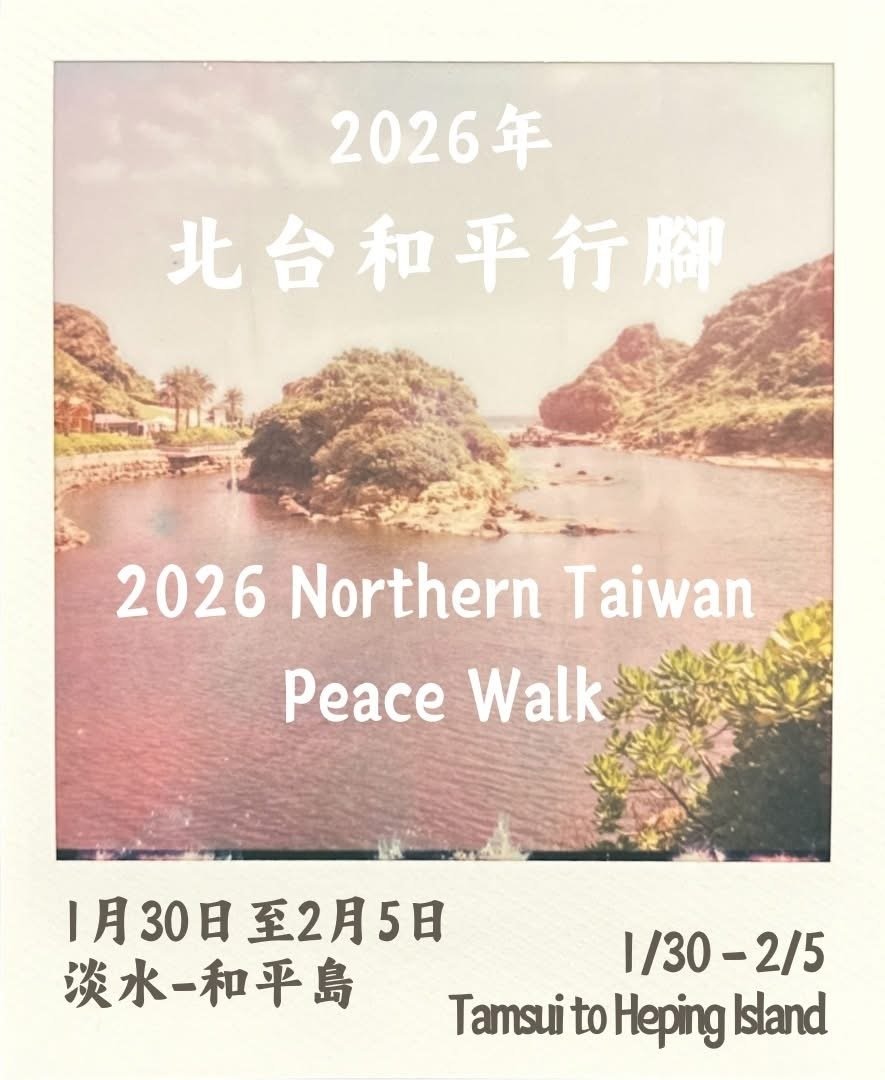
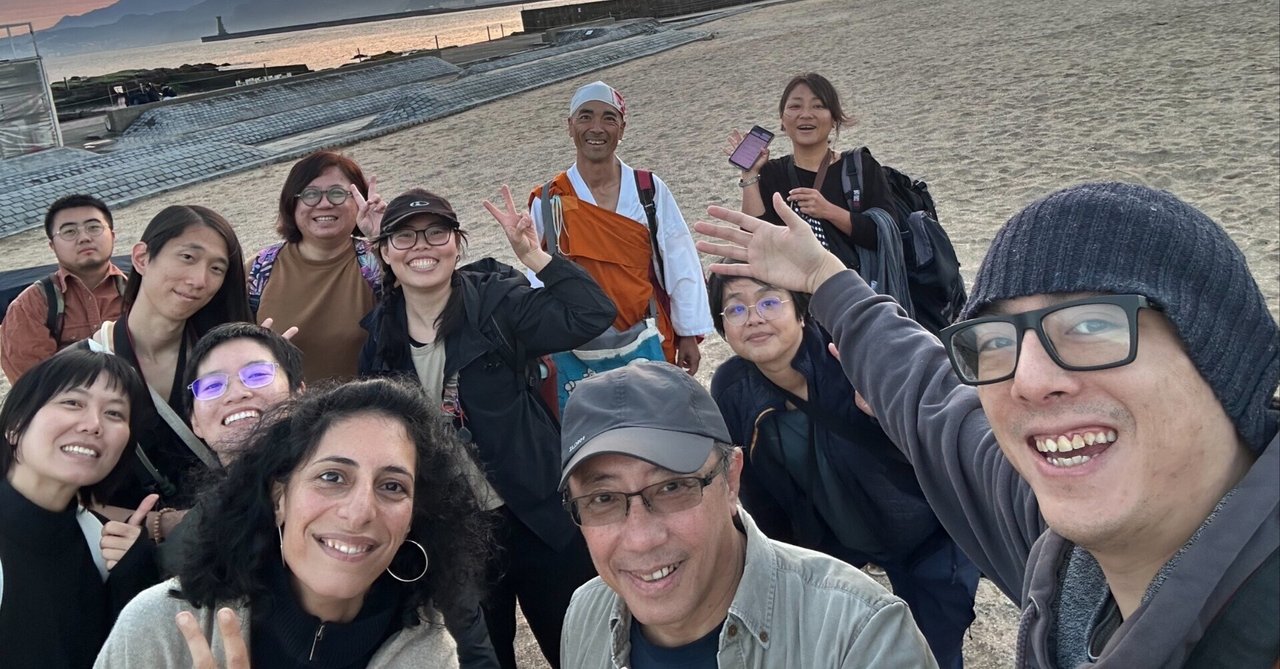
The photo was taken on Heping Island in Keelung (called Sheliao Island during the Japanese era)during the 2025 Peace Camp.
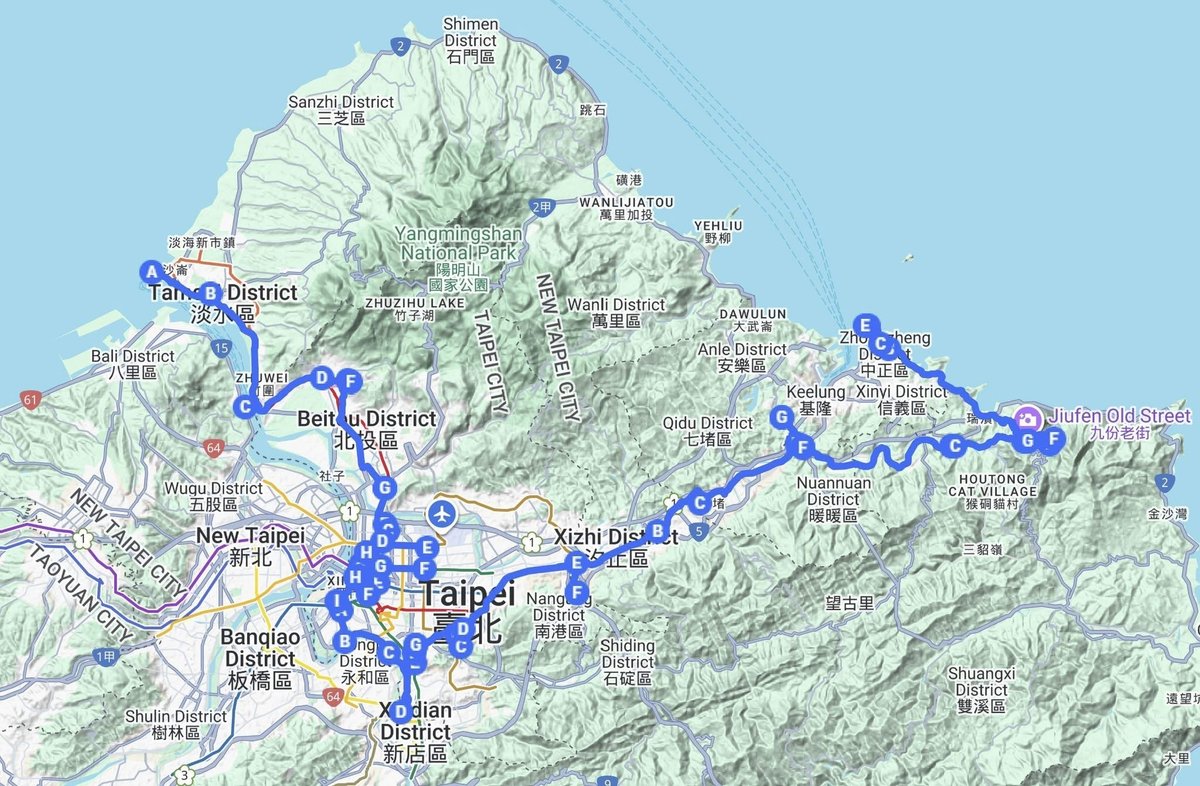
I walked about 130km in seven days, from Tamsui to Beitou to Taipei to Jiufen to Keelung.
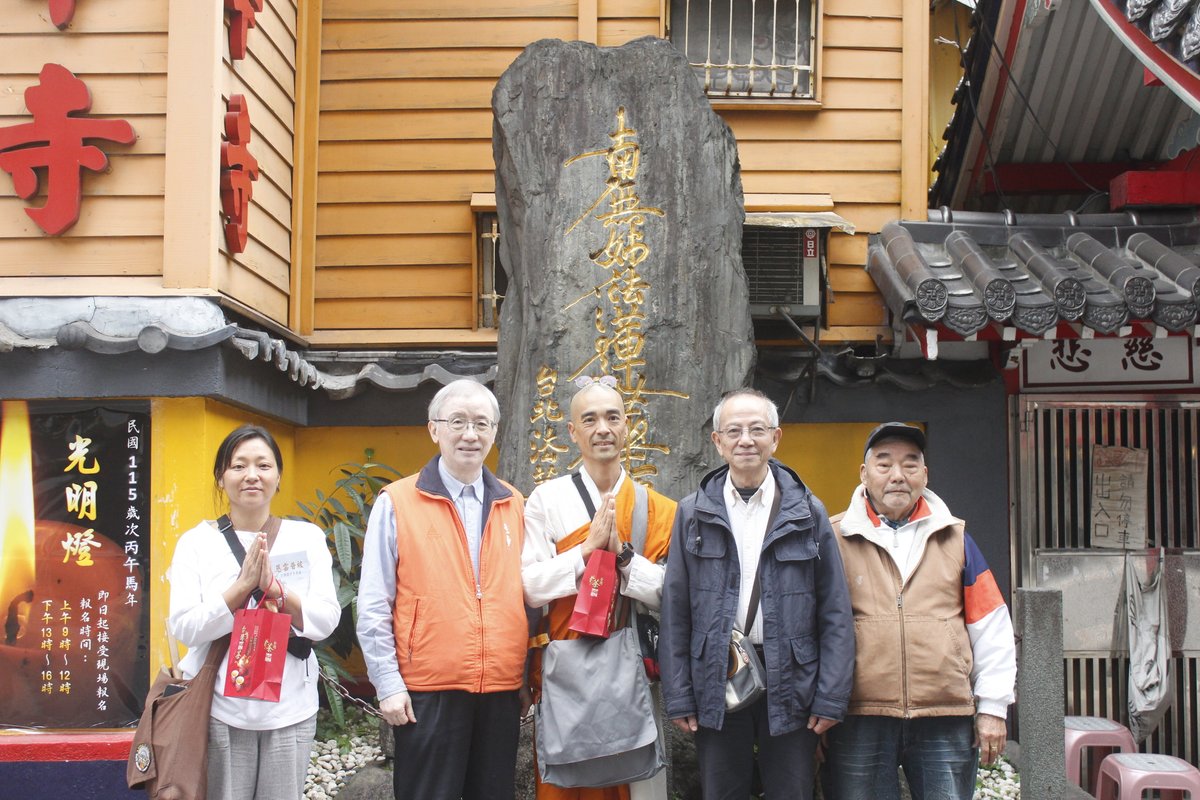 Located in the west gate of Taipei, Hokkeji Temple was built by the Nichiren sect during the Japanese colonial period and is now a Pure Land Buddhist place of worship for local people.
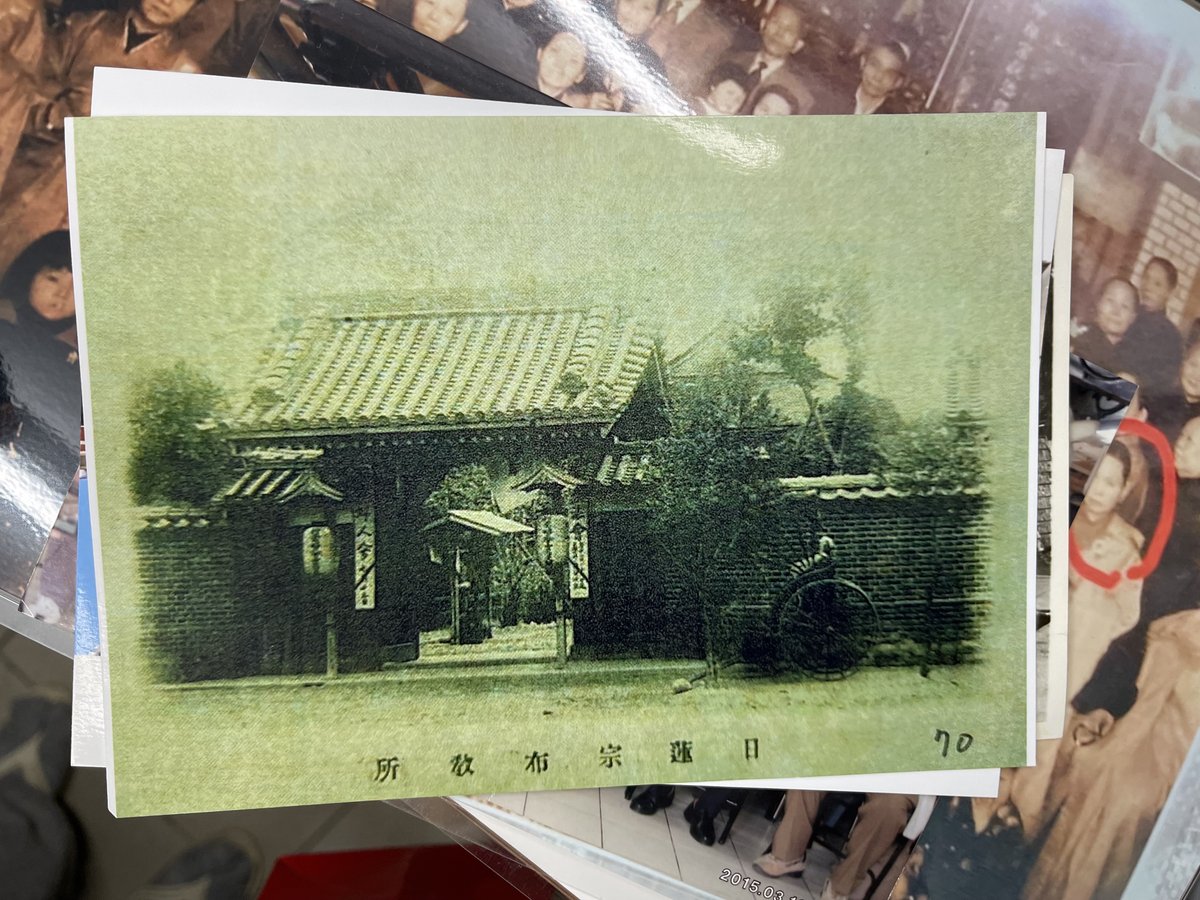
Photos of Hokkeji Temple from the Japanese colonial period.
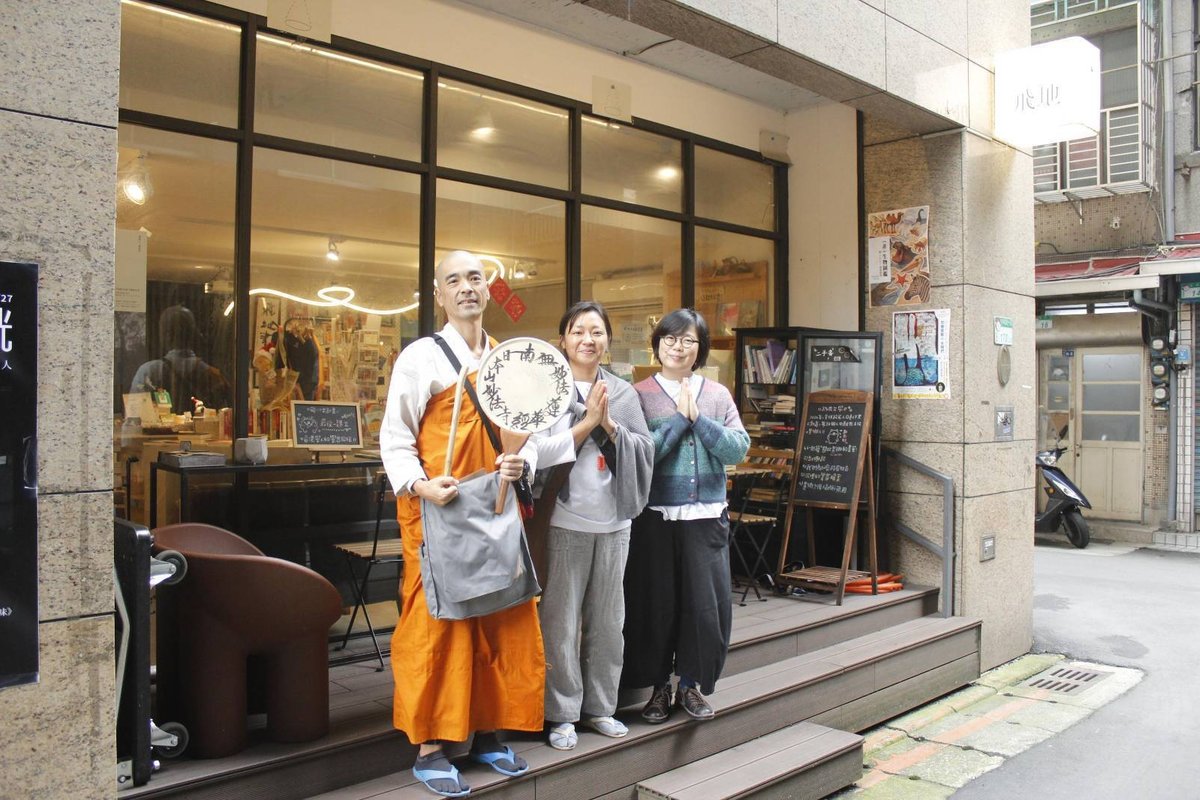
An independent bookstore called "no where" in Ximen. There are many unique, privately owned and independent bookstores in Taiwan. The owner, Annie Zhang, also runs a "no where" bookstore in Koenji, Japan.
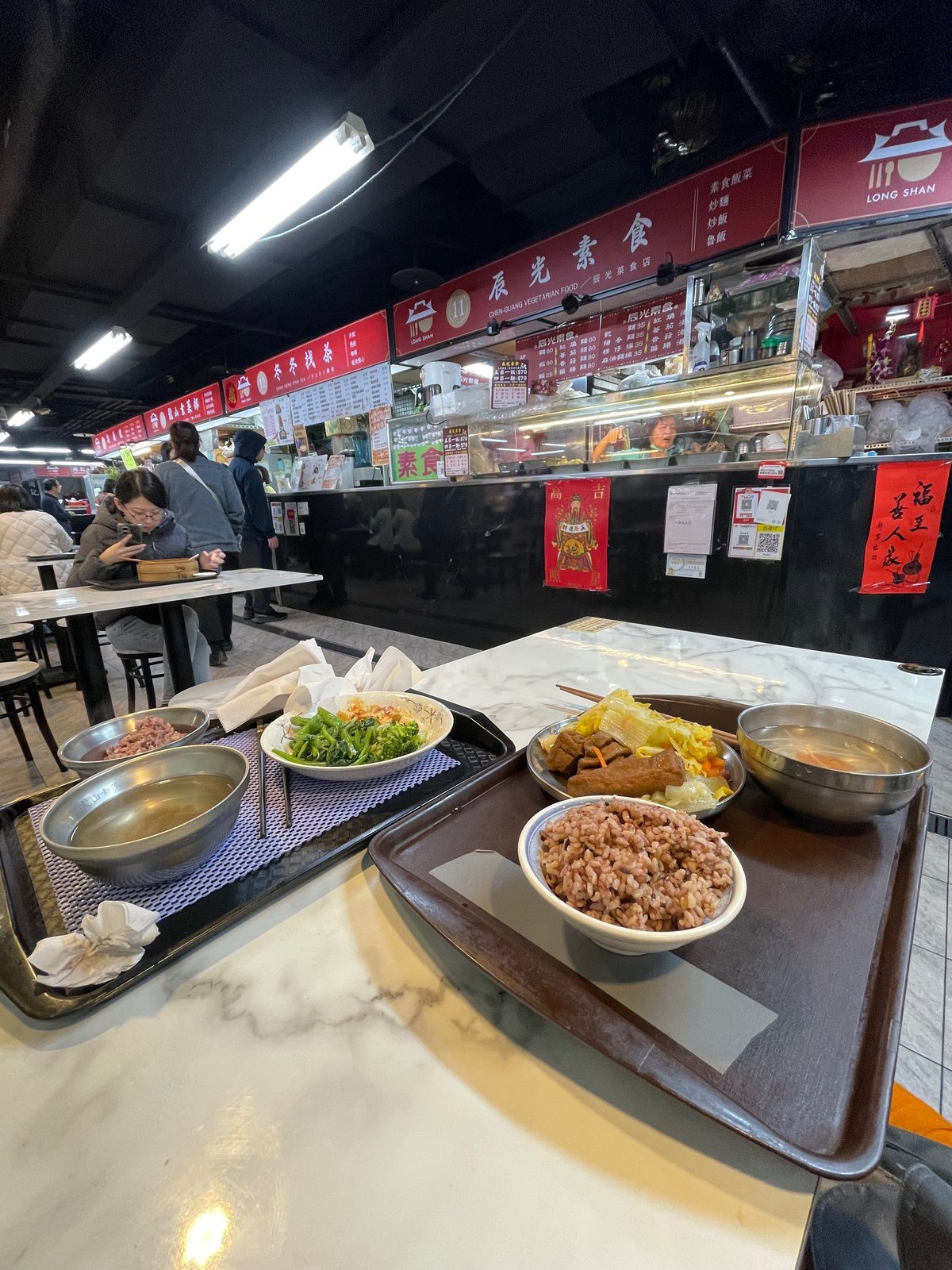
A restaurant near Longshan Temple. When I ordered at a vegetarian restaurant, they didn't take any money from me, a monk. Many vegetarian restaurants in Taiwan are run by Buddhists, and sometimes they are used as offerings.
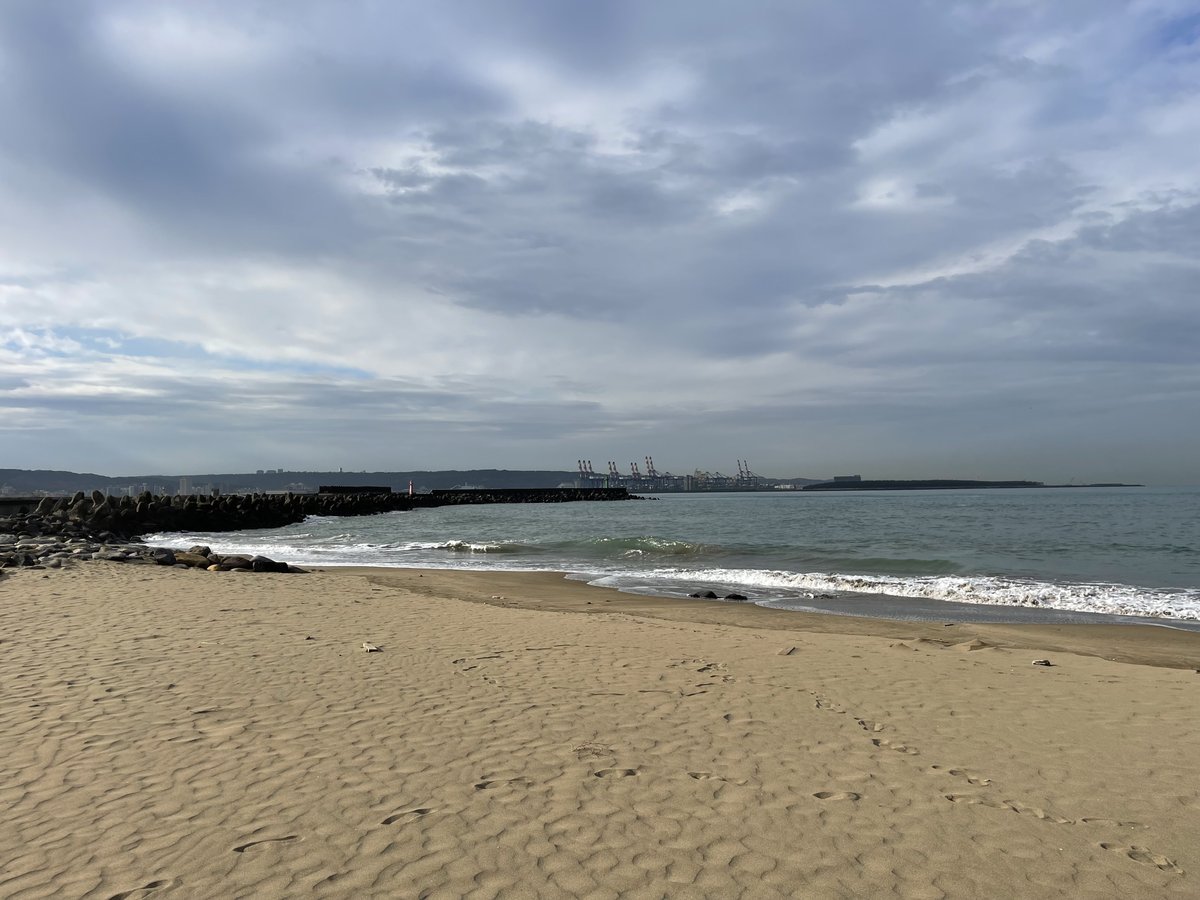
This is Shalun Beach in Tamsui, our starting point. In the past, this beach was the site of casualties from the 228 Incident and the White Terror. Now, Taiwan's Ministry of National Defense has designated it a likely beach for Chinese Communist forces to land. It's apparently called a "Red Beach" for this reason. This is the mouth of a river, and if you go upstream you can reach the center of Taipei.
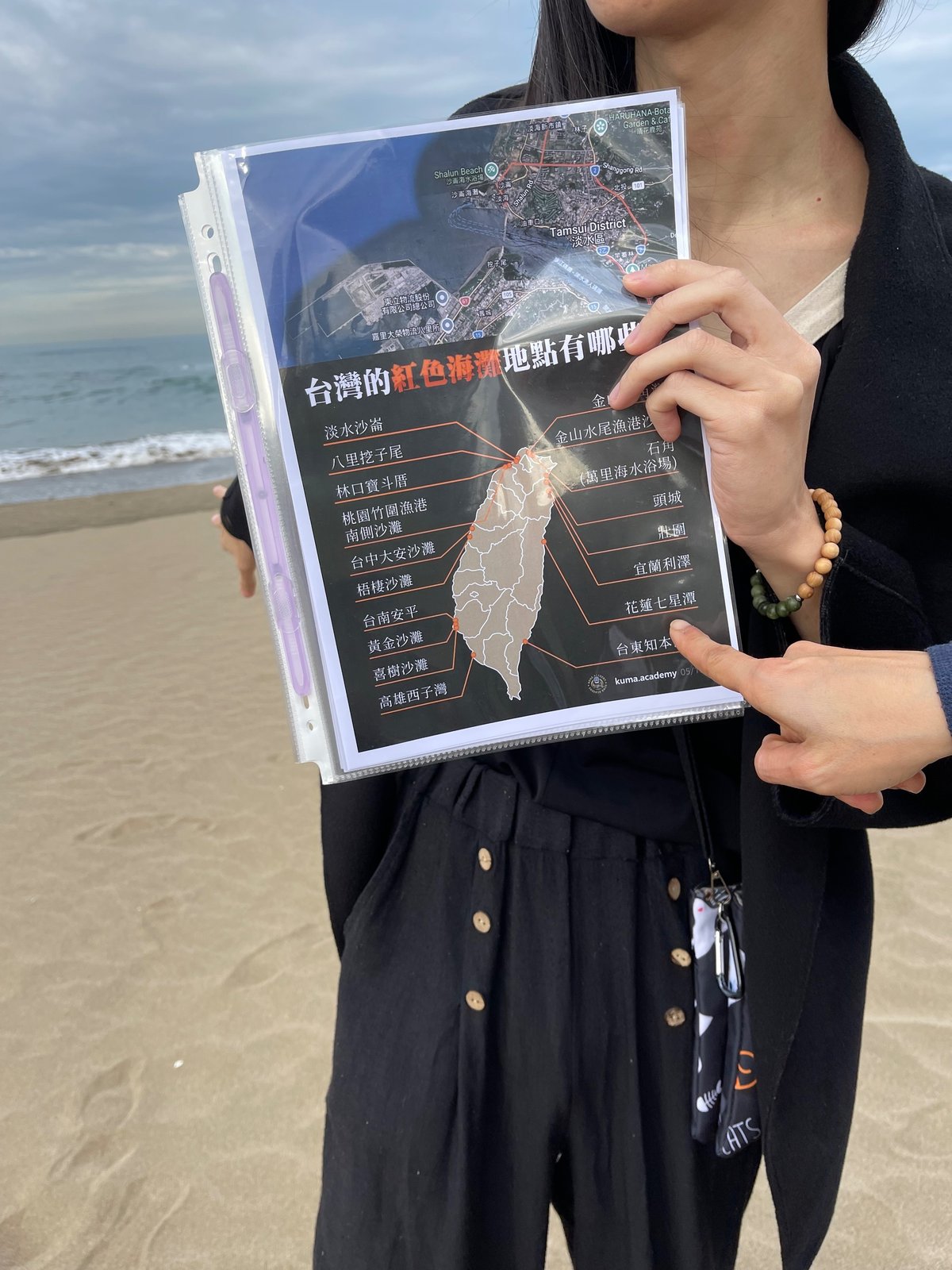
A list of Red Beaches. The Taiwanese government and non-governmental organizations seem to be educating its people about these beaches in preparation of a potential military invasion from China.
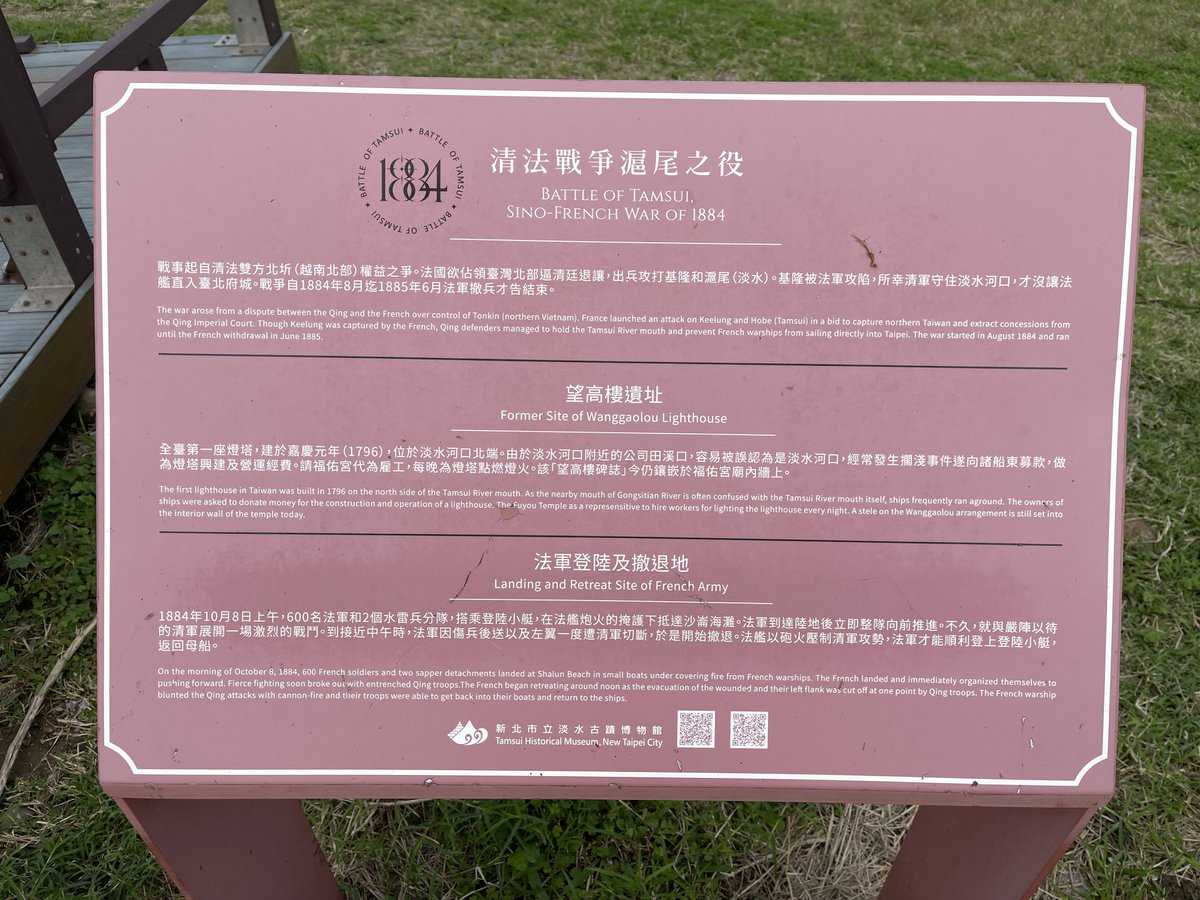
During the Qing dynasty, wars with France also broke out in Tamsui.
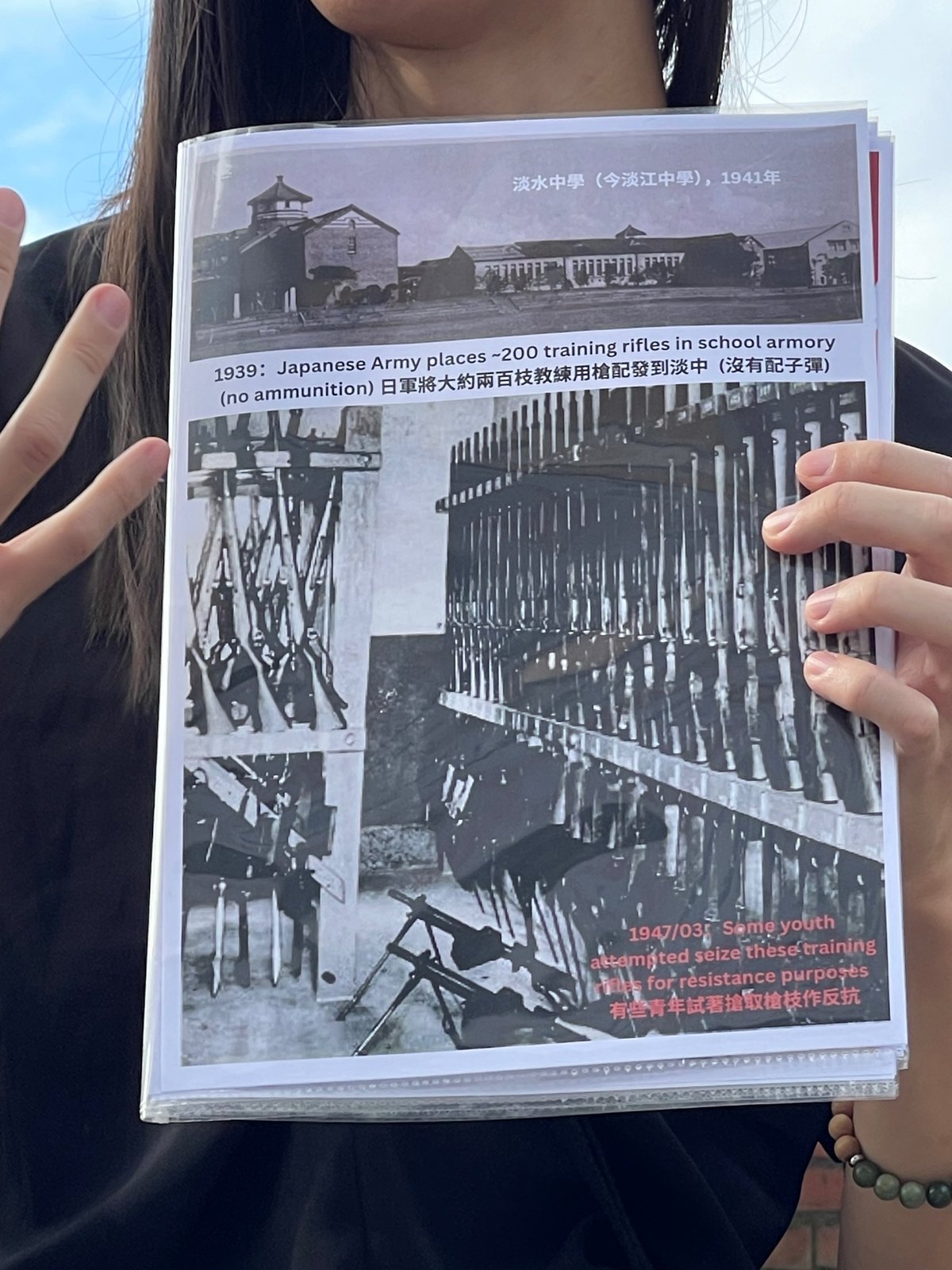
When the 228 Incident occurred, local residents the in Tamsui seized weapons stored in Tamsui Middle school (now Tamkang High School) in order to fight against the KMT army. These weapons had been stored in the school by the Japanese army.
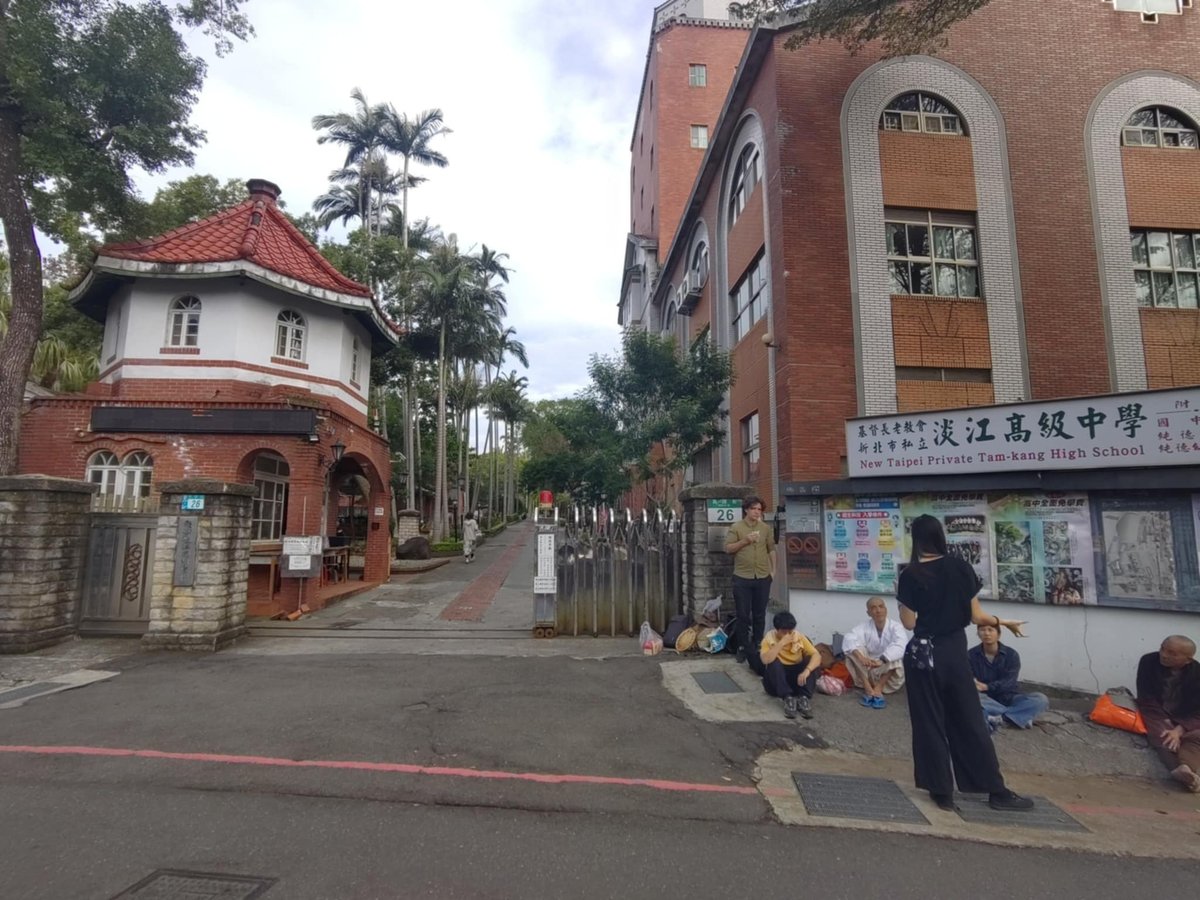 Apparently there are buildings and monuments on campus commemorating the students, teachers, and a principle who were killed during the 228 Incident. However, since the school is a private Christian school, only those affiliated are allowed to enter.
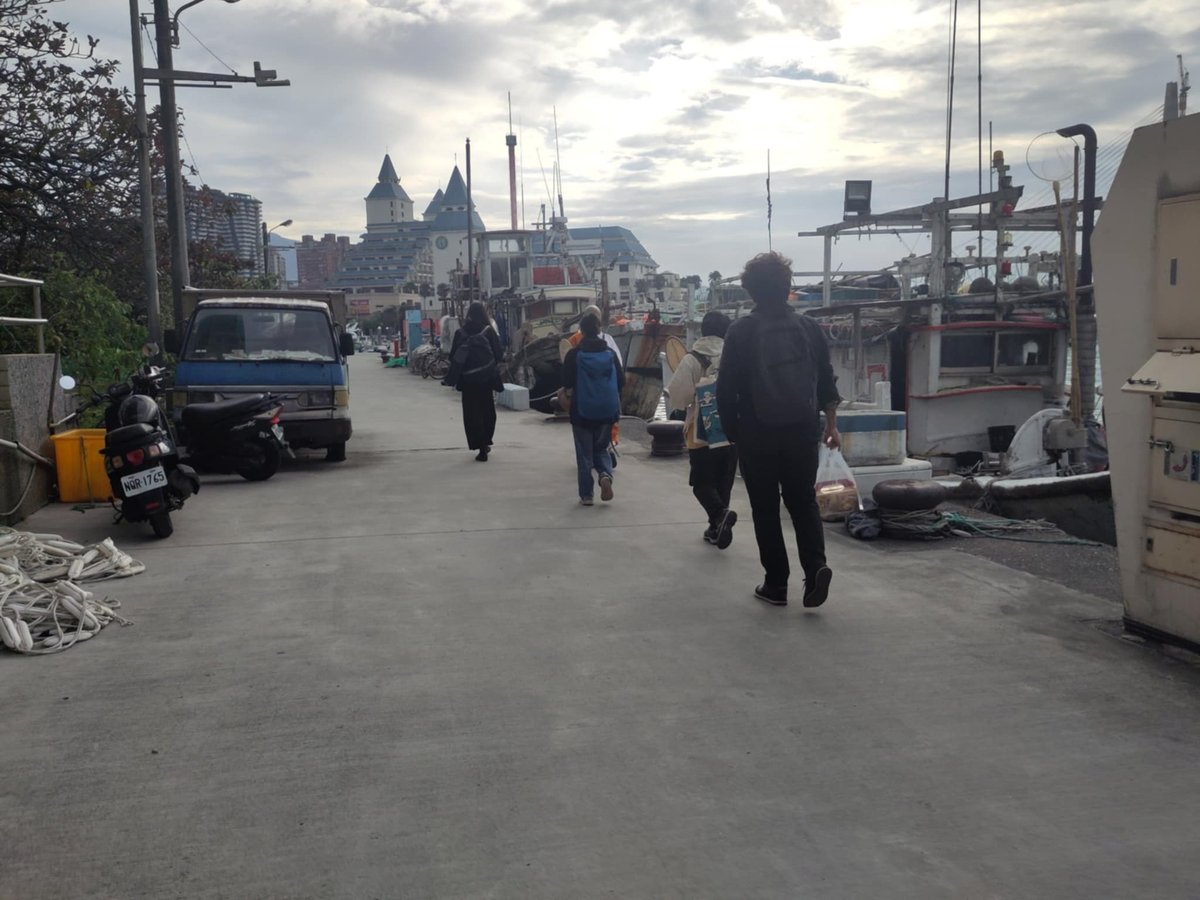
Tamsui Port
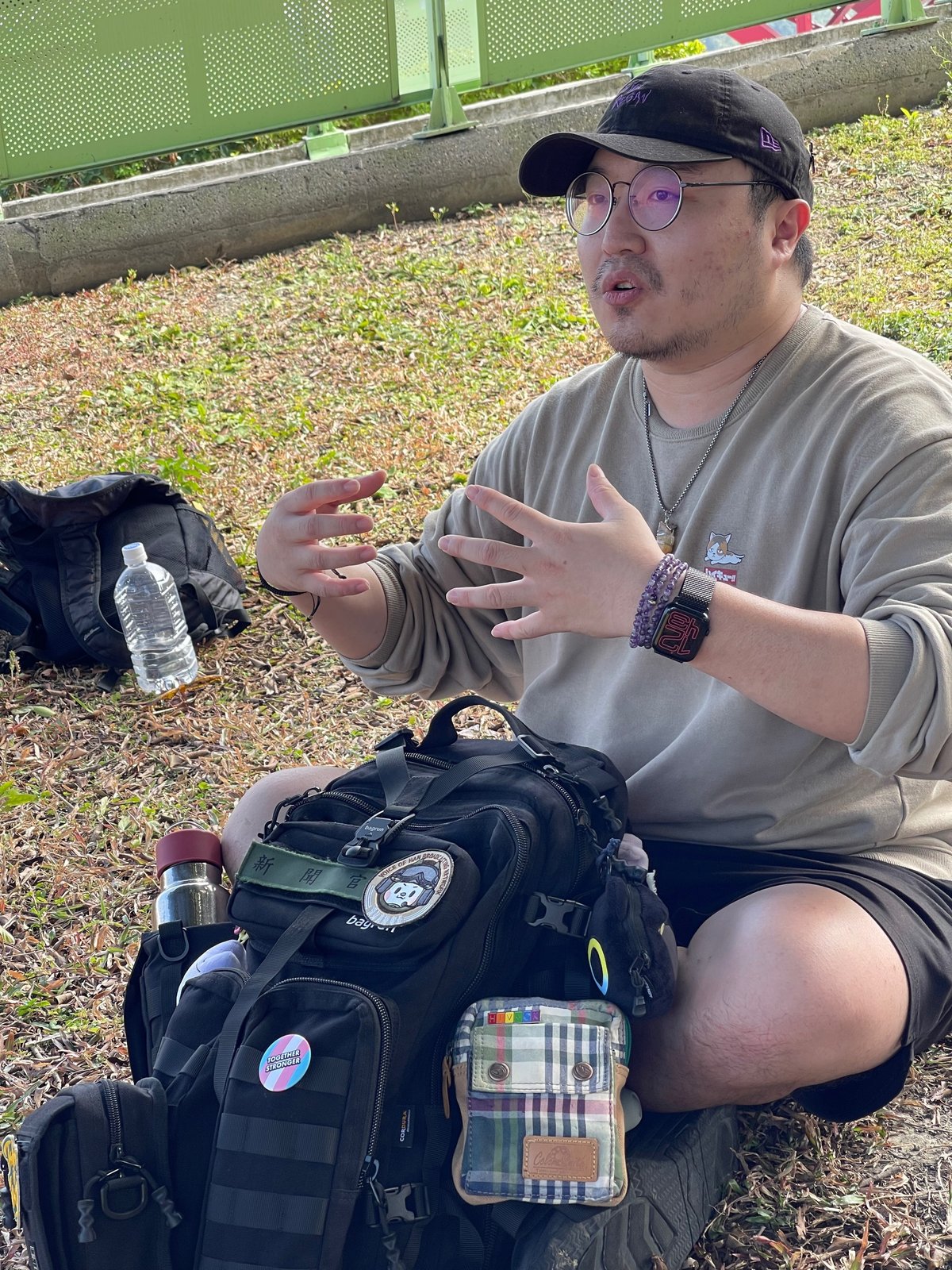
A former Taiwanese military serviceman came to talk about the recent Taiwanese military exercises and the history of the Taiwanese military. Until now, when former military personnel came to the peace walk, they were almost always opposed to the military policies of the current administration. In Taiwan, the perception of the word "peace" is very different from that in Japan.
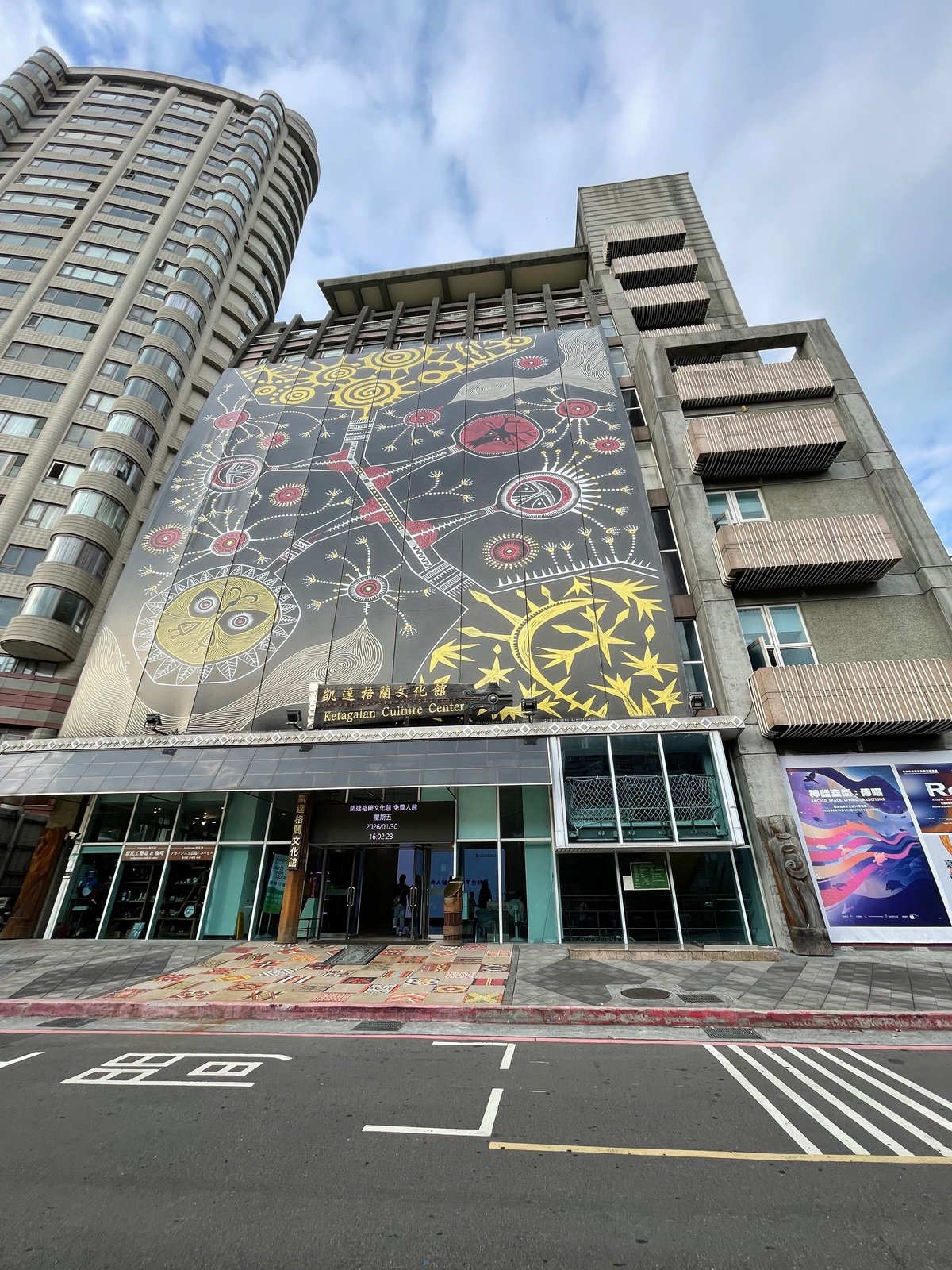
Ketagalan Culture Center in Beitou.
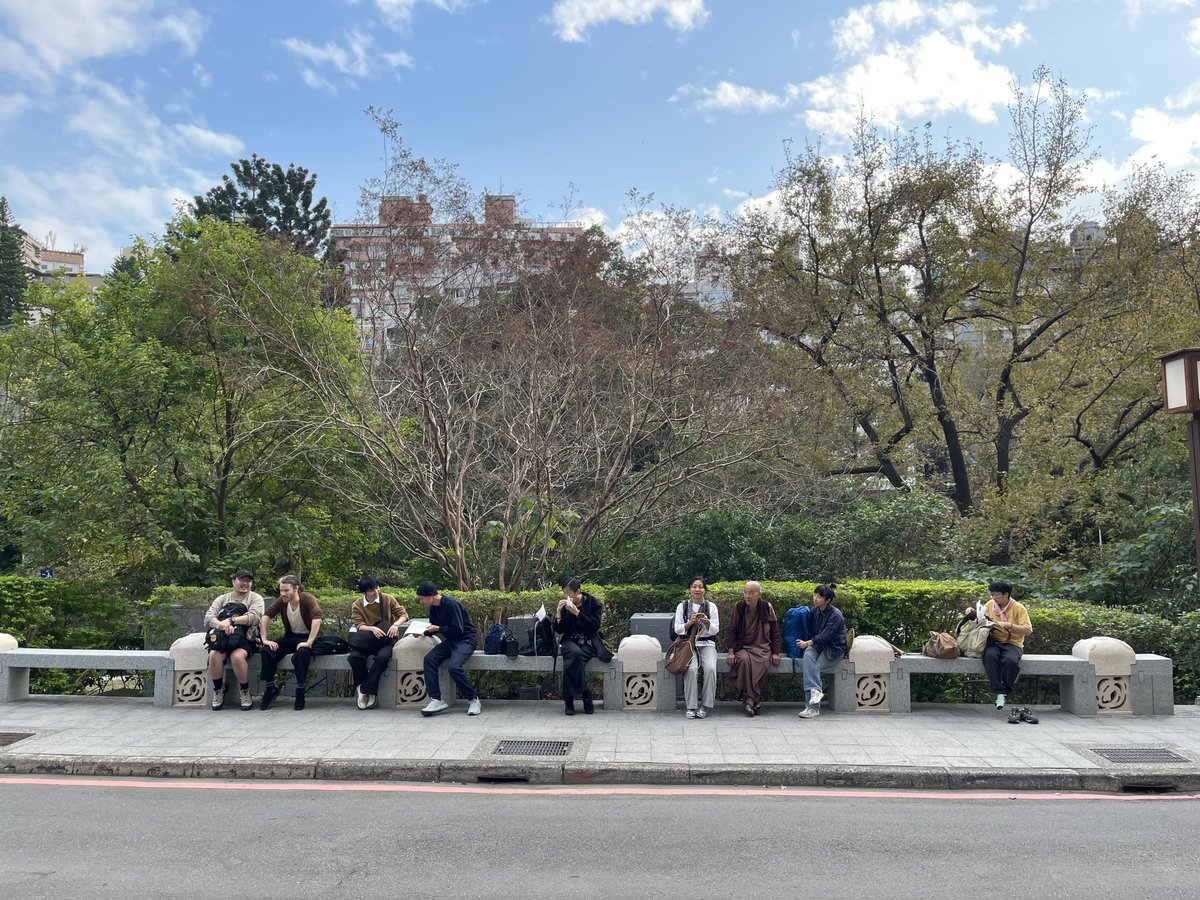
Beitou is home to many natural hot spring resorts developed during the Japanese colonial period. It is now a popular tourist spot, and was also popular amongst US military officers who were stationed in Taiwan from the 1950s to 1970s.
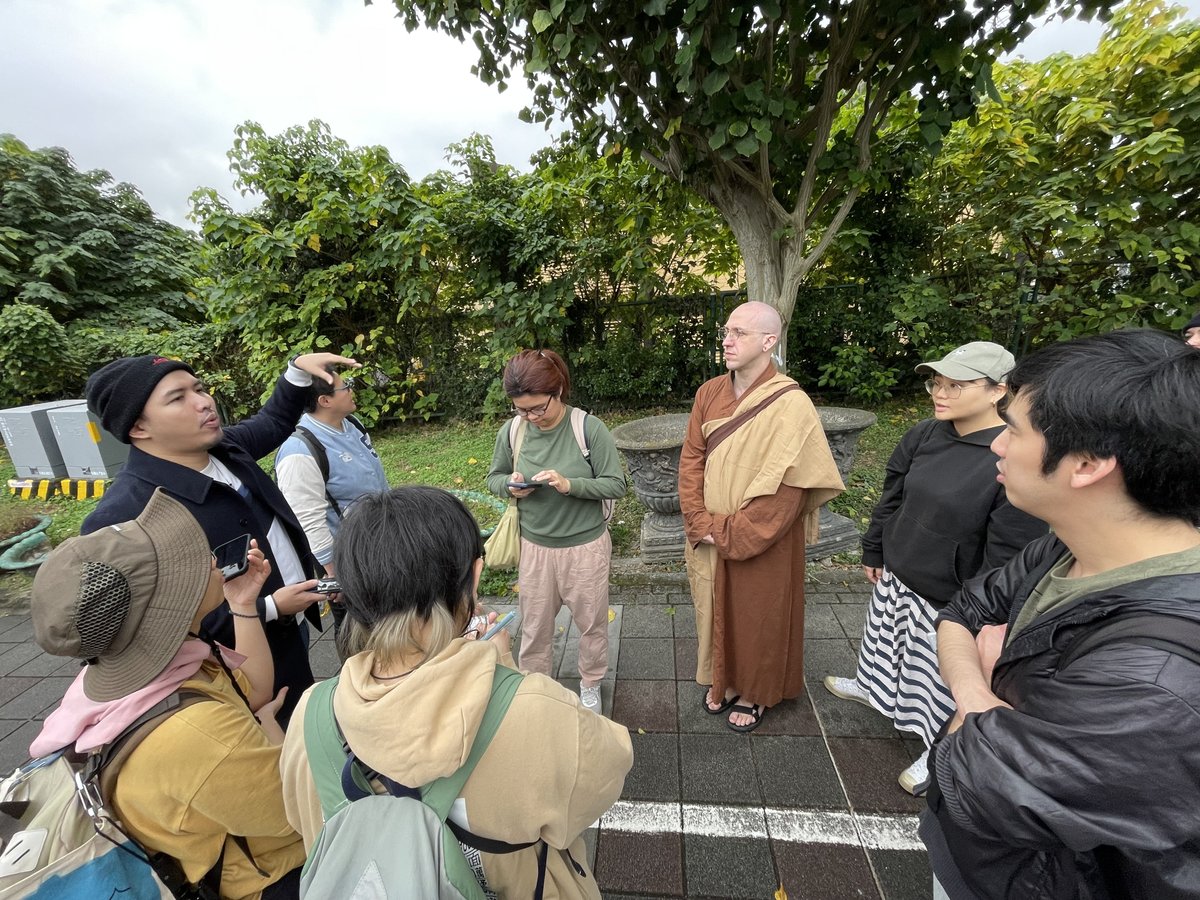
In the past, US troops were stationed in Taiwan. Until the US severed diplomatic ties with Taiwan in 1979, military facilities were scattered across Taiwan, especially in Taipei, Taichung and Tainan. Raphael Kuo, who is researching US military bases in Taiwan, led a walking tour for us.
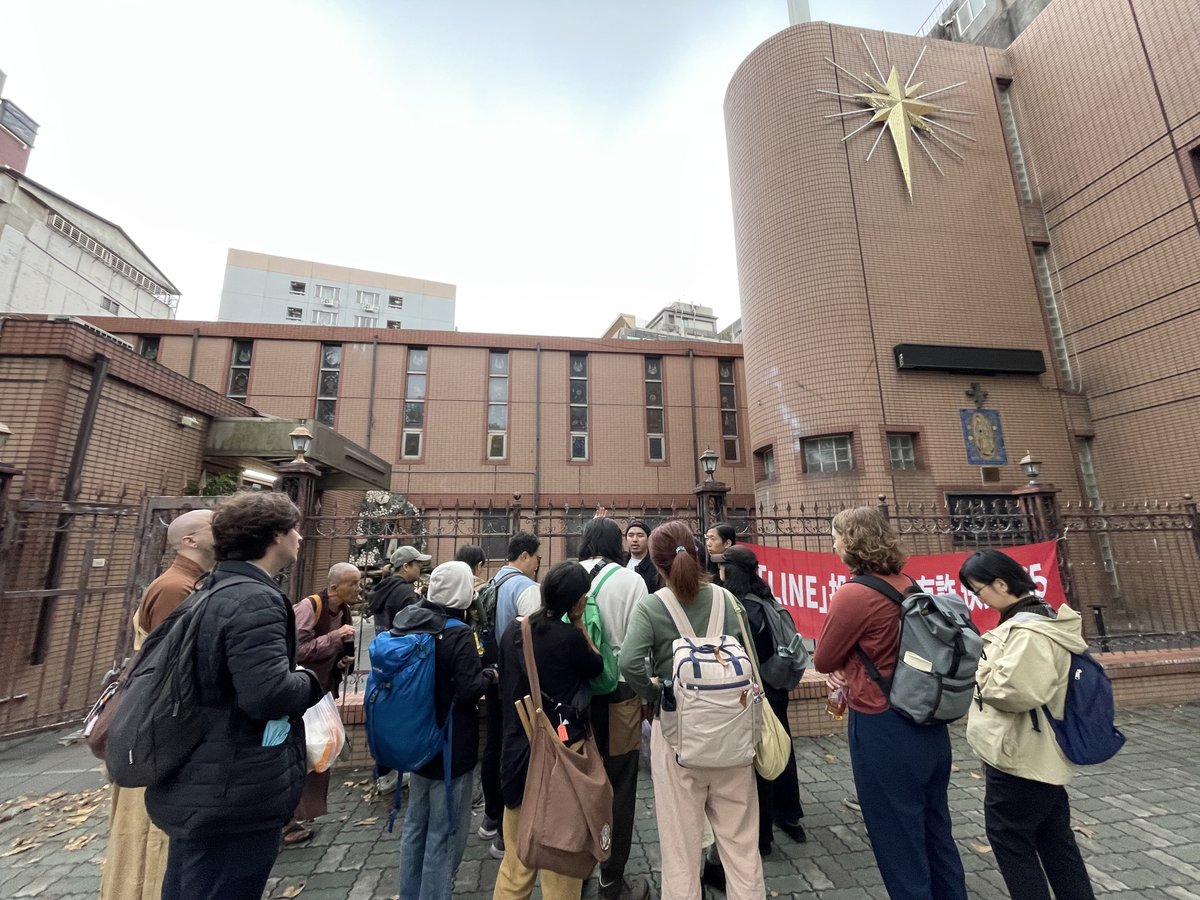
A church built for American soldiers.
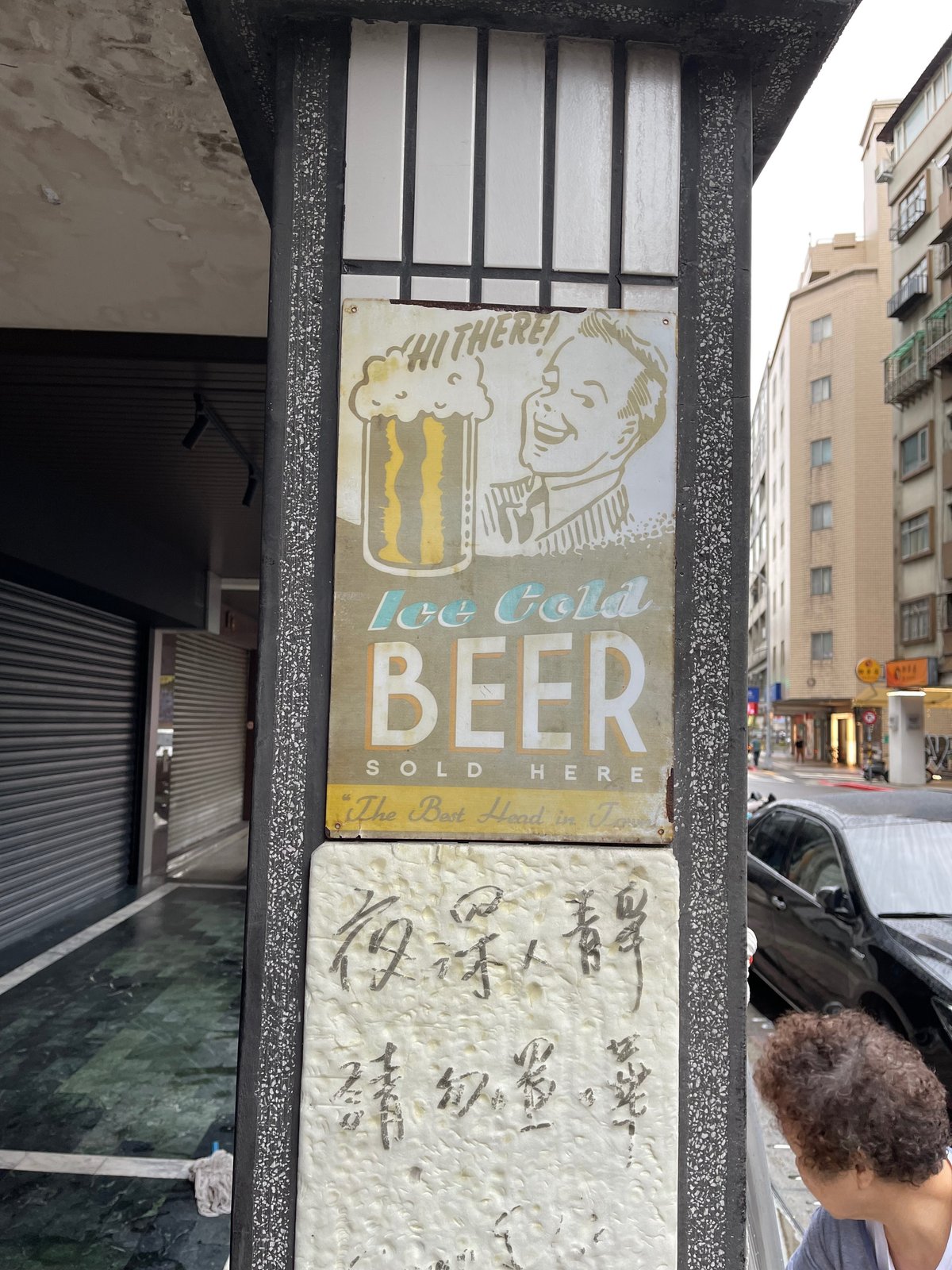
There was a bar district where American soldiers would hang out to drink. Apparently, some bars from that time still remain, though serve different clients.
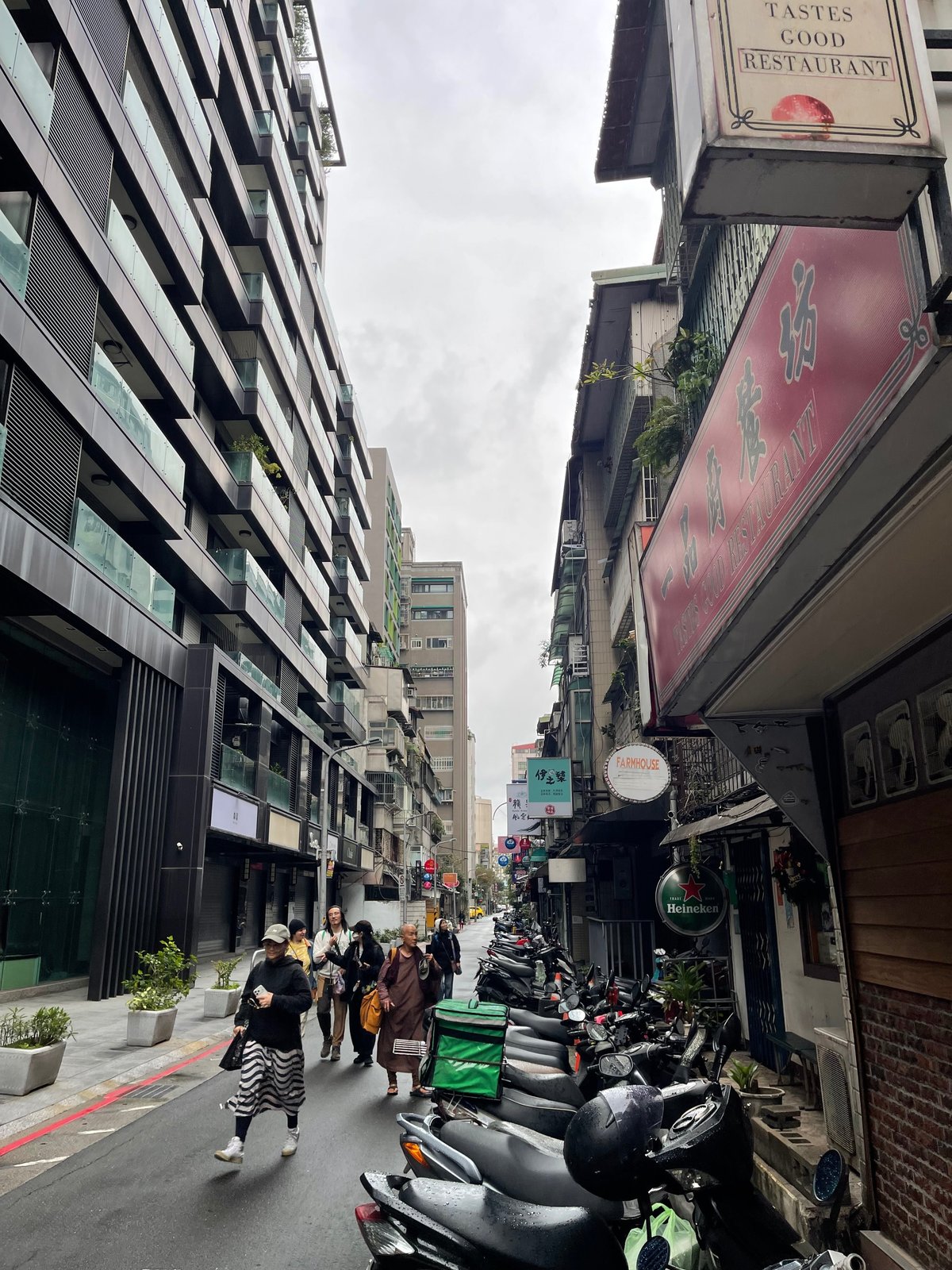
In Taiwan, which has a large number of immigrant workers, the bar districts left behind by the United States have apparently become dining districts and community hubs for immigrants from the Philippines and other countries.
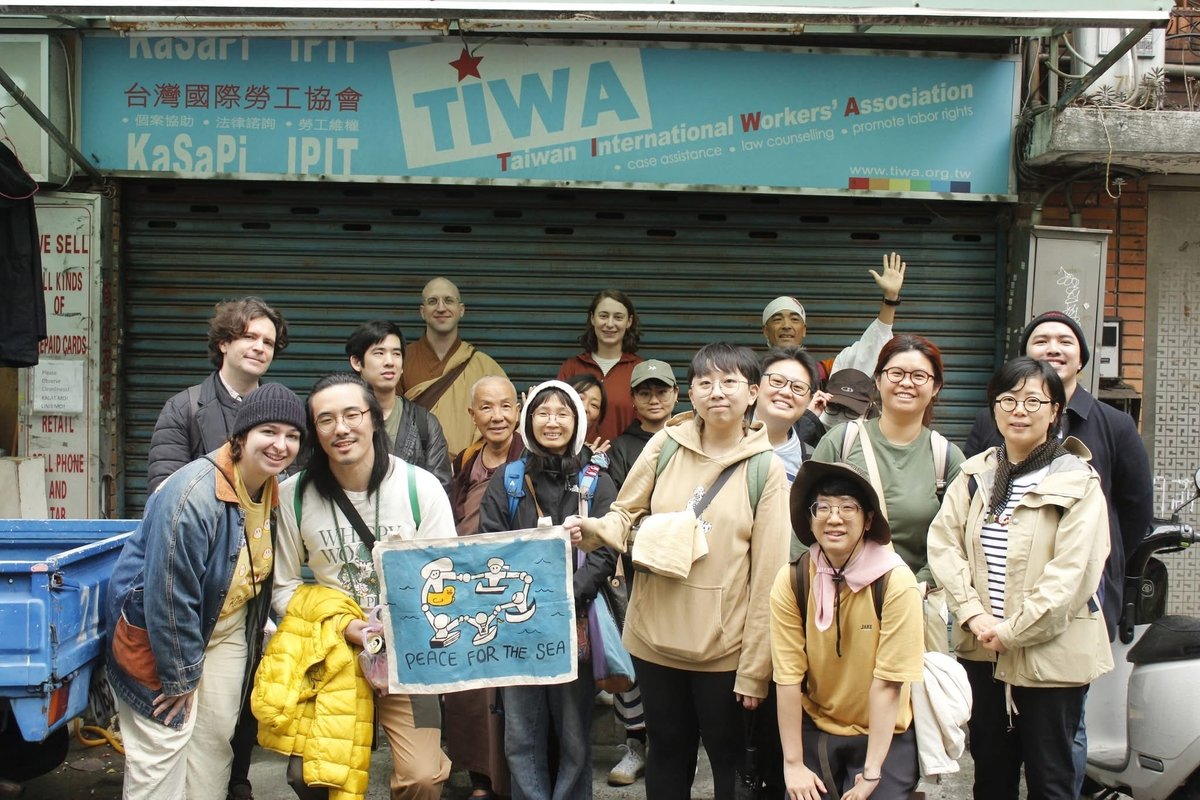
In front of the Taiwan International Workers Association.
They said that recently they have been particularly active in protecting the rights of migrant workers.
They explained that the treatment of migrant workers in Taiwan is worse than in Japan.
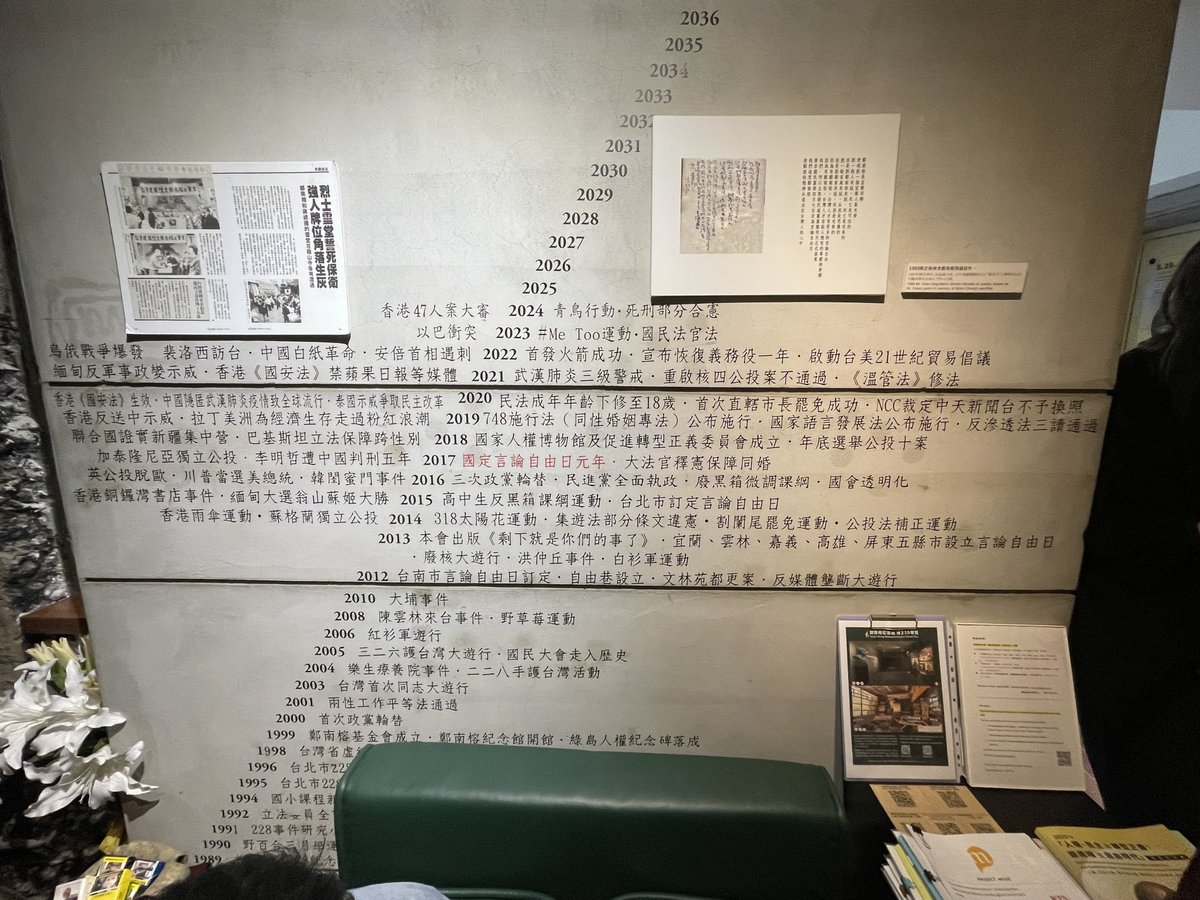
Nylon Cheng Liberty Foundation and Memorial Museum. Nylon Cheng was born in Taipei in 1947. From 1984, despite the censorship of speech during the martial law era, he published a weekly magazine called "Freedom Era" weekly, which advocated freedom of speech. He also founded the "228 Peace Memorial Promotion Association" to campaign for the restoration of the honor of the victims of the 228 Incident (leading to the current Transitional Justice Movement).
He was a major social movement leader during the White Terror period who publicly advocated for "Taiwan independence." He was charged with "treason" for publishing the "Draft Constitution of the Republic of Taiwan," but refused police arrest. On April 7, 1989, he doused himself in gasoline and set himself on fire in the magazine's editorial office.
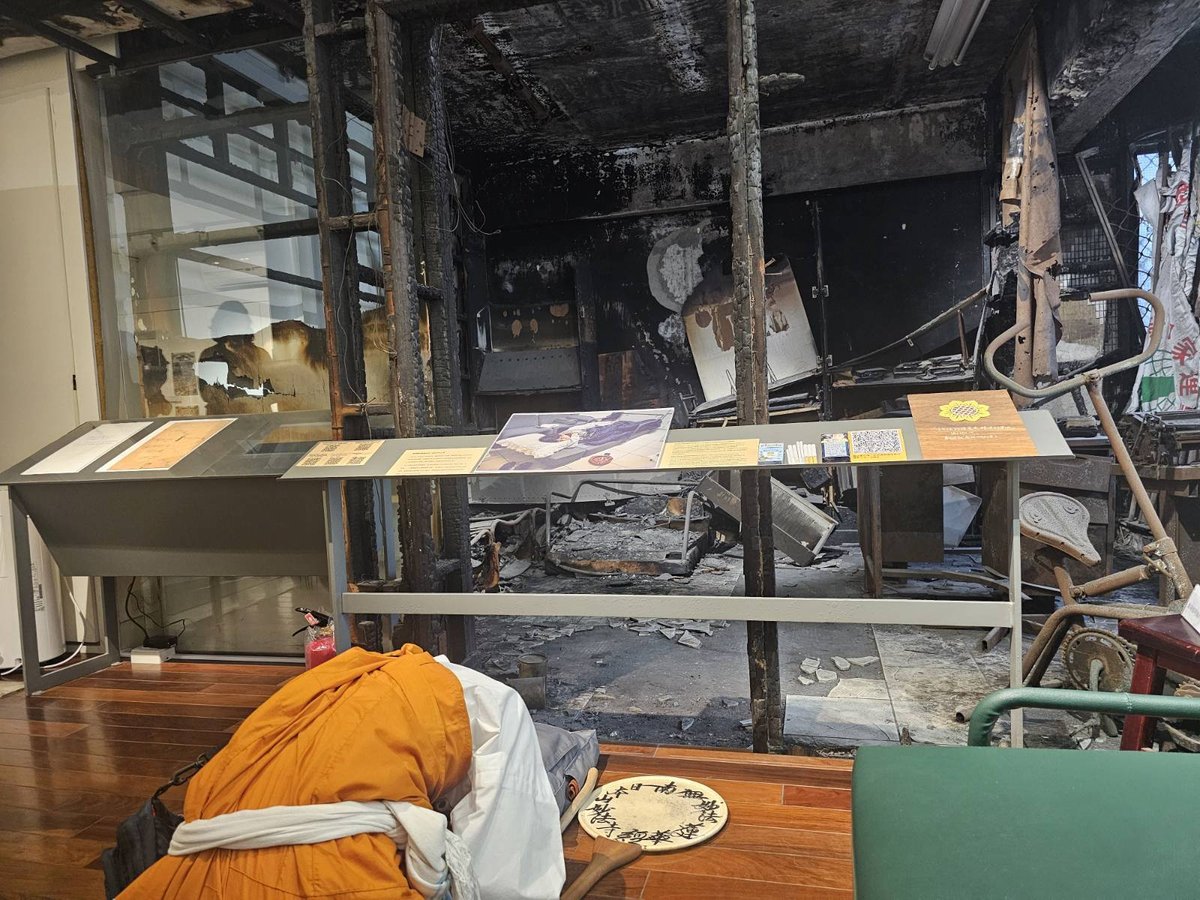
The room where he was burned to death remains to this day.
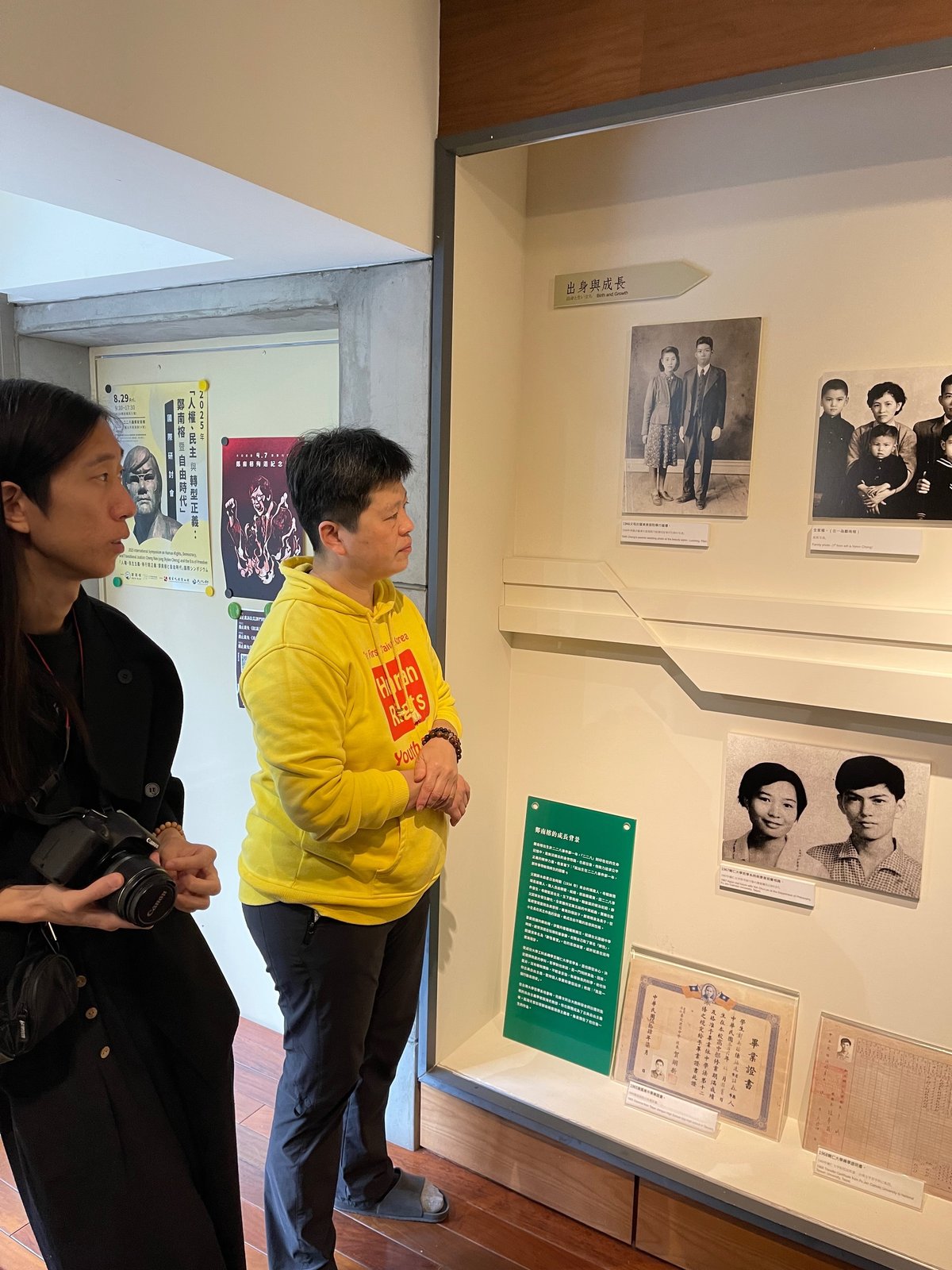
The history of Taiwan’s democratization, as told through the life of Nylon Cheng, packed into a small museum exhibition.
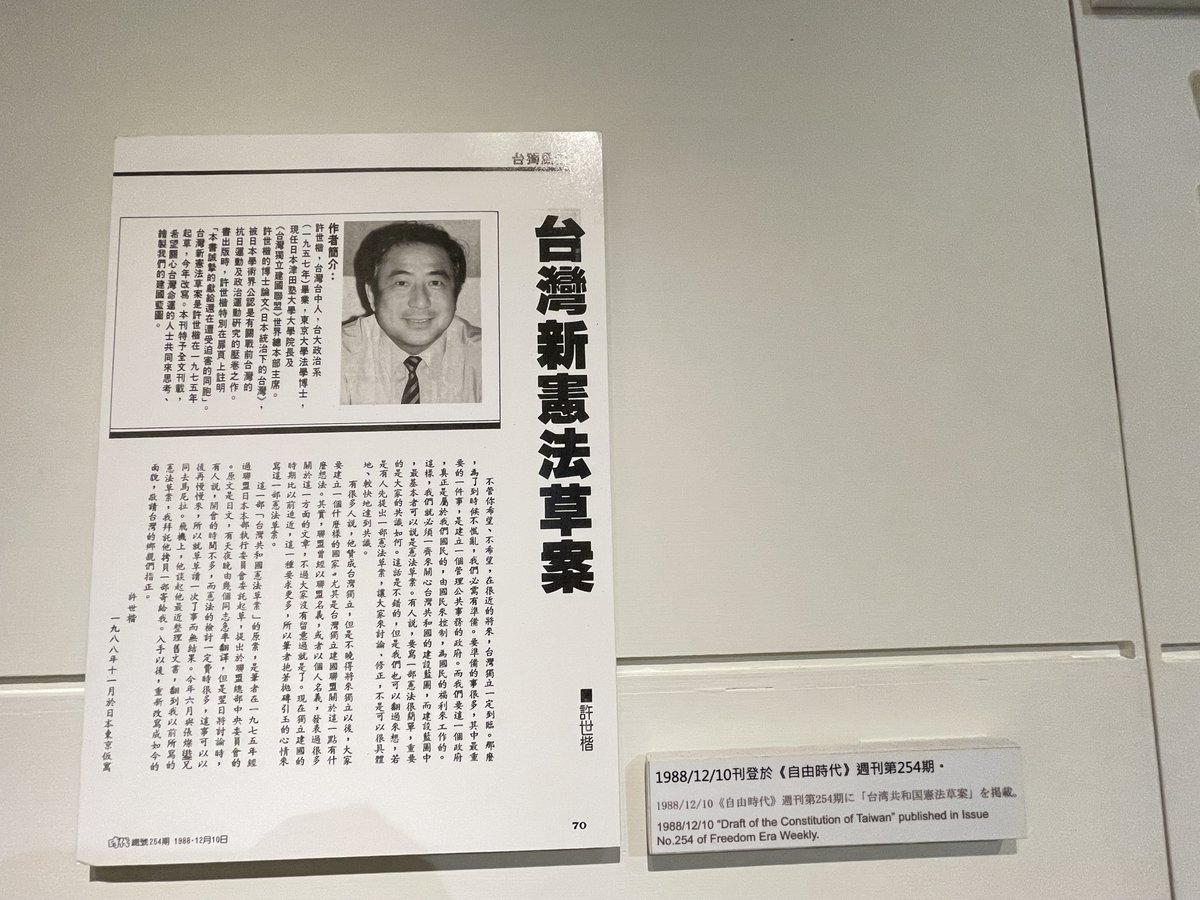
Draft of the "New Taiwan Constitution." The meaning of "Taiwan independence" during the authoritarian era was independence from the Republic of China (and before that, the Empire of Japan) under the KMT government. I think many people in Japan mistakenly think it means independence from the People's Republic of China.
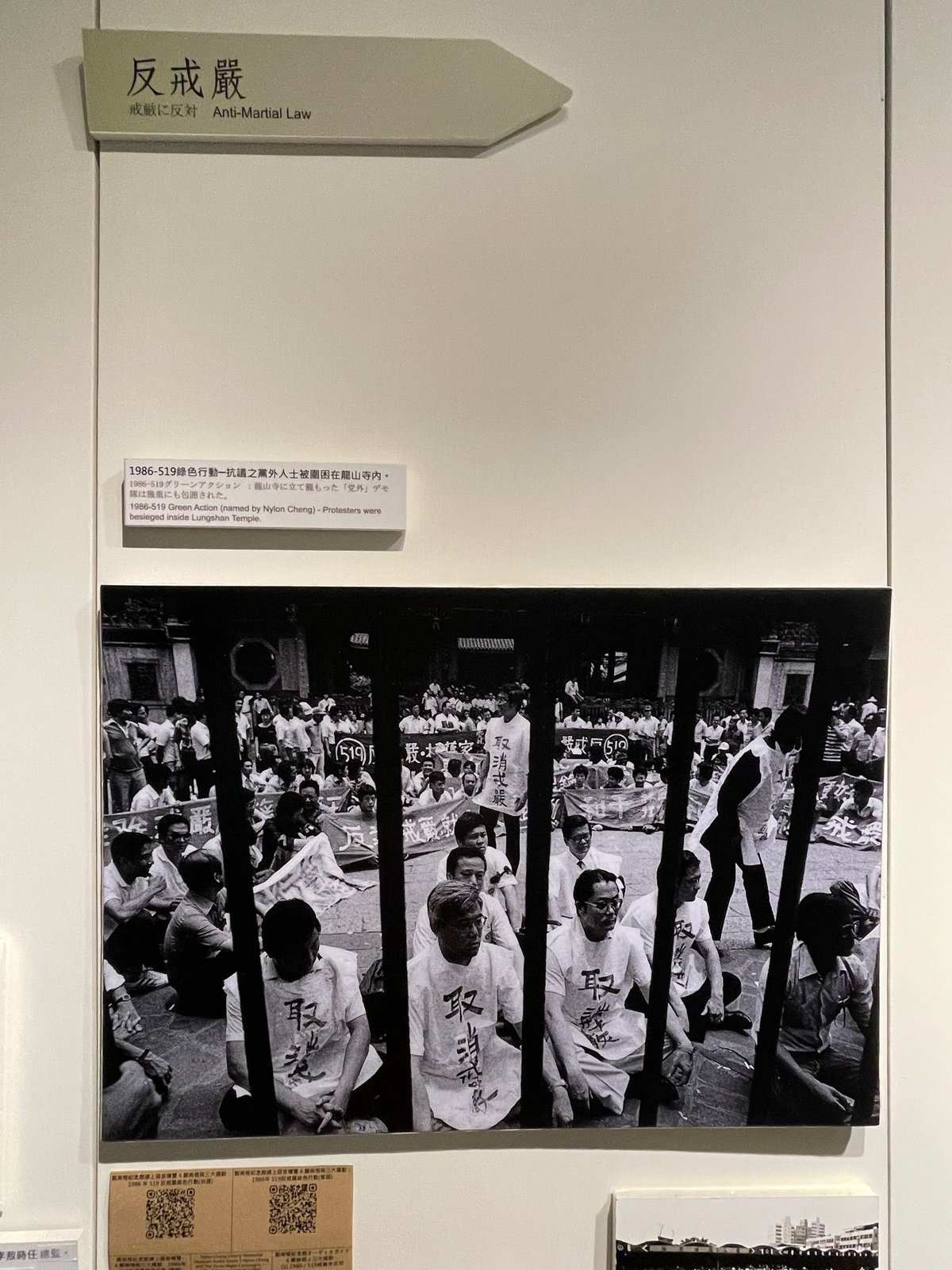
A photo of police surrounding a group of demonstrators in Longshan Temple, One of Taiwan's most famous temple.
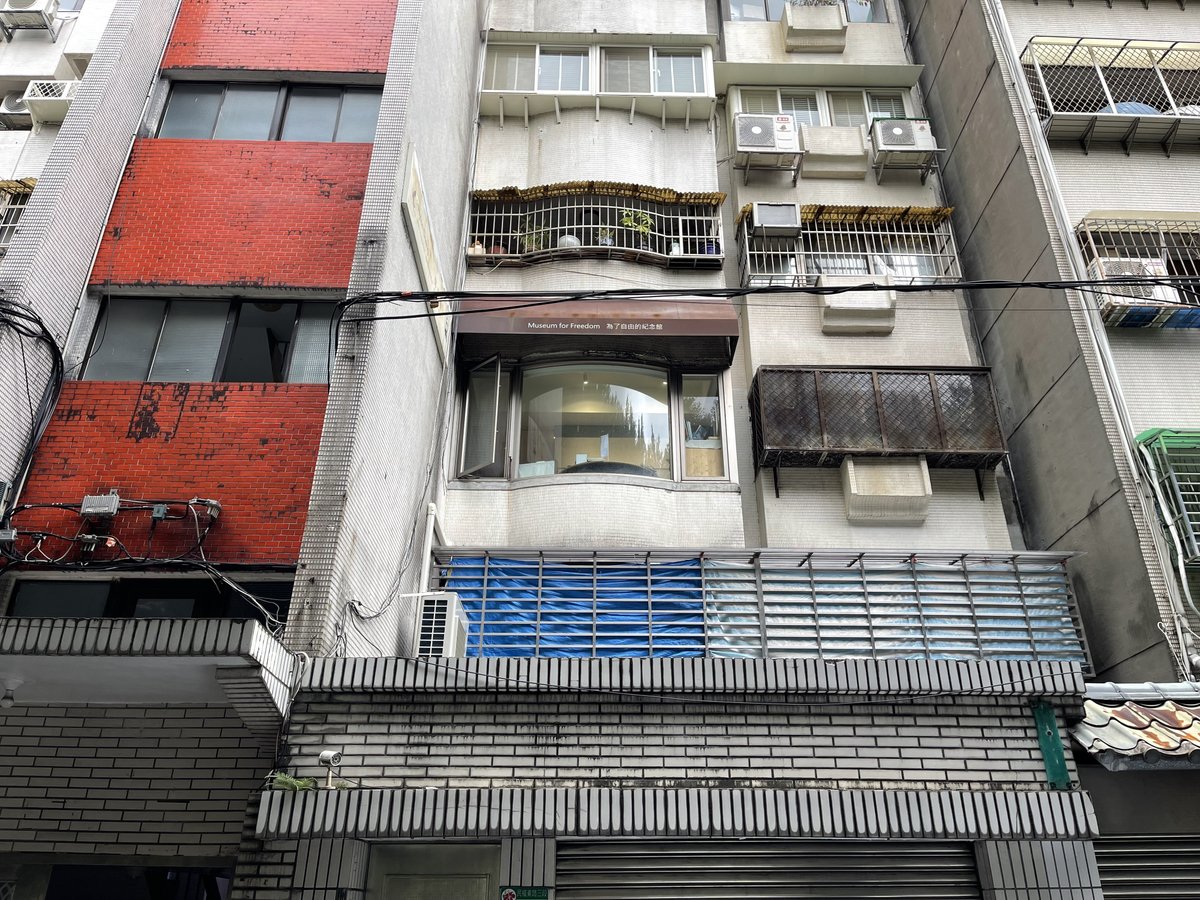
https://nylonenglish.blogspot.com/ Nylon Cheng Liberty Foundation Memorial Museum English website.
Chinese language website: https://www.nylon.org.tw/
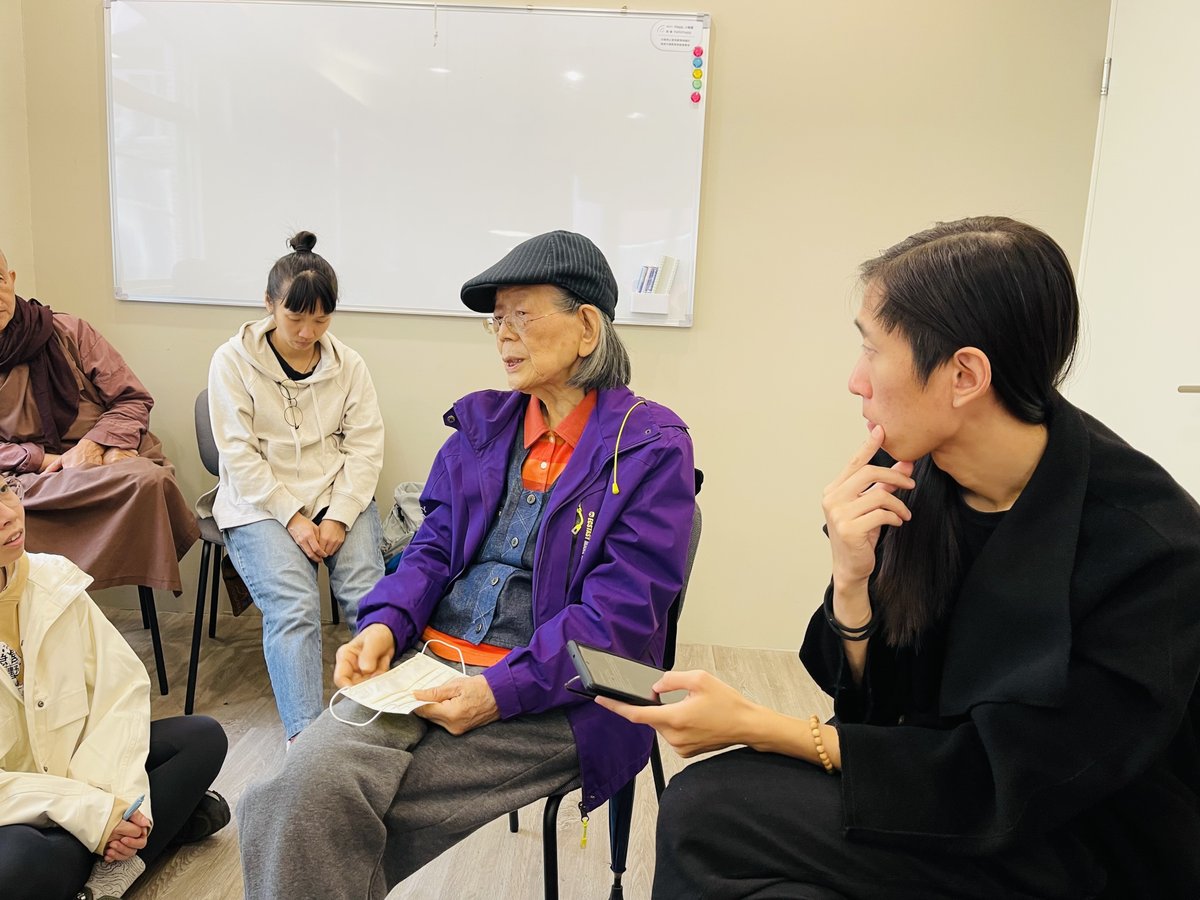
Yo-Ling's grandmother, 90 years old. She spoke of her memories of her time under Japanese rule and her work as a tailor for the families of American military officers and businessmen after the war. While the Japanese education system was strict, she saw it as a positive aspect. She did not speak positively about KMT government who came from China after the war.
She also seemed to have a positive impression of the American families she made clothes for at the time. This was likely due to the fact that working for Americans was a way to earn a high salary, especially in the impoverished social conditions under the KMT regime. While there were certainly incidents and accidents involving American soldiers at the time, such as the murder of Taiwanese father Liu Ziran by an American military officer, she said she had no recollection of them. She did, however, have vivid childhood memories of the Taipei Aid Raid when the United States bombed her neighborhood in 1945.
During the Cold War era, Taiwanese society was under martial law suffering under a reign of terror characterized by unjust oppression and extrajudicial executions. The United States "prioritized Taiwan's stability as a bastion of anti-communism," despite widespread human rights abuses.
Taipei city
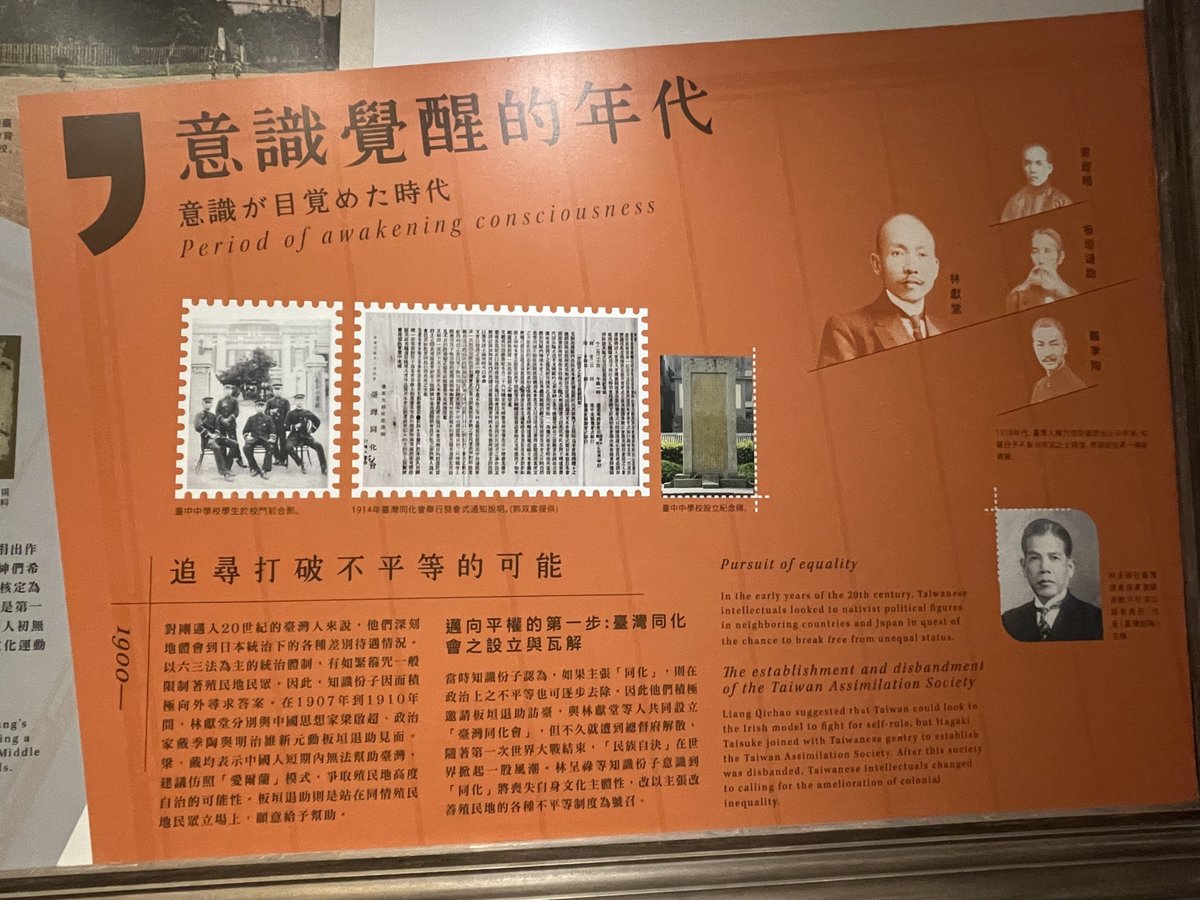
Taiwan New Cultural Movement Memorial Museum (formerly Taipei North Police Station)
It is said that Taiwanese people first became aware of their identity as Taiwanese during the Japanese colonial period, stemming from the unequal treatment of Japanese and Taiwanese people by the Japanese colonial government.
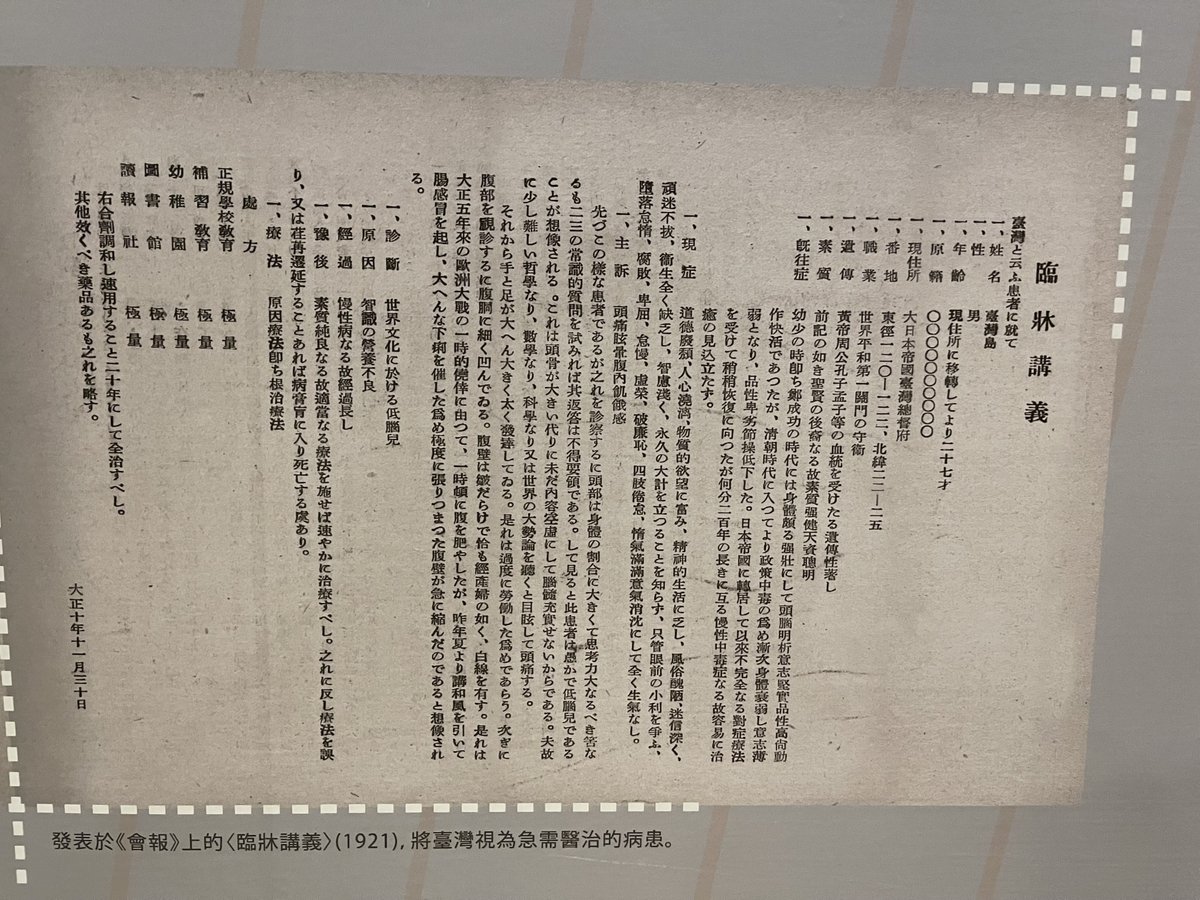
This document clearly shows how Japan viewed Taiwanese people at the time. Compared to the Japanese who were the first to achieve Westernization, they openly described Taiwan as a "patient" who had not modernized.
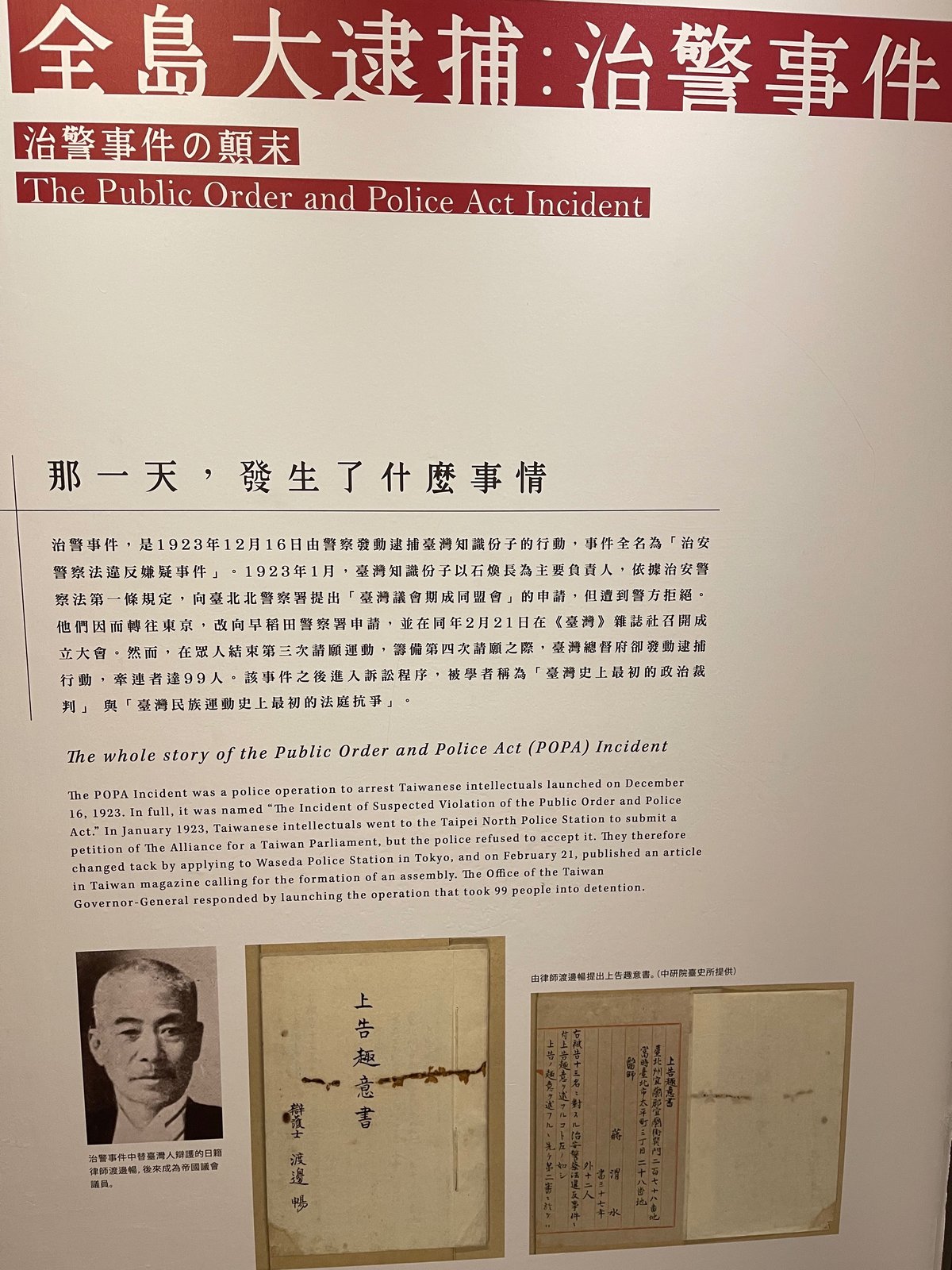
December 16, 1923 - “Incident of Suspected Violation of the Public Order and Police Act” where the police mass arrested New Cultural Movement activists. A petition for the establishment of a Taiwanese parliament by Taiwanese people was submitted to the Taipei North Police Station, but was rejected. The petition was then submitted to the Waseda Police Station in Japan, and also published in a Taiwanese magazine. In response to these actions, the Taiwan Governor-General's Office arrested 99 people involved.
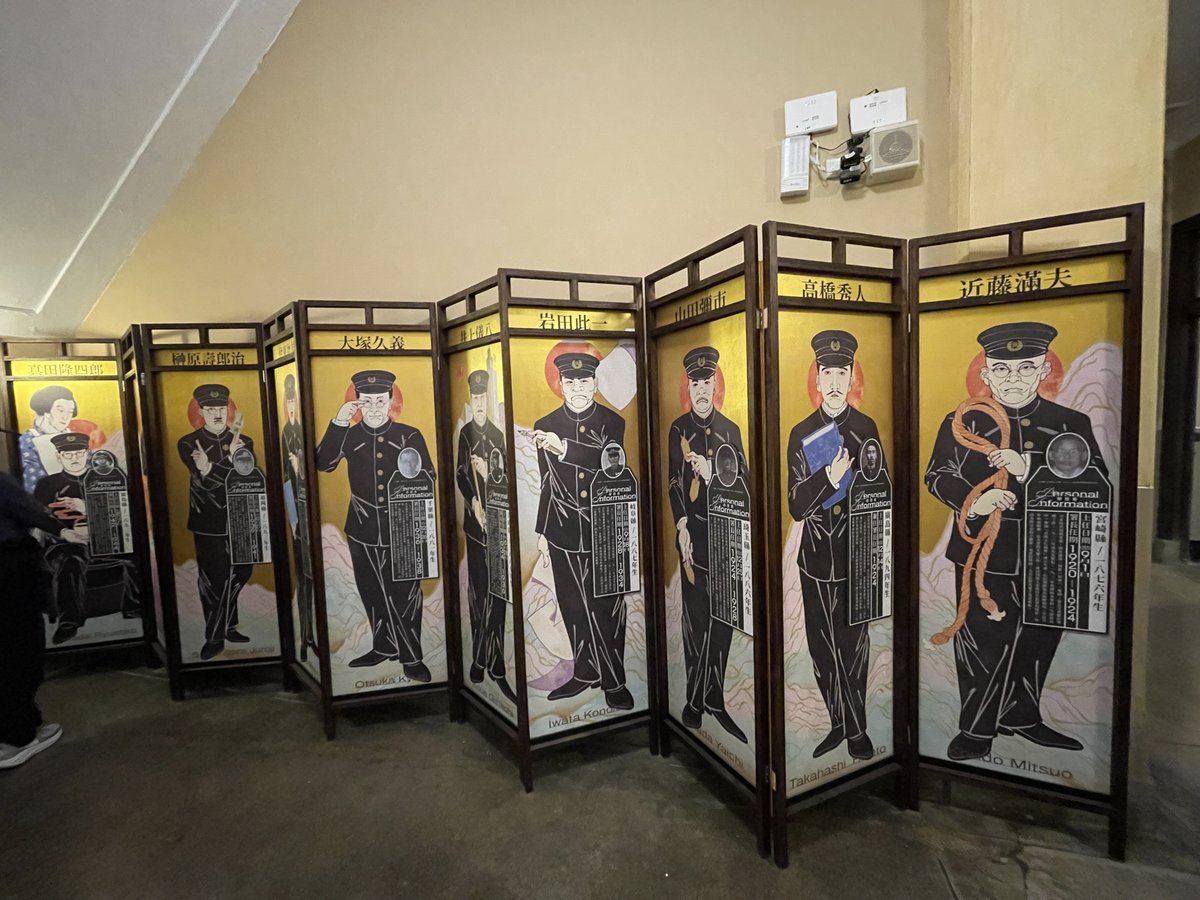
Japanese police officers at the time
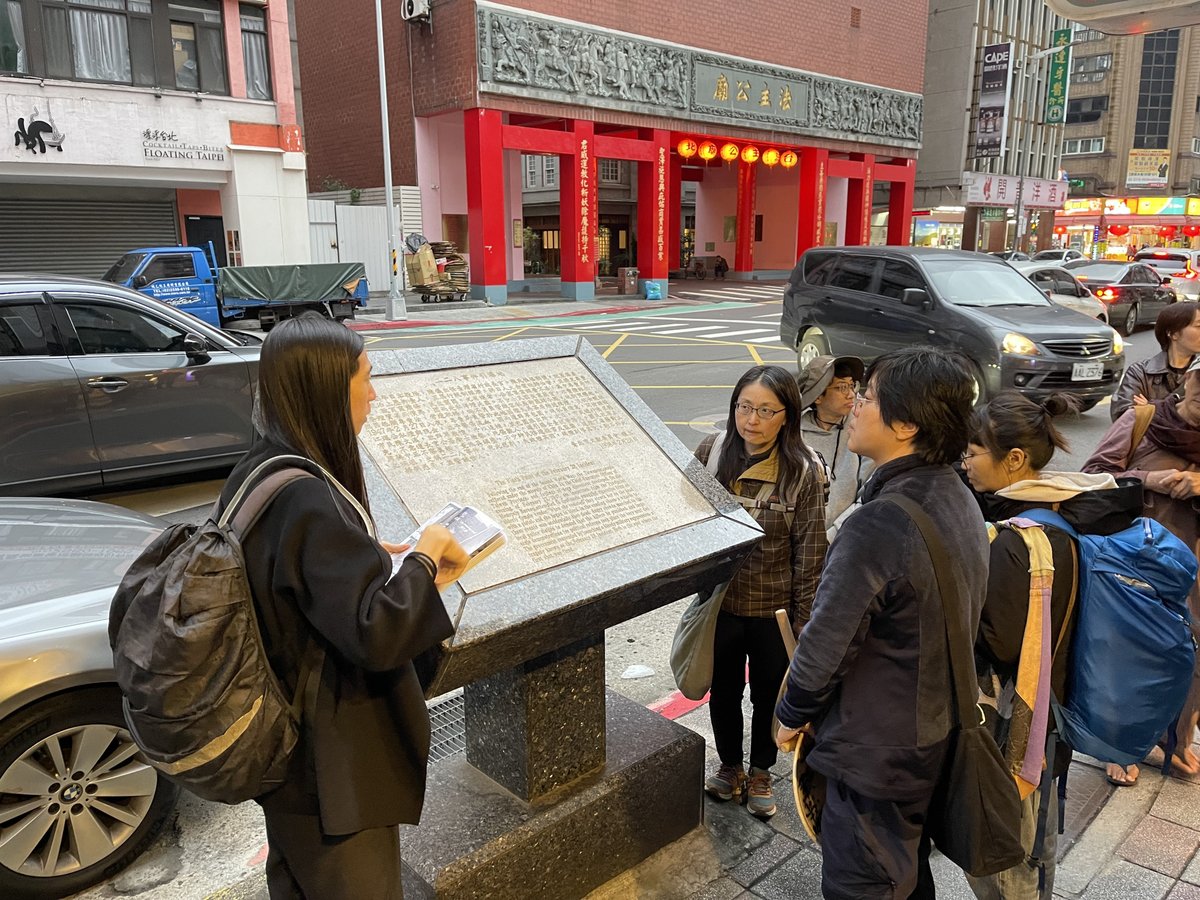
228 Memorial Plaque built at the site of where the 228 Incident started.
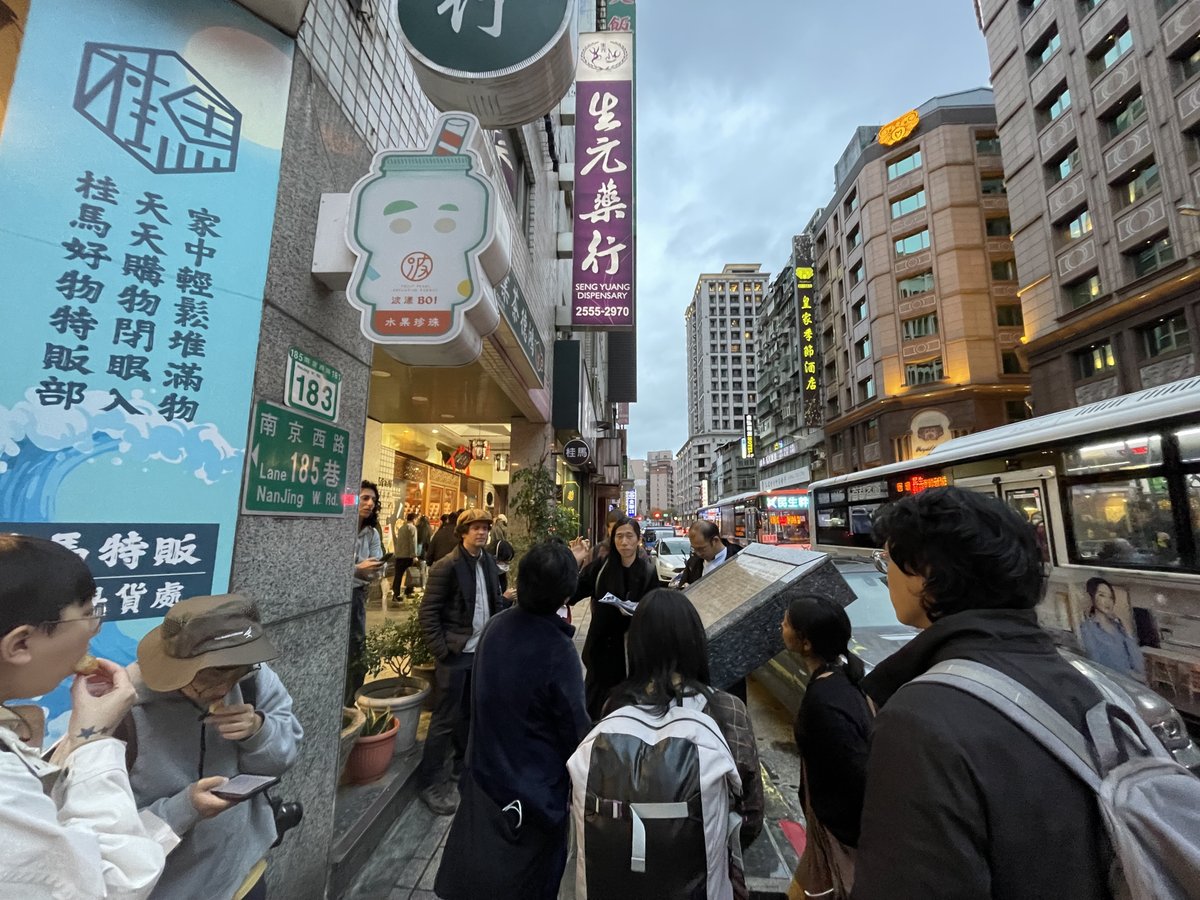
In 1947, the so-called black market was rampant among citizens struggling to make ends meet. Although tobacco was a government monopoly, some people made ends meet by selling tobacco imported through Tamsui Port on the black market. One woman among them was assaulted by a KMT inspector, who then opened fire on citizens who had gathered to protest, killing one. The next day, citizens who had long been dissatisfied with the KMT's rule rioted against the police and authorities. The government indiscriminately machine-gunned the protesters, sparking further widespread protests and oppression across Taiwan.
https://taiwan-shugakuryoko.jp/dictionary/3616
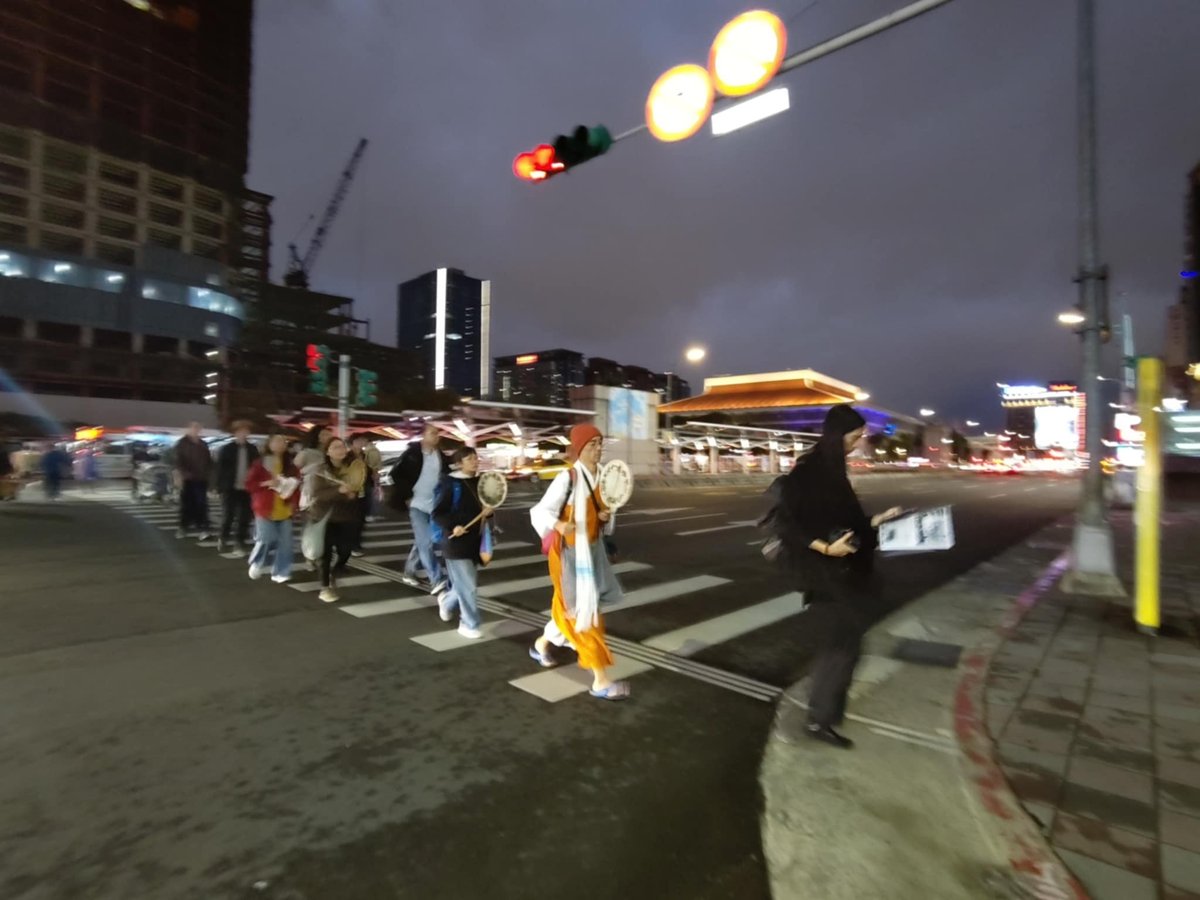
We followed in the footsteps of the citizens who protested on the day of the 228 Incident.

We ended the 228 Walking Tour at the former site of the United States Consulate in Taiwan (now the National Taxation Bureau of Taipei), where George Kerr famously observed the 228 Incident, and also where some Taiwanese people attempted to seek asylum in. Over a decade later, this site is also the site of the largest anti-US military protest in Taiwan’s history, which took place on May 24, 1957 after a US military officer shot and killed Taiwanese father Liu Ziran. The photos are of Taiwanese protestors storming the United States Consulate in Taiwan.
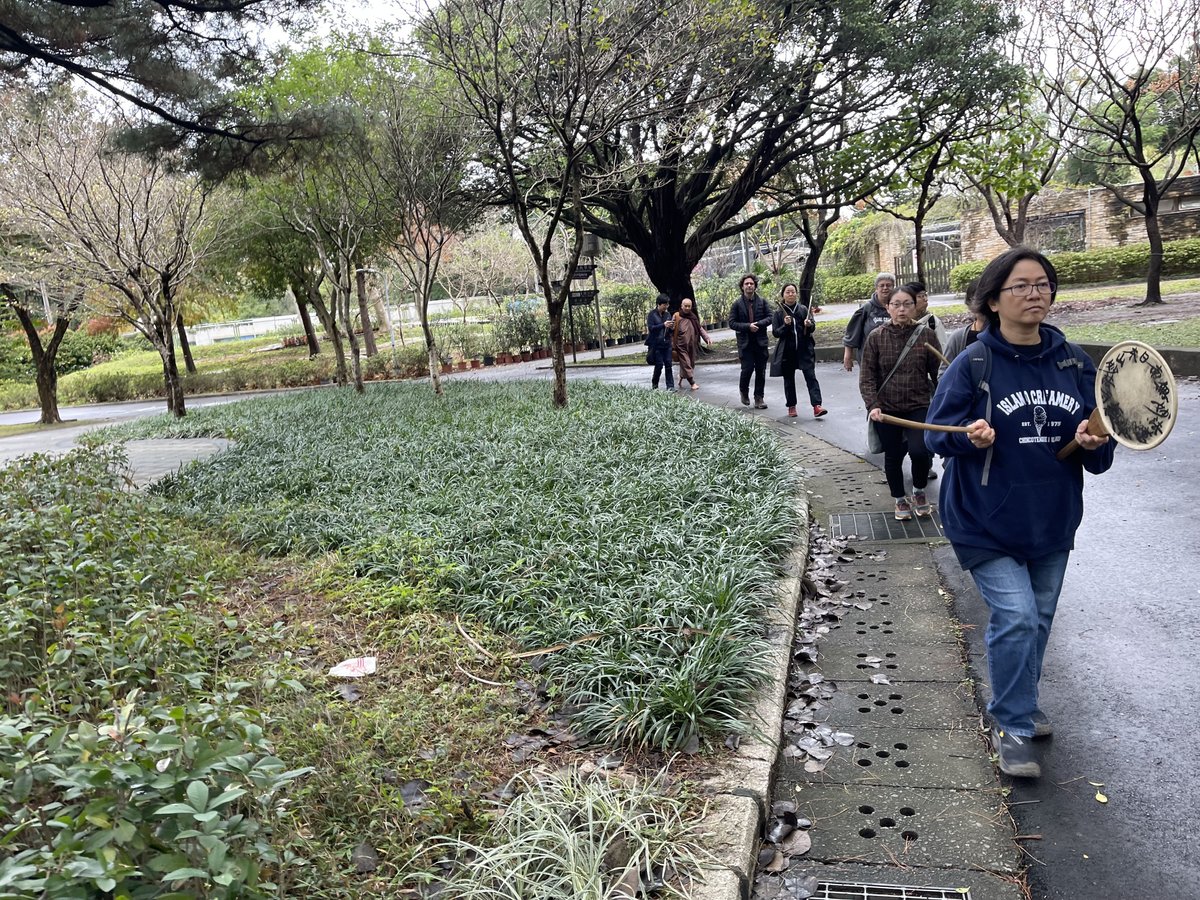
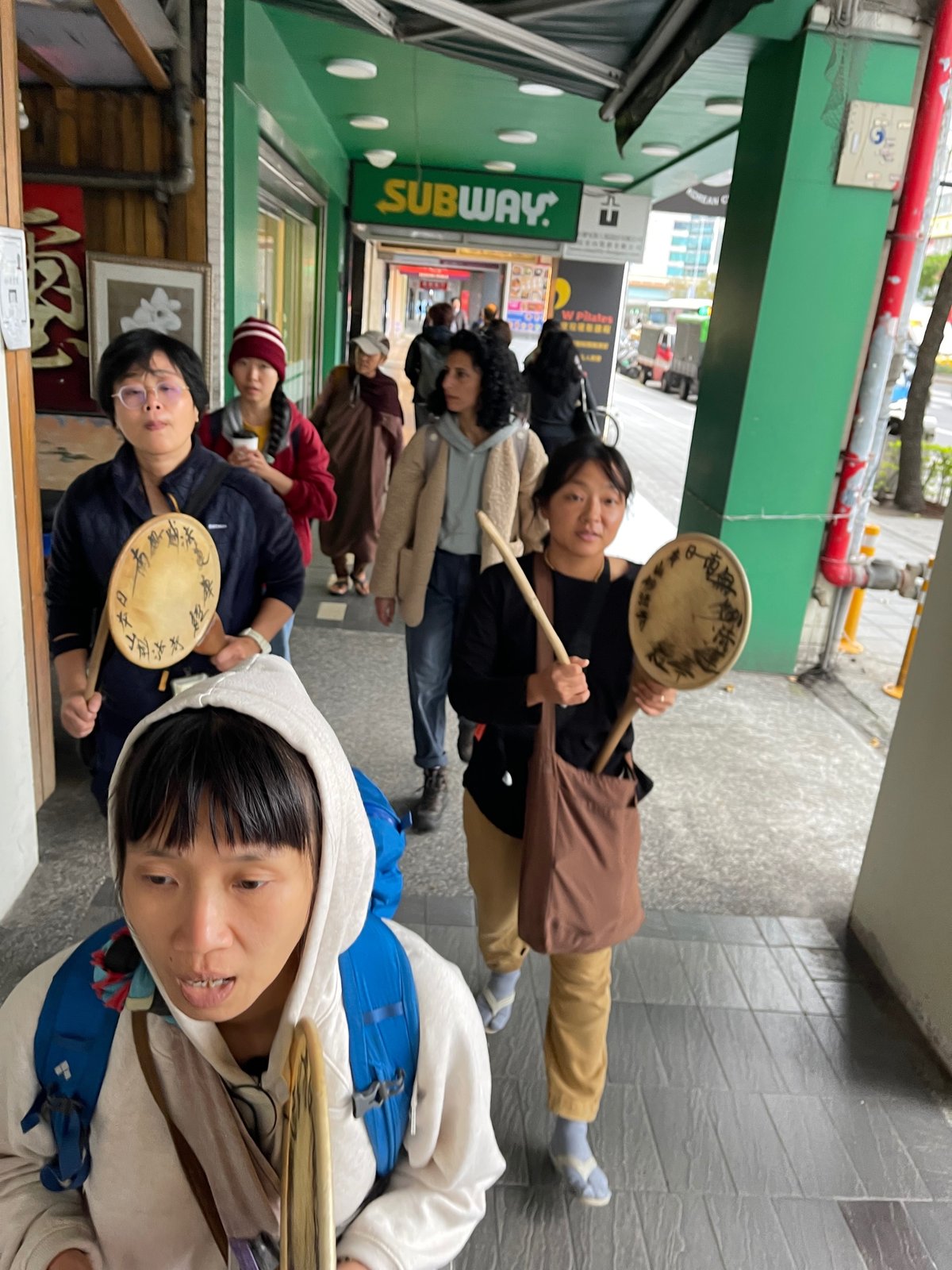
Four people walked the entire seven-day schedule. Every day, many participants who joined for only one or a few days joined us and walked together. First-time participants also enthusiastically beat the Uchiwa Daiko (hand drums) and chanted the Odaimoku.
It is not well known in Japan, but the divisions in Taiwanese society are deep and serious on many levels. There are many different positions and categories, such as Benshengren (Han Taiwanese people who lived in Taiwan before Taiwan was relinquished by Japan at the end of World War II, Waishengren (Mainland Chinese people who immigrated to Taiwan after World War II, especially during the KMT retreat to Taiwan in 1949), Indigenous peoples, new immigrants, deep blue, deep green, pro-US, pro-China, and so on, and it is said that labeling makes reconciliation difficult.
This time, participants came from a wide range of positions and beliefs, but I believe that the march was centered around prayer and reaffirmed the spirit of the Lotus Sutra, which is to respect each other.
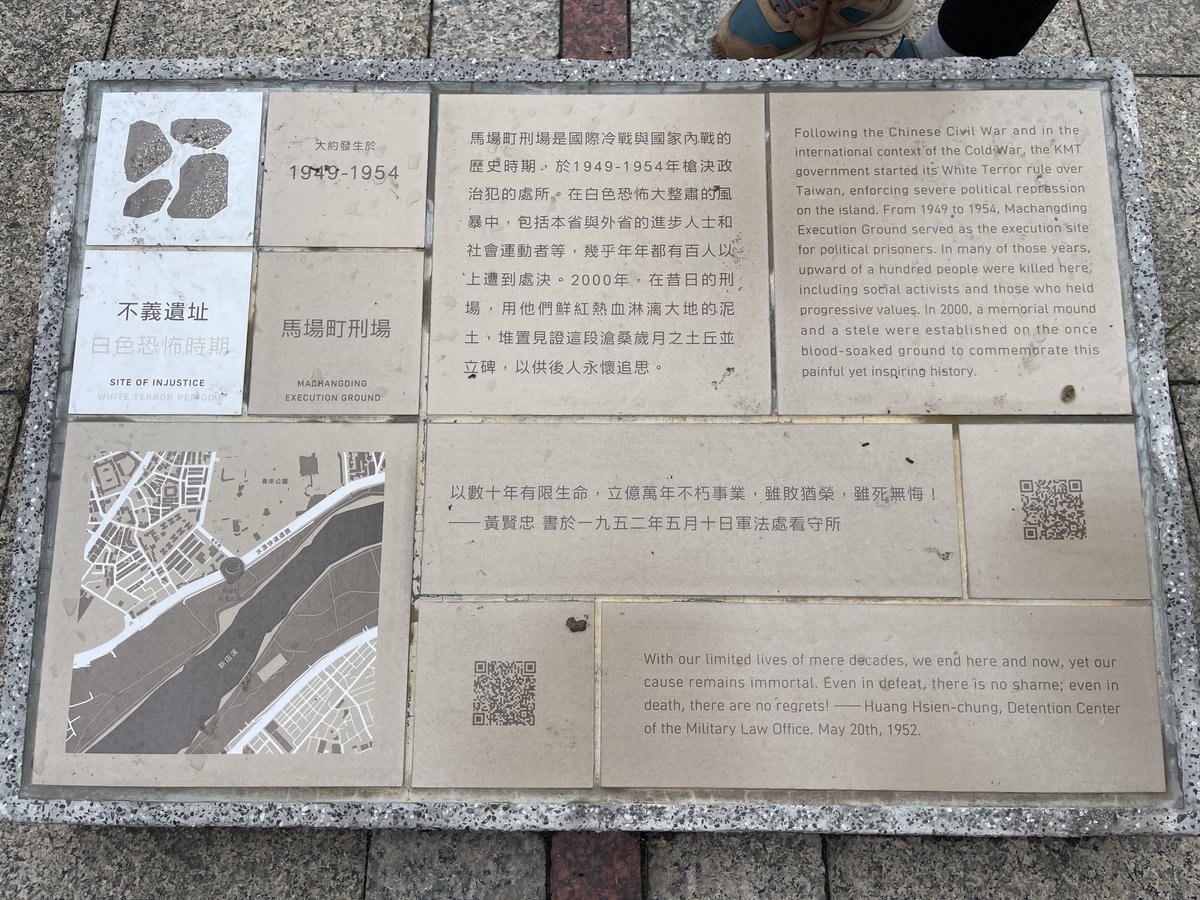
This was one of the execution sites for the 228 Incident. People were shot along the Xindian River and their bodies dumped into the river.
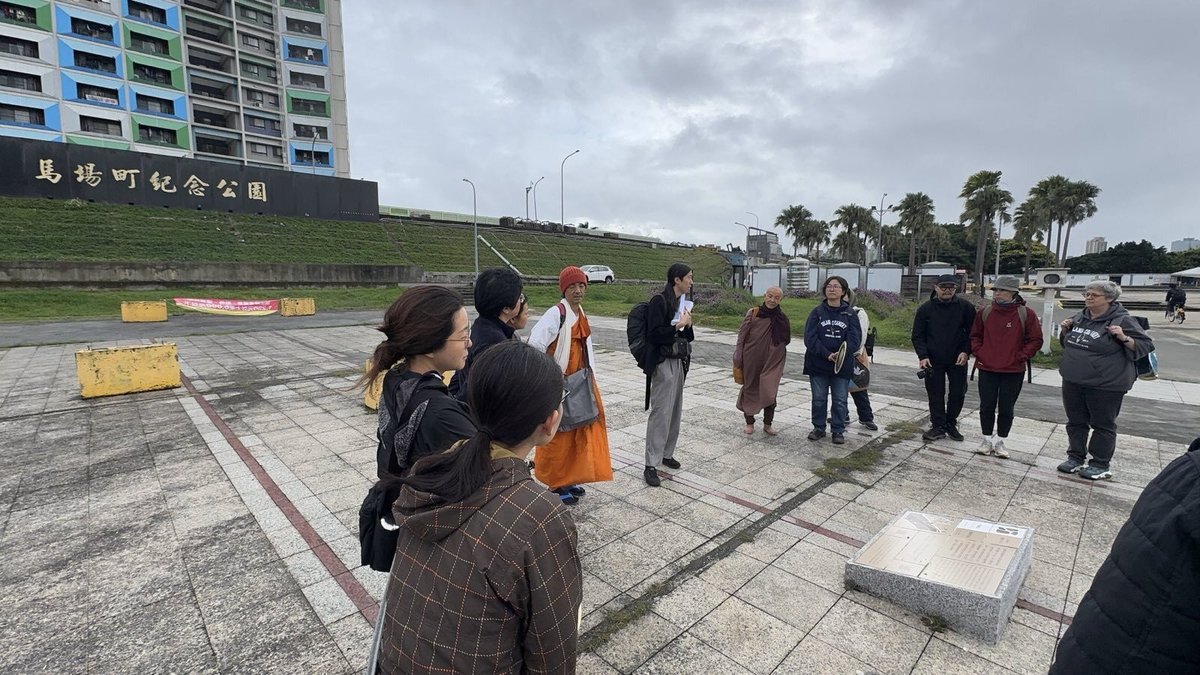
Machangding Execution Grounds Memorial Park, where firing squads executed numerous Taiwanese people. 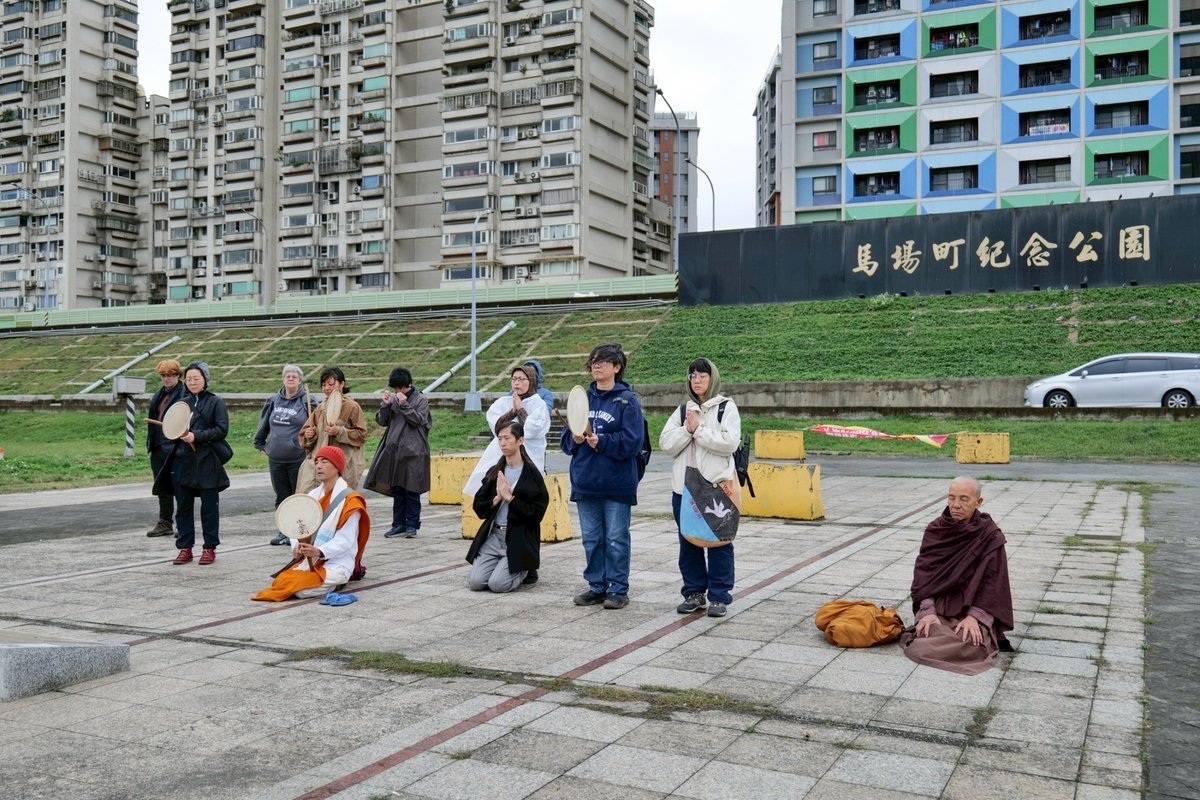
A prayer of remembrance for all.
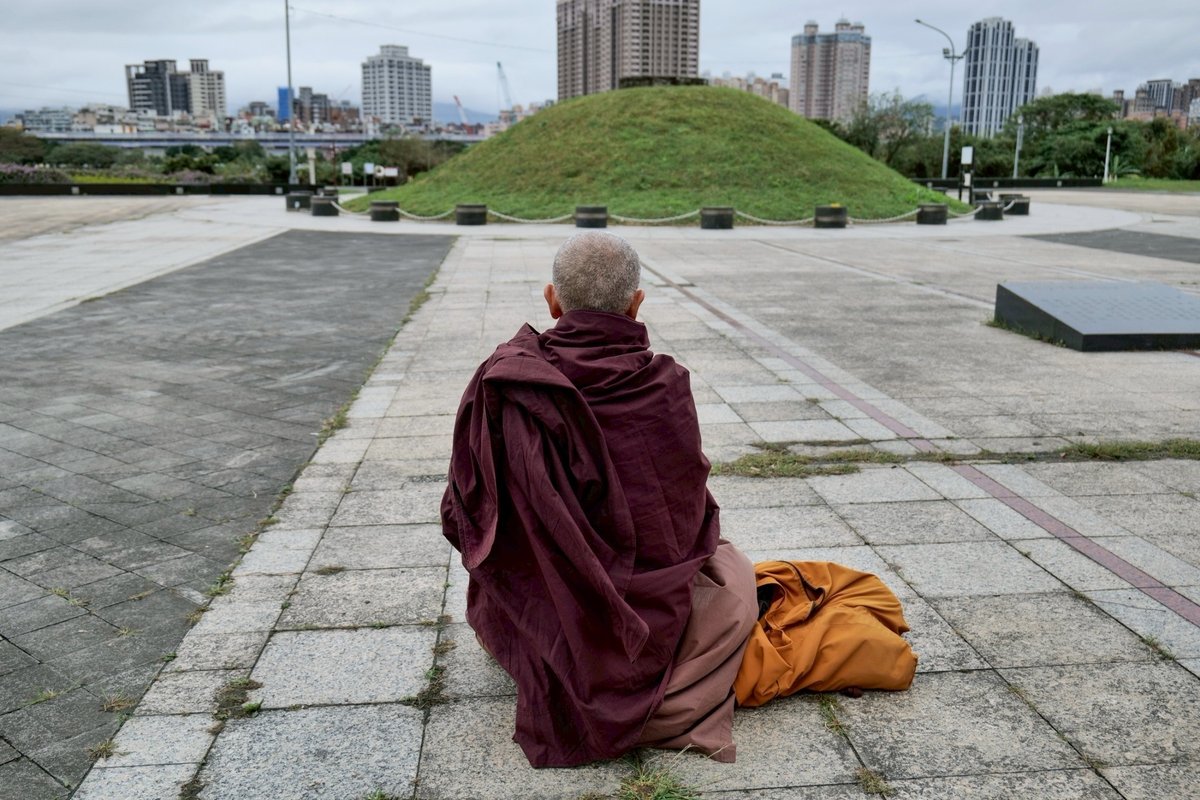
This time, Buddhist Nun Minchen (明證法師) participated in the entire peace walk. She is much older than us, so I think it was quite difficult for her.
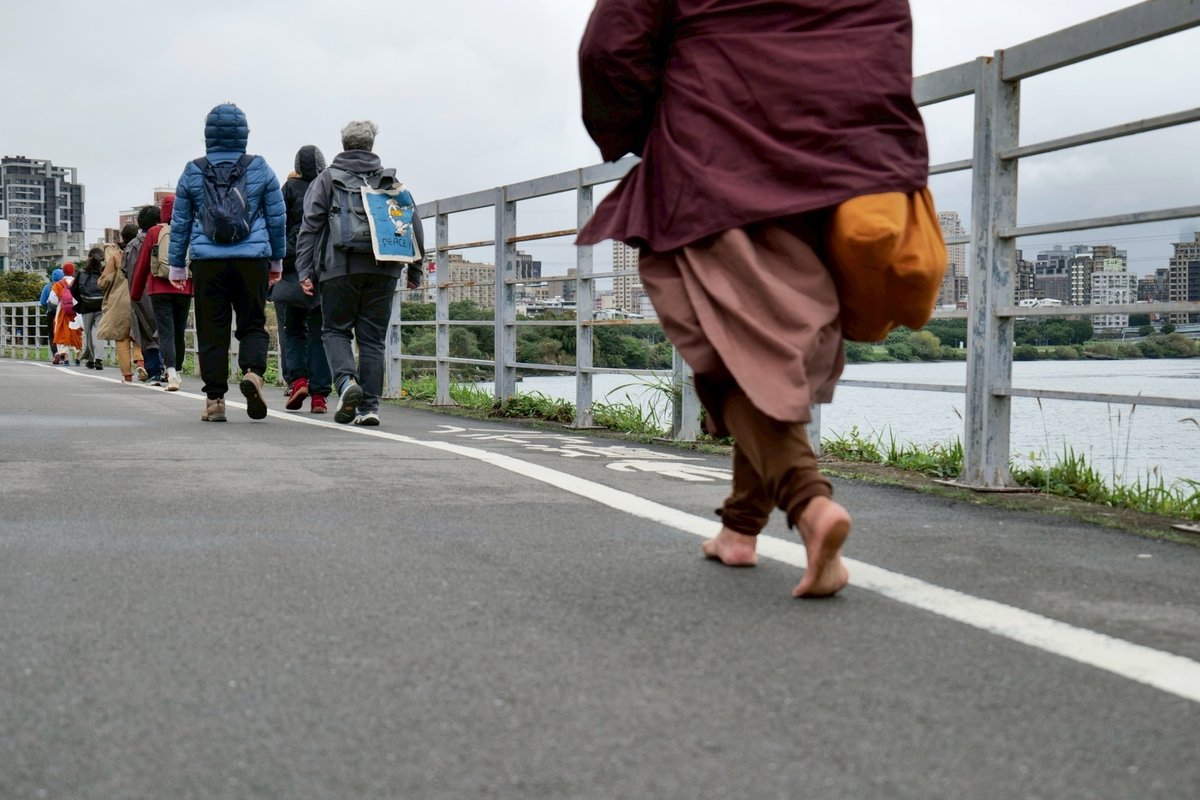
And barefoot!
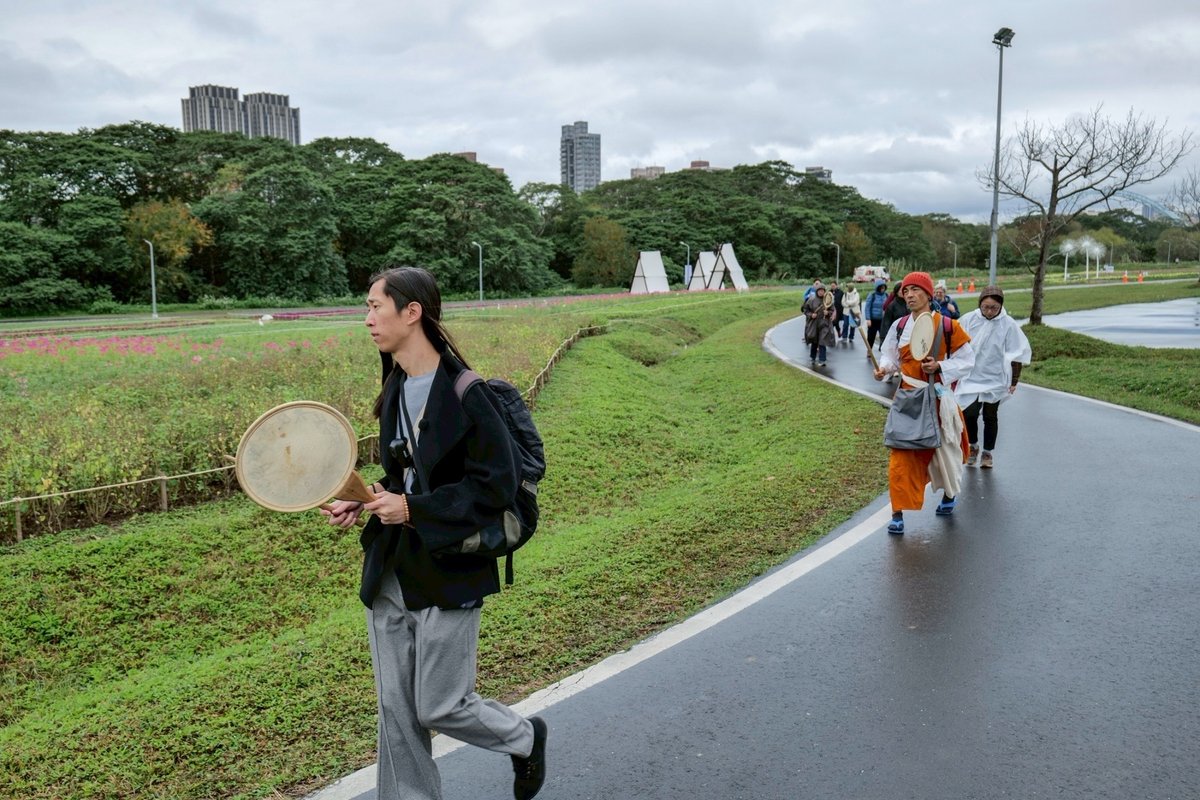
Yo-Ling (main organizer of this peace walk)
A participant in the Taiwanese LGBTQ+ movement. Recently, They have been working to improve relations and promote mutual understanding among Okinawa, Taiwan, and China, based on Buddhist principles.
This is a fairly rough explanation of Taiwanese attitudes toward China. (This is based on my own experience, so I'm sure there are some inaccuracies. If you notice anything strange, please let me know.)
I think roughly 80-90% of Taiwanese people do not want to be governed undemocratically by the PRC government. Furthermore, with China's military exercises against Taiwan on the rise recently, they believe that military deterrence is essential. (The same is true of government policy.) Therefore, they place importance on defense cooperation and collaboration with the Japanese and US governments.
And, while probably less than 10%, there are also those who accept unification with China. As far as I know, this group is typically traditionally left-wing or self-identifies as Chinese. I have the impression that many are anti-imperialist and anti-American. They are also not critical of China's handling of Hong Kong, etc. In this climate, Taiwanese society finds it difficult to accept ideas like disarmament, non-violence, and peaceful dialogue with China.
I believe the biggest reason for this is a lack of trust in China.
First, the PRC government has stated that it will not officially engage in dialogue with the current Republic of China (Taiwan) government (i.e. the Democratic Progressive Party), which does not recognize one China.
Second, China's military exercises against Taiwan are becoming increasingly intense.
Also, non-military methods of instigating internal unrest in Taiwanese society are being used. For example, fake news (cognitive warfare) and the bribing of social influencers, celebrities, and active military personnel (espionage) are all shocking Taiwanese society.
The list goes on and on, but conversely, Taiwan is also engaged in internal operations against China, but these are asymmetric in both quantity and quality.
Recent news reports have revealed that in the 10 years since the DPP came to power, 80% of Taiwanese have had no experience of interaction with mainland China. https://japan.storm.mg/articles/1102405#wholePage
As mutual exchanges decrease and criticism grows, distrust and fear grow, leading to a vicious cycle of dependence on deterrence.
As distrust grows, people feel a sense of crisis about solutions that rely solely on military forces.
I believe many of my comrades who share this sense of crisis participated in this pilgrimage.
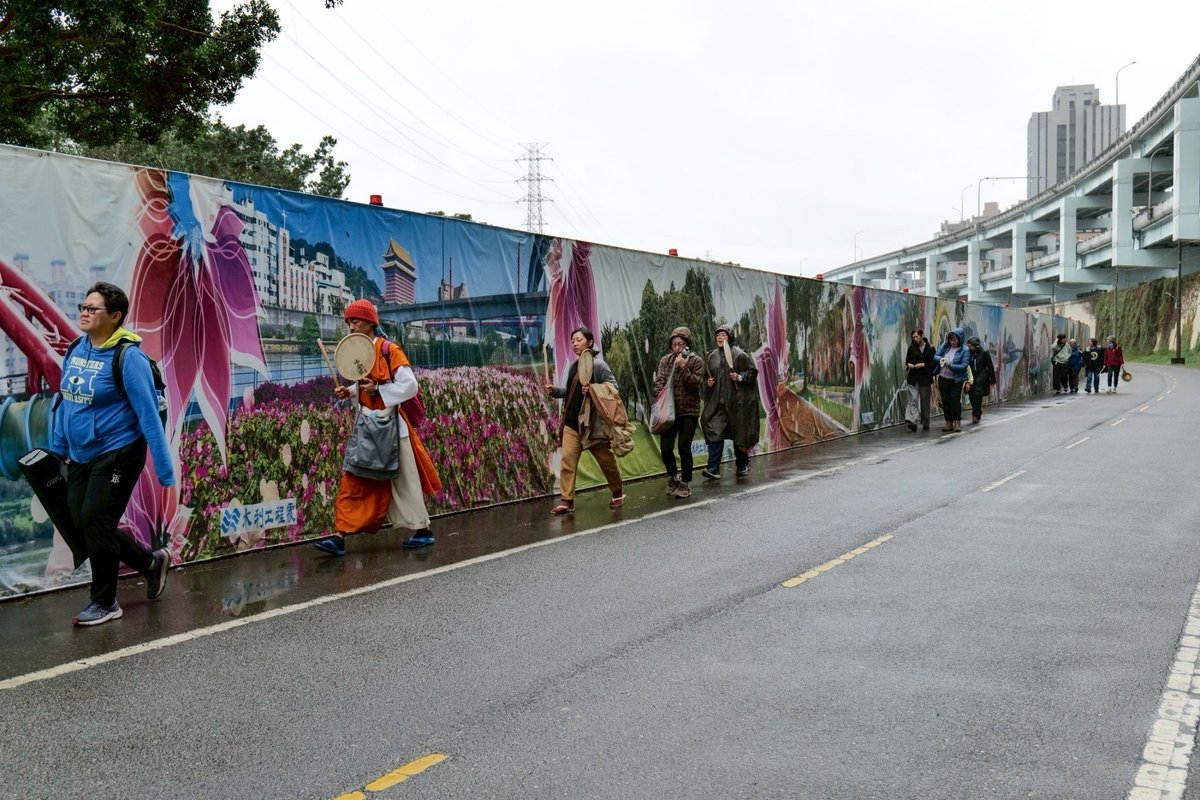
Walk!
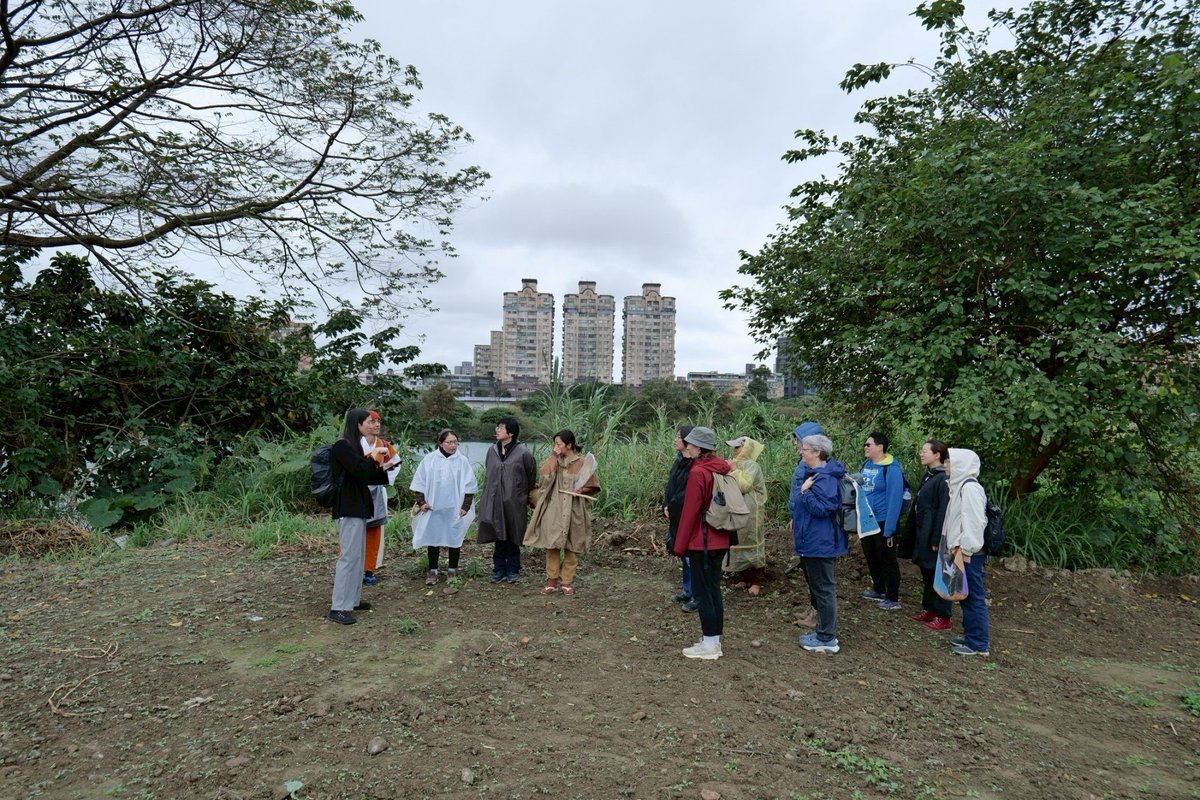
This was also an execution site along the Xindian River. The bodies here were used as cadavers for medical students to practice dissections on. Yo-Ling said that this was a case of desecration of the dead, similar to the issue in southern Okinawa Prefecture where soil mixed with the remains of war dead was used for U.S. military bases.
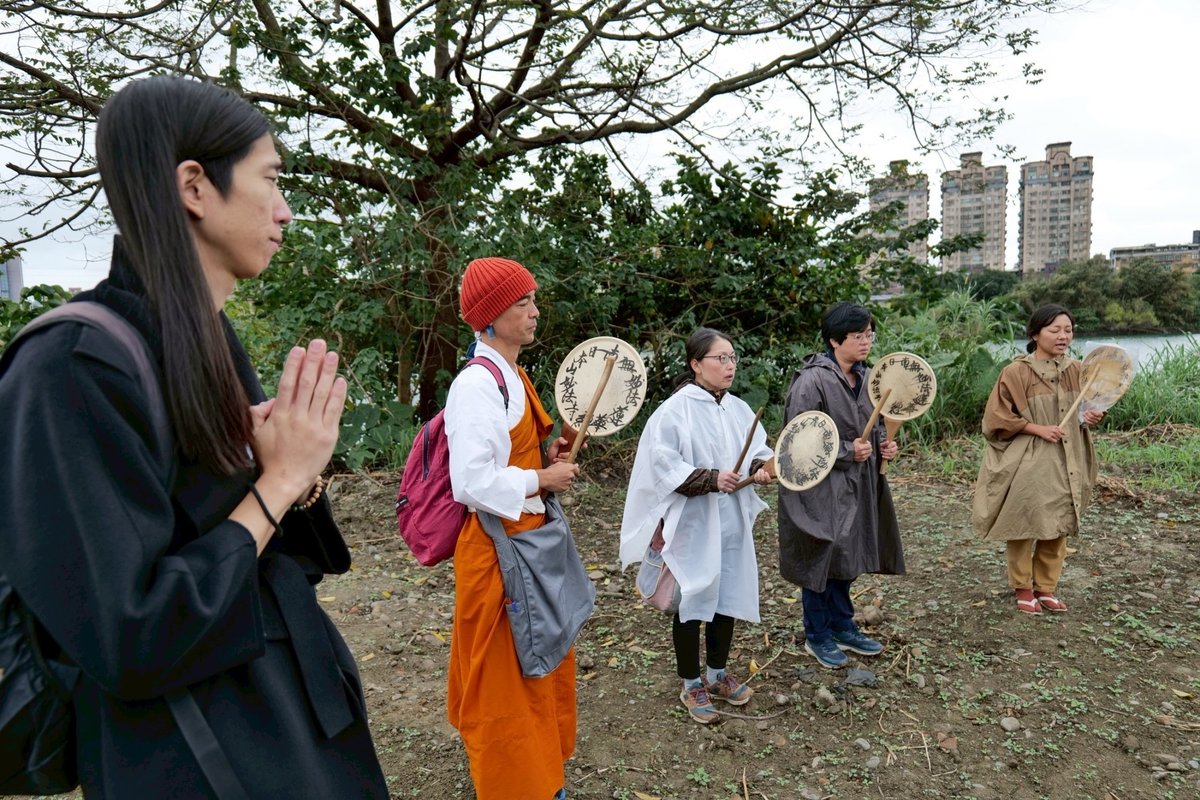
Prayer at the place of execution
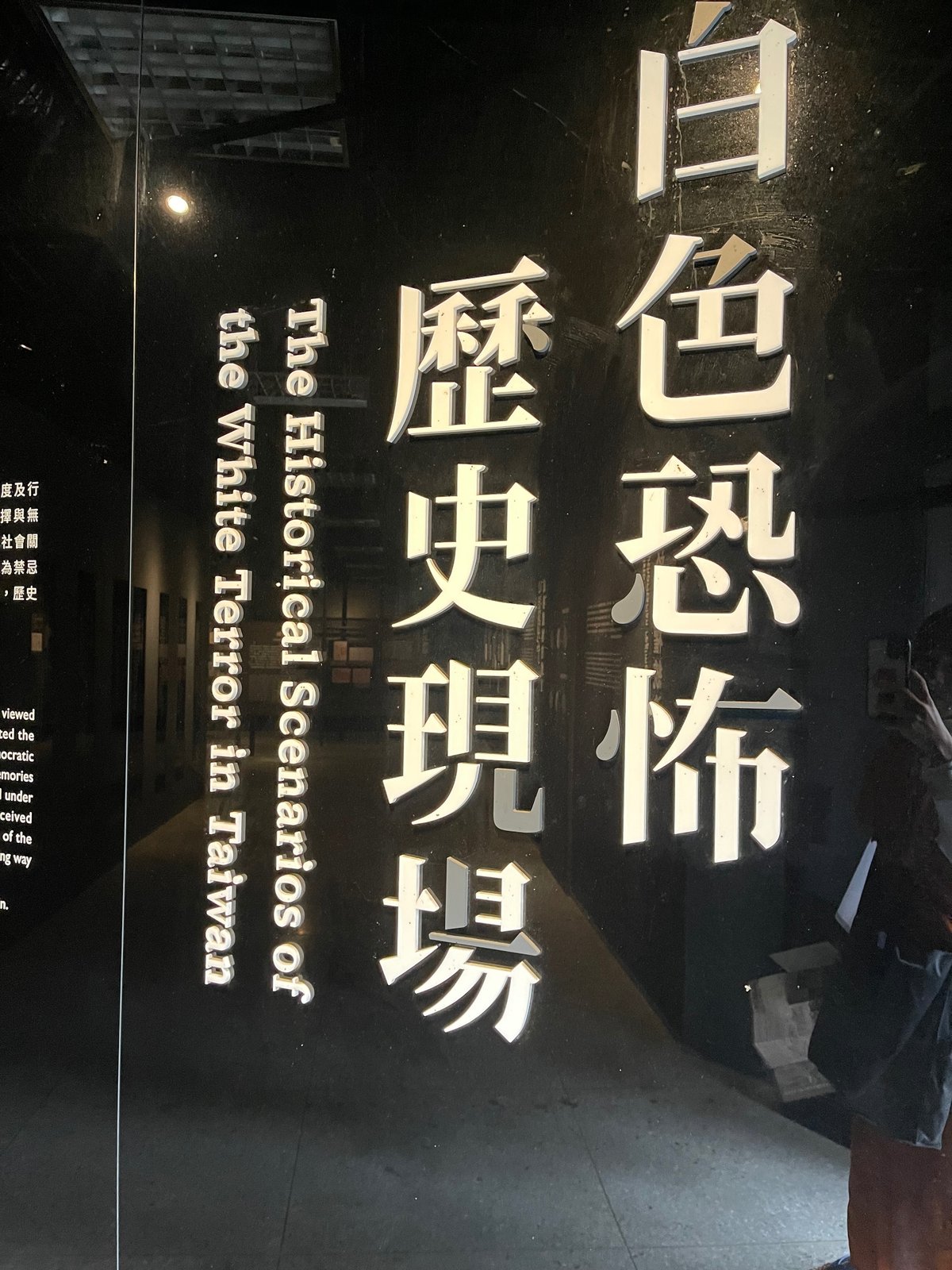
The 228 Incident was a sudden incident, and the victims were killed indiscriminately.
The White Terror refers to the period of martial law that followed(1949-1987). Therefore, the victims of the White Terror were those targeted by the authorities. (Of course, many of them were falsely accused.)
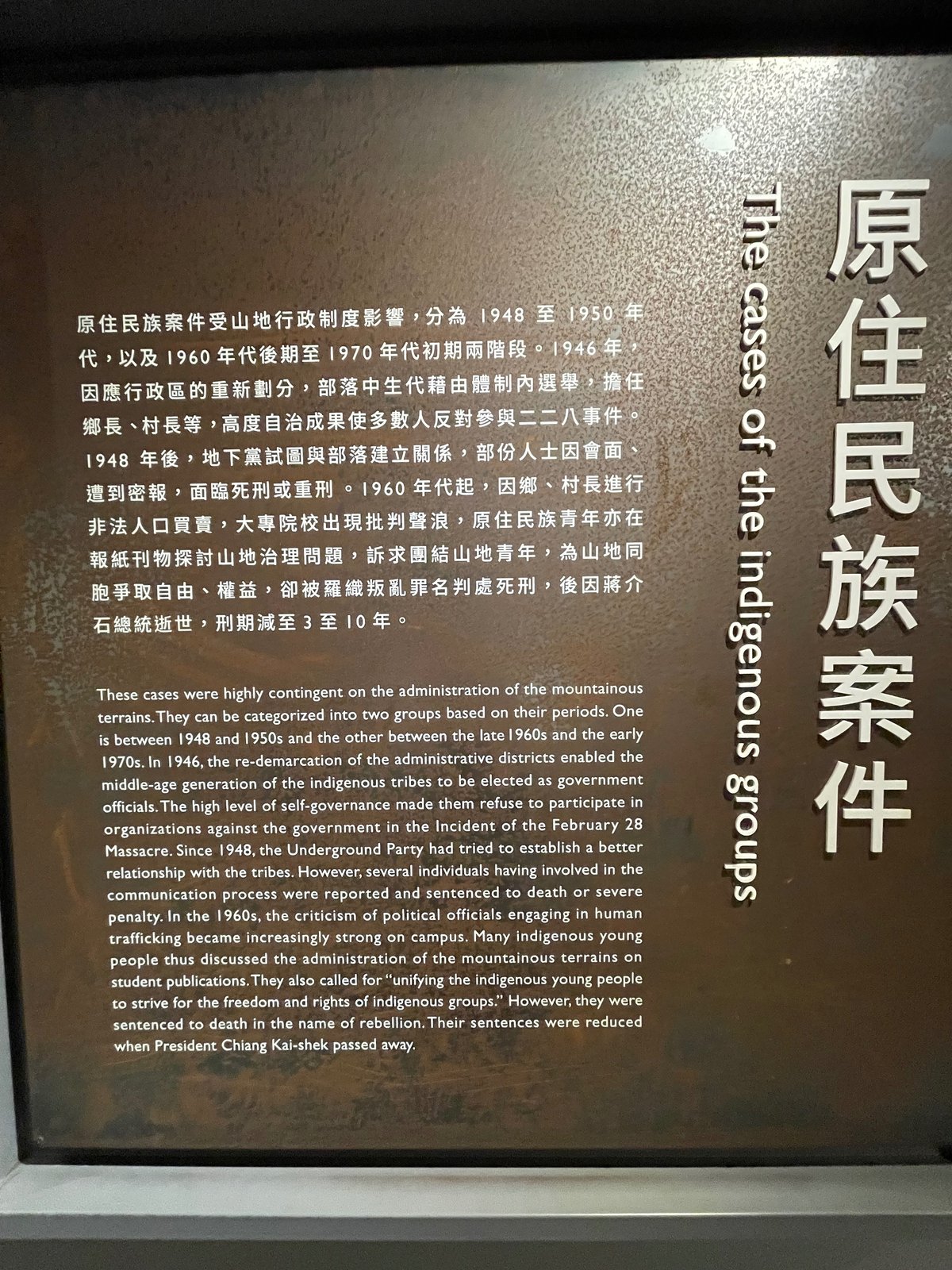
There were also indigenous people who became victims during the White Terror.
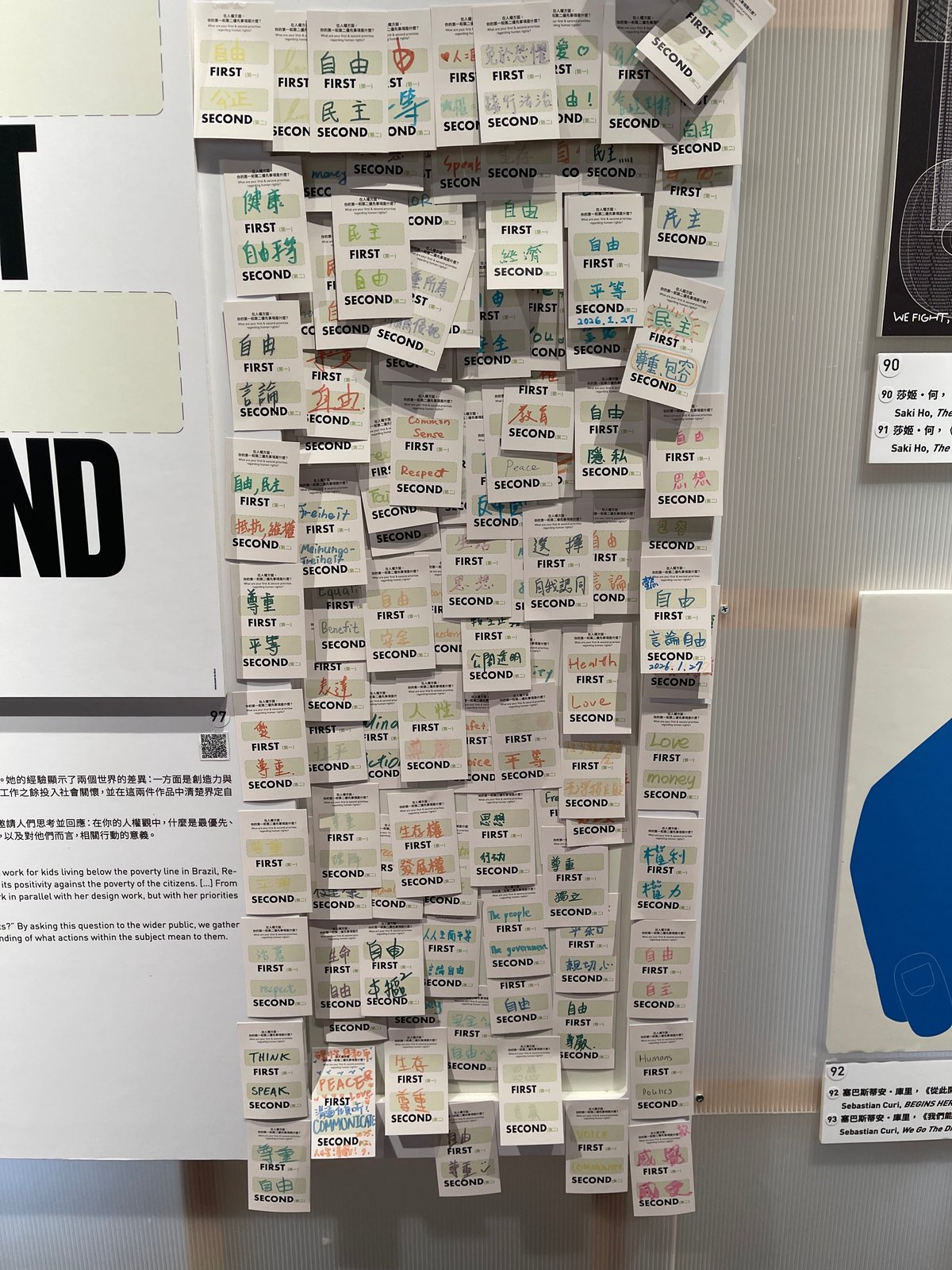
The most important thing and the second most important thing are the words democracy and freedom.
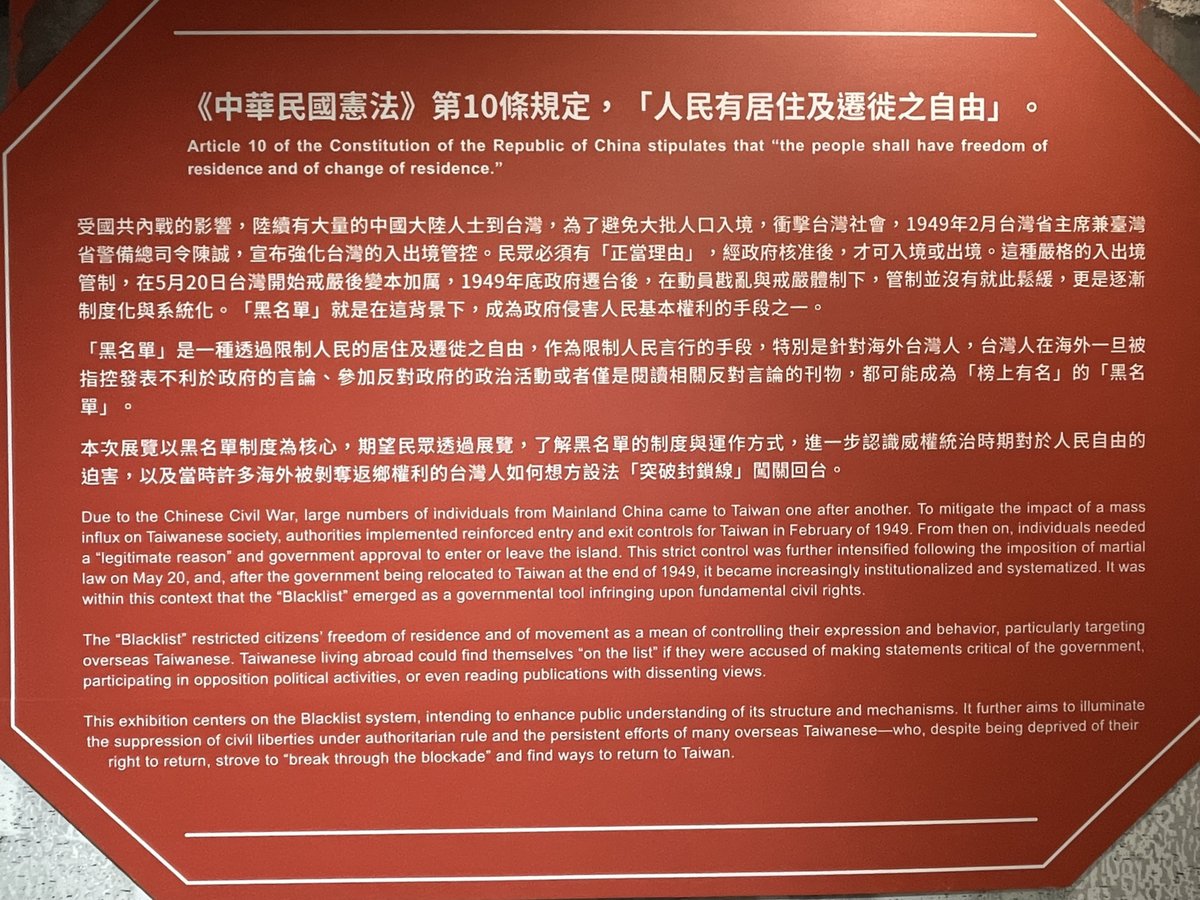
Article 10 of the Constitution of the Republic of China - Freedom of Residence and Freedom of Movement
During the White Terror, this freedom was restricted.
For example, people who came to Taiwan from the mainland during the Chinese Civil War were unable to return to the mainland for a long time.
Furthermore, Taiwanese living overseas who were critical of the KMT government or who called for independence from the Republic of China were restricted from entering Taiwan.
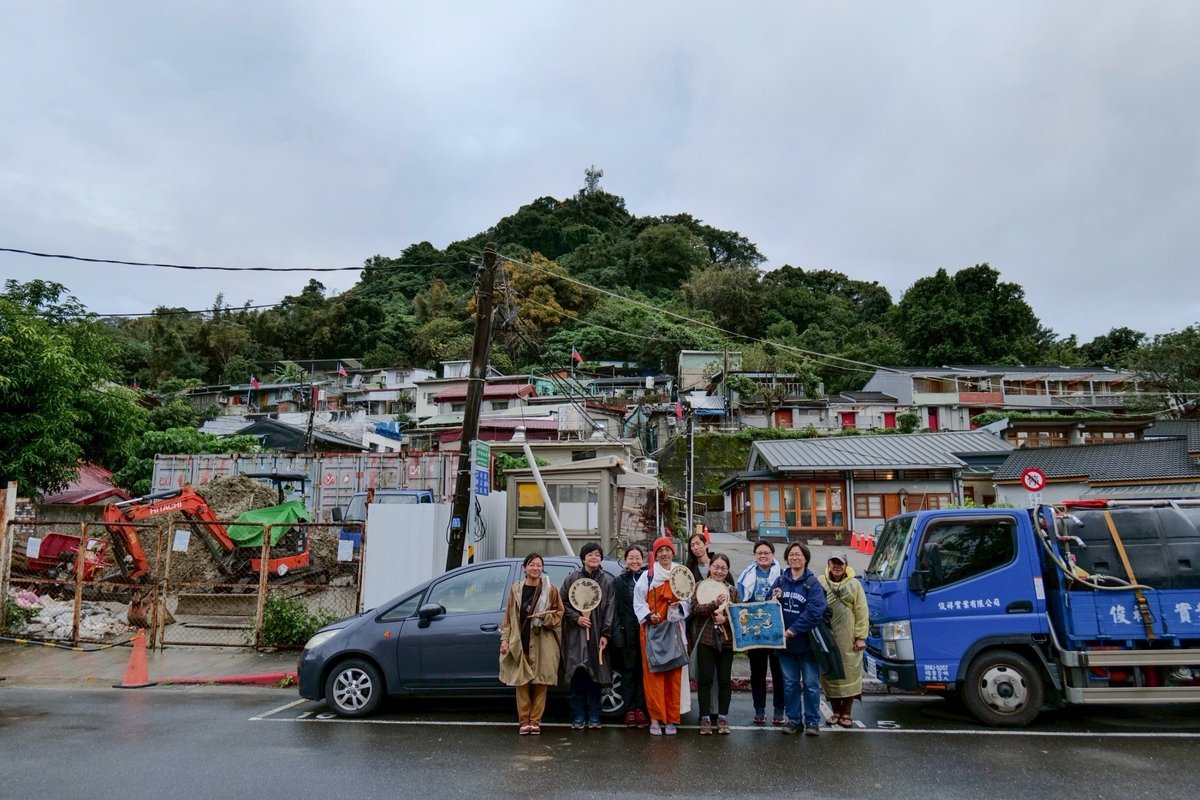
We visited Huanmin Village at the base of Toad Hill, where the ROC Airforce has established a radar and airforce command center. We interacted with a local village resident about her views of this village’s history and present situation hosting a military base.
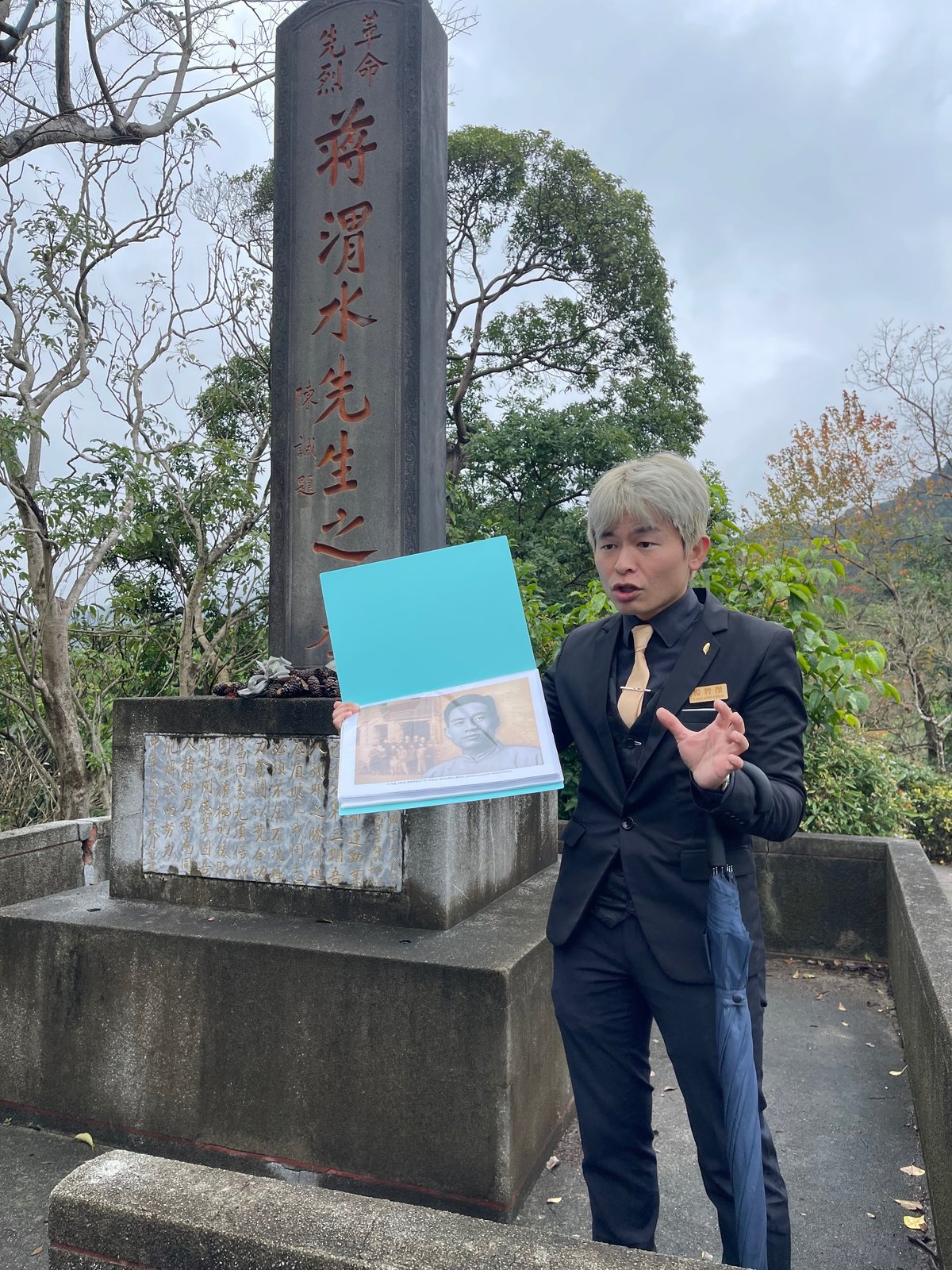
Tomb of Chiang Wei-shui (1890-1931) (his remains are in his hometown of Yilan).
Chiang became a social activist during the Japanese colonial period. He founded the Taiwan Cultural Association and the Taiwan People's Party. He was arrested and imprisoned by the Governor-General's Office during his campaign to establish a national parliament.
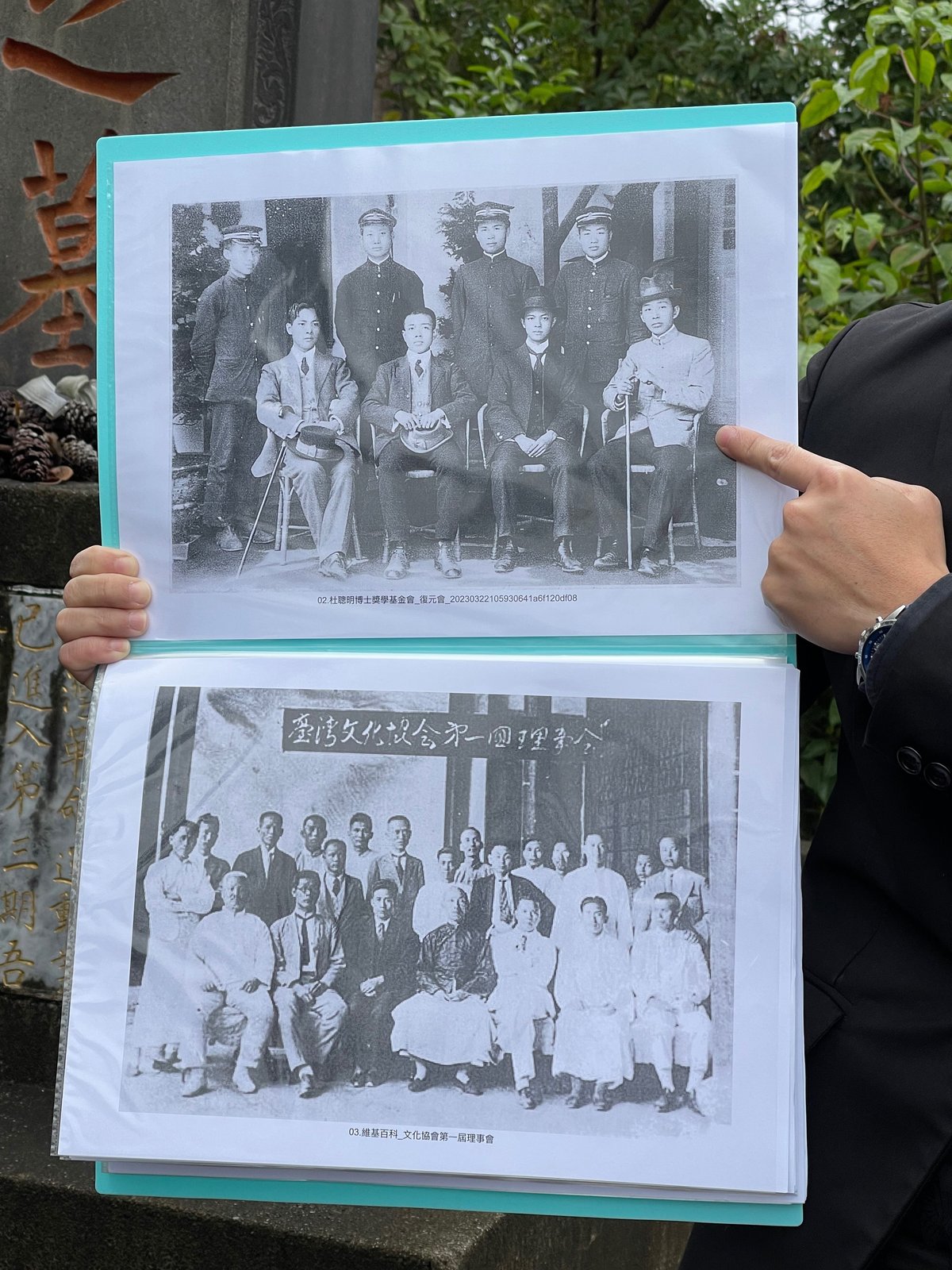
A photo of members of the Taiwan Cultural Association, which became the foundation of the Taiwanese civil rights movement.
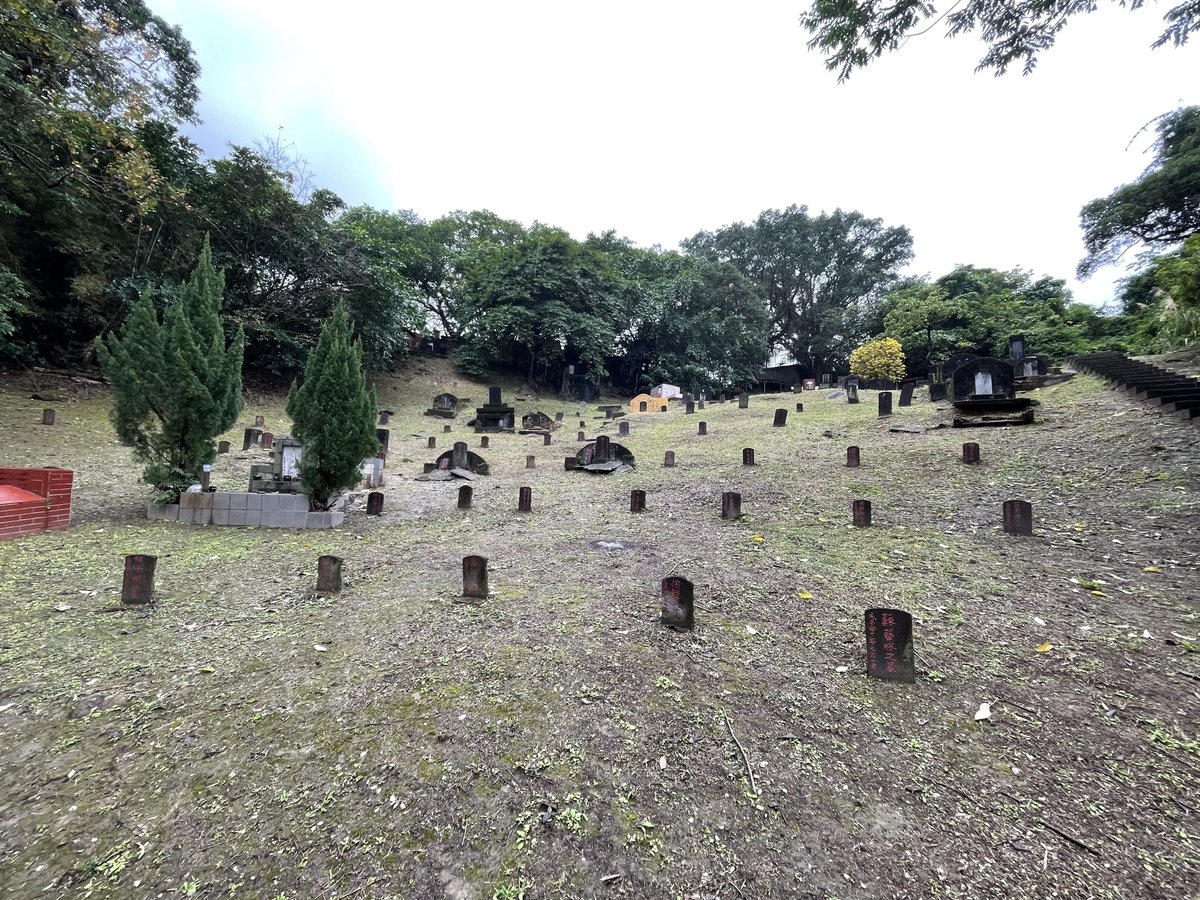
White Terror Victims Cemetery
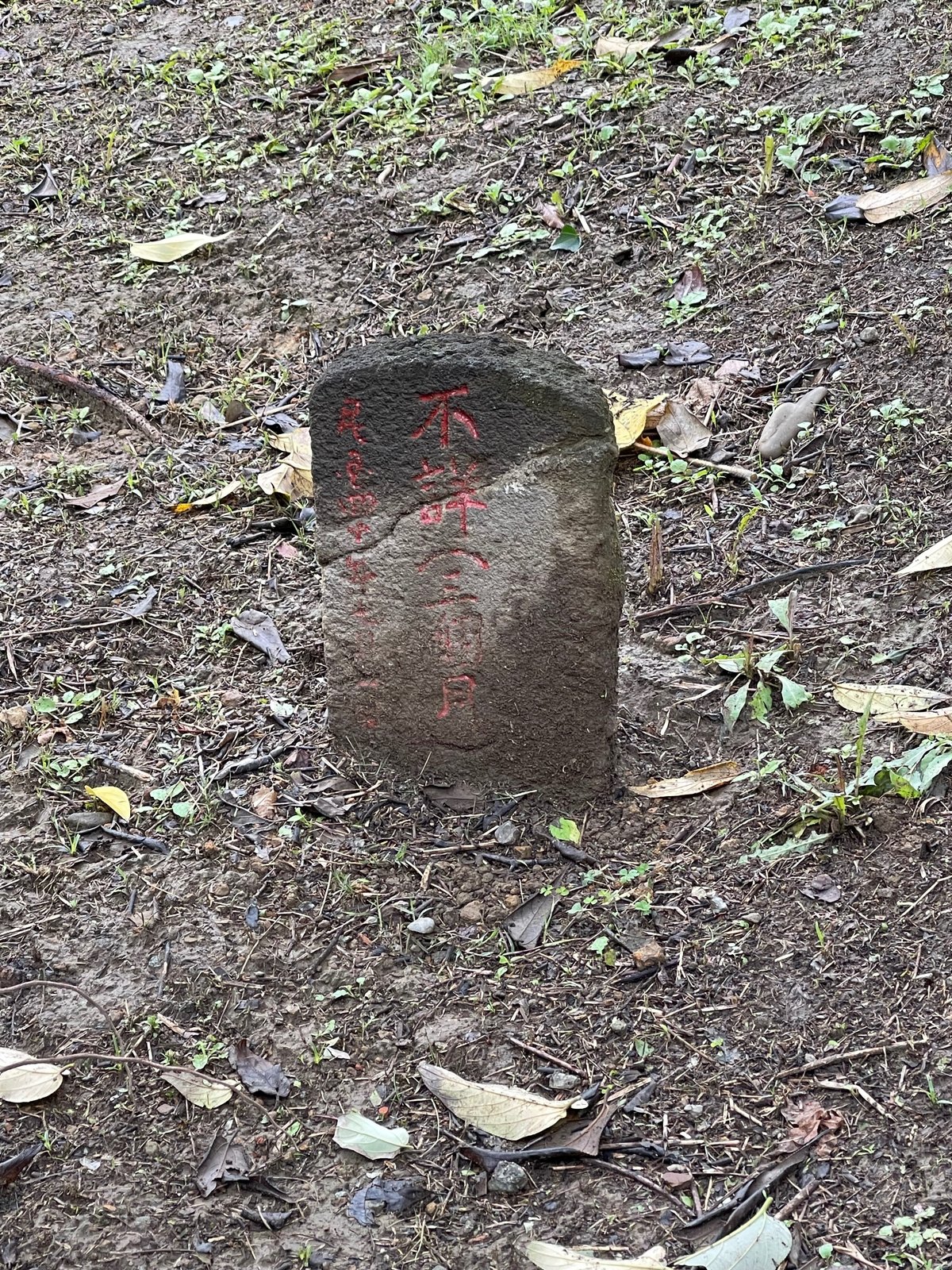
Grave of unknown name
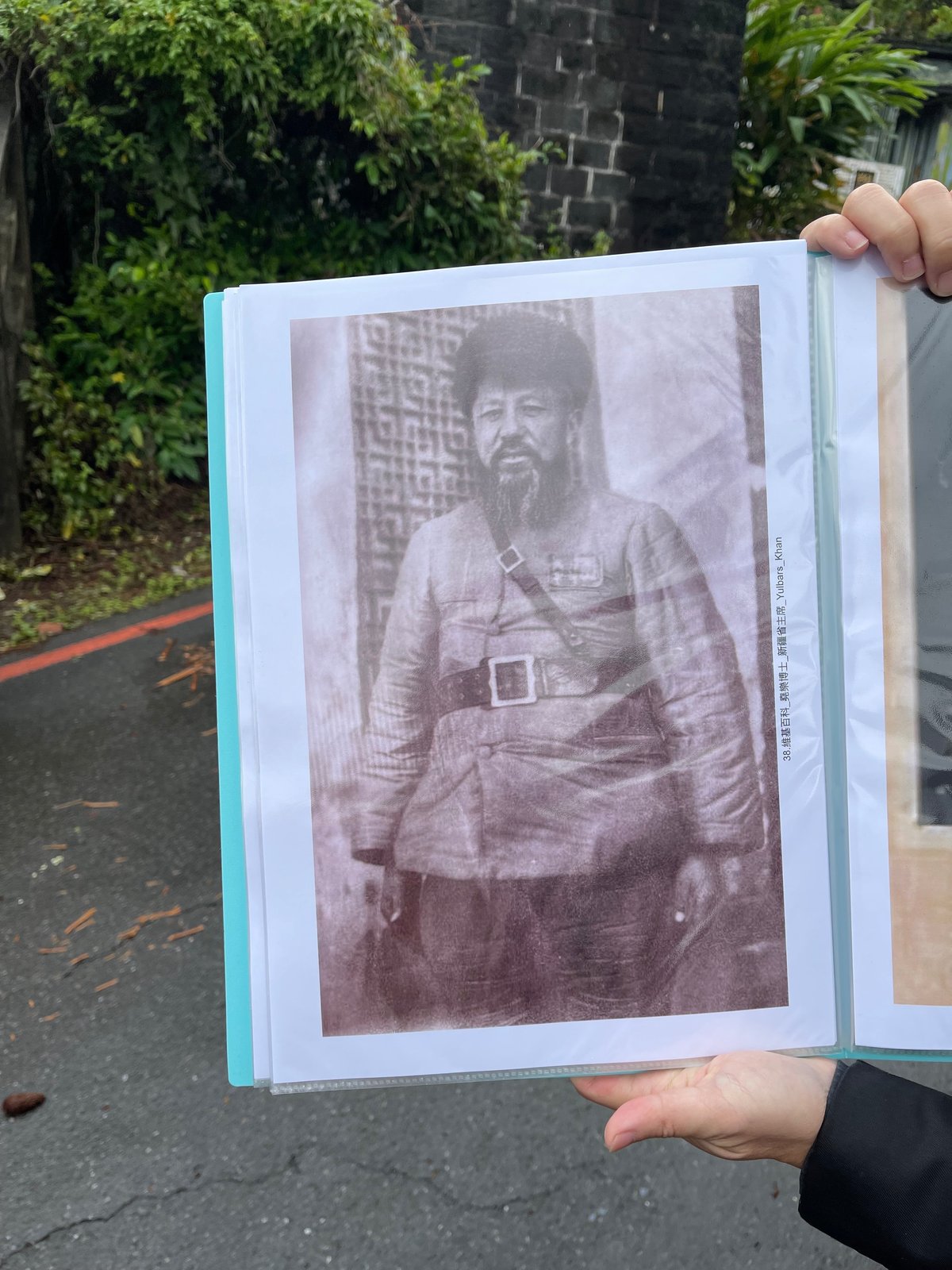
A Uighur soldier who came to Taiwan with the KMT army, but was never able to return home.
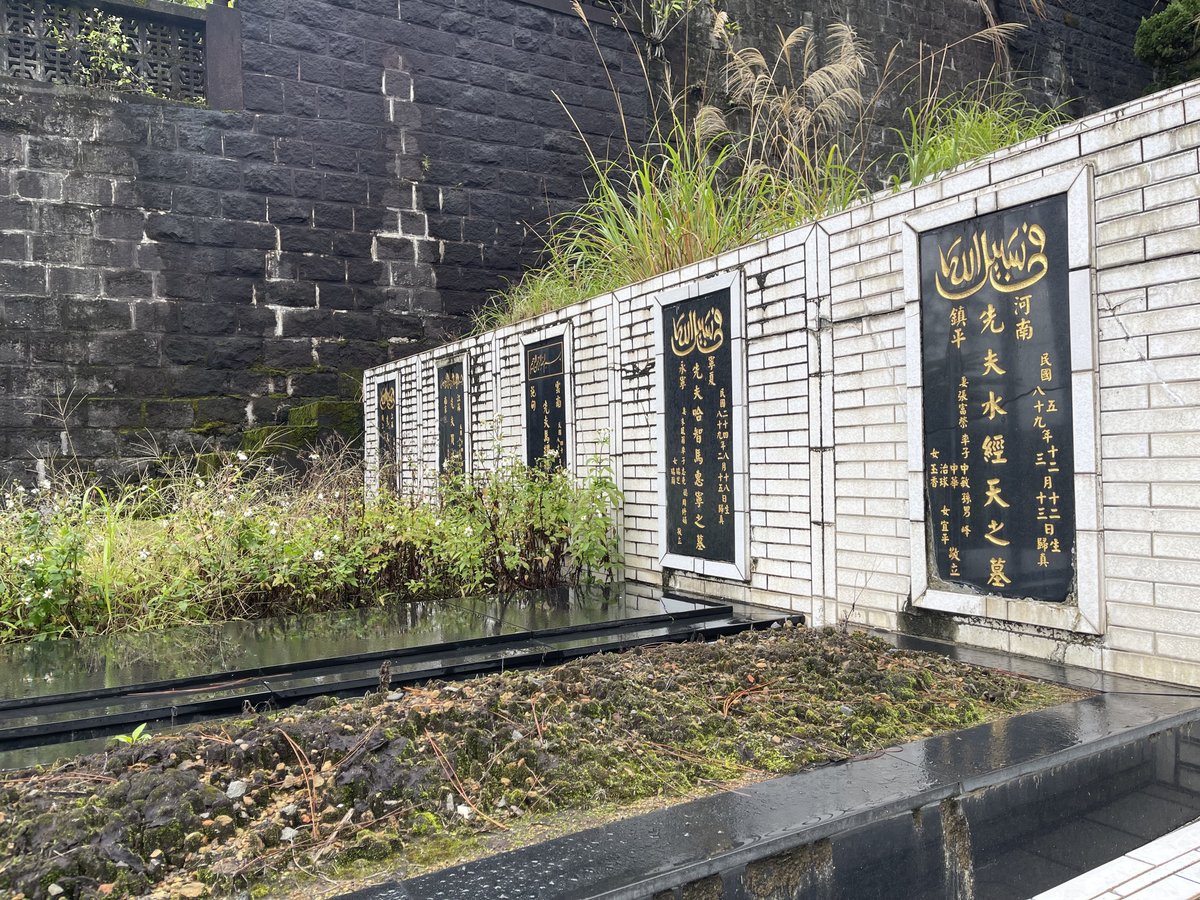
Graves with Arabic writing. These are the graves of Muslims from Xinjiang and Ningxia of main land China.
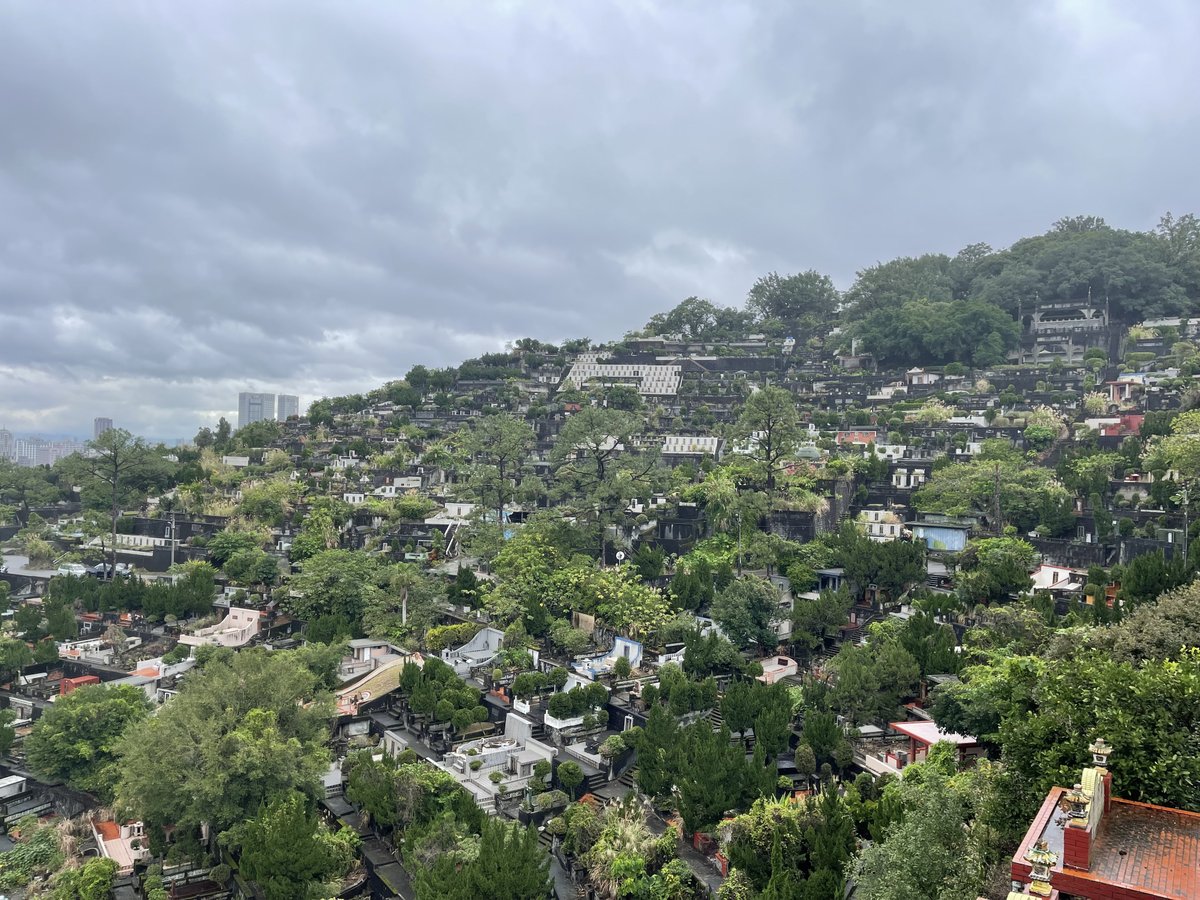
The whole mountain is a cemetery
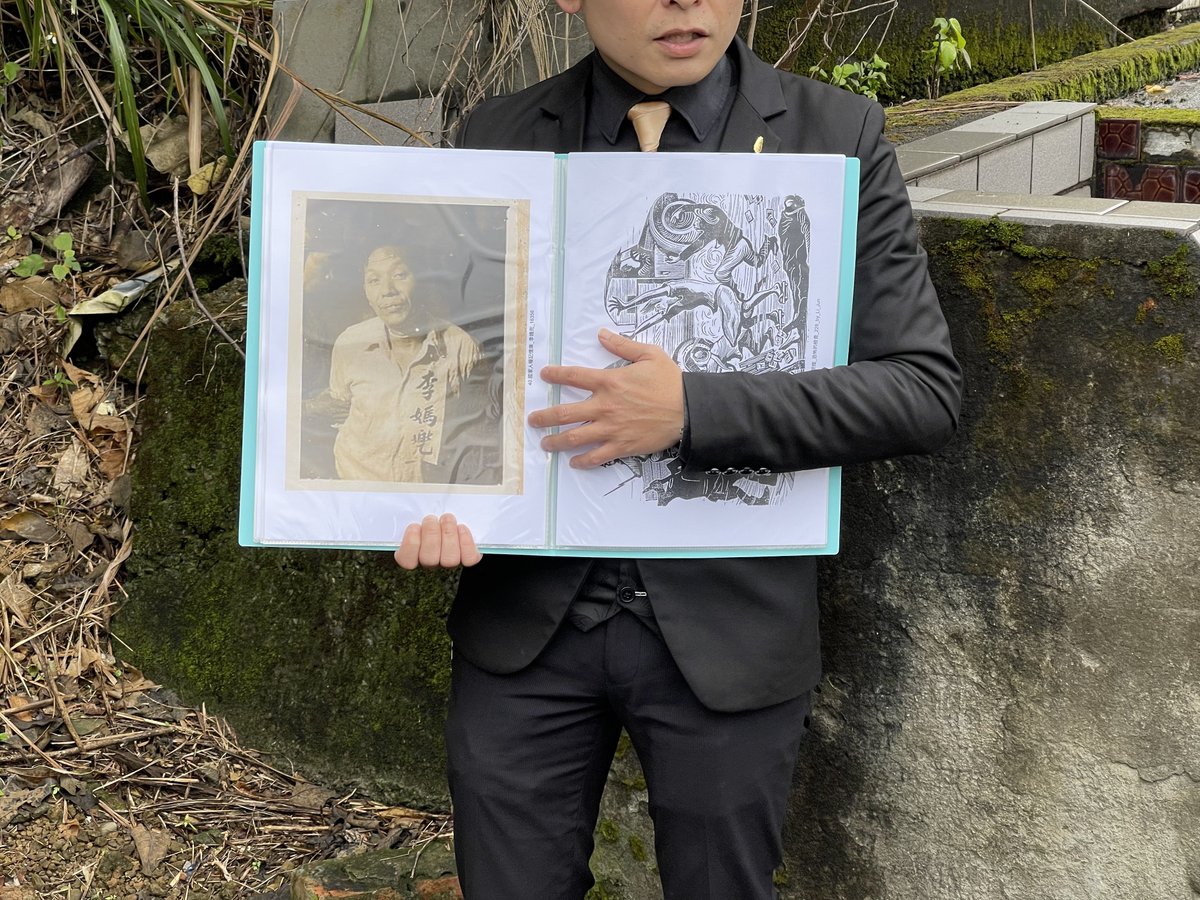
Among the graves of many victims, our tour guide shared the personal stories of several people. Some of them were executed due to internal conflicts within the KMT leadership. The man shown in the photo was apparently the leader of an anti-KMT organization.
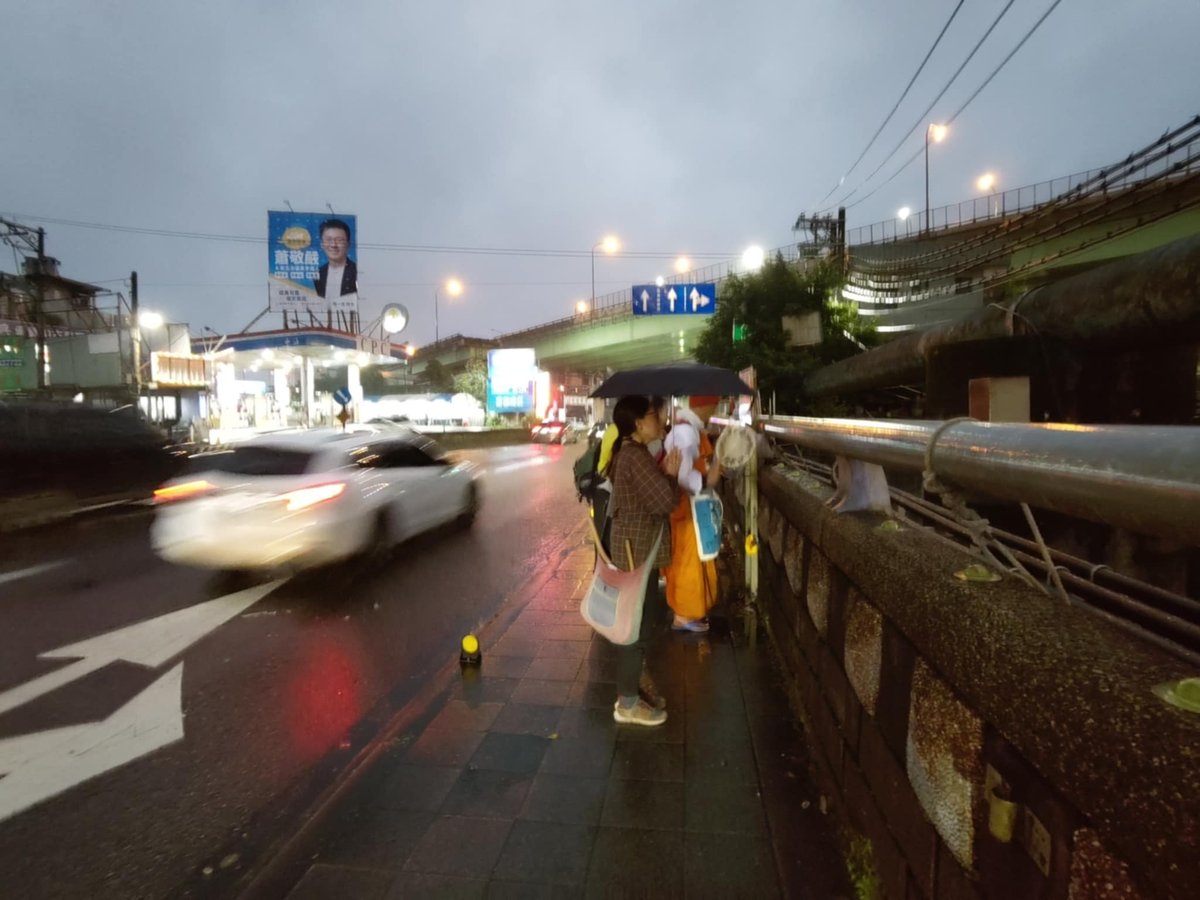
Nangang River was also home to victims of the 228 Incident. Eight bodies were reportedly dumped into the river off of Nangang Bridge.

This tunnel was built during the Japanese occupation. It was abandoned and no longer in use, but was restored as a historical heritage site.

Memorial to the victims of the 228 Incident at Badu Station

The former Keelung Middle School (now a high school) was used as an arms depot during the 228 Incident. Residents came to the school building to retrieve weapons, but the principal’s wife, who wanted to keep the peace, refused to release the arms depot. Her husband, the school principal, agreed with and supported with her decision.
However, in 1948, the principal, Chung Hao-Tung (鍾浩東), started publishing a leftist magazine that was critical of the KMT government. He and multiple teachers at the school were later captured and executed at the Machangding Execution Grounds.
This school was the setting for the video game and film "Detention." It is said that nothing remains of the original building today.

Yiling: A researcher who is knowledgeable about the former miners in the Ruifang District area of New Taipei City, located in the northeast of Taipei, where she does research on the history of mining labor. Gold, copper, and coal were discovered here during the Qing Dynasty, and the area expanded during the Japanese occupation. Jiufen, a famous tourist destination, also thrived as a miners' town.

During the Japanese colonial period, the gold mine was plundered by the Governor-General's Office and placed under the management of the Fujita Group.

Fujita-gumi leased the mine where anti-Japanese patriots gathered to Taiwanese people and established Taiyo Kogyo Co., Ltd. After that, under the policy of encouraging gold production, the developed Jiufen became known as Little Hong Kong.

Jinguashi Station, another 228 Incident site that is nearby the Jinguashi Gold Museum.

The Japanese army set up the Kinkaseki Prisoner of War (POW) Camp in the Jinguashi area in 1942.

There were POW prisoner of war camps all over Taiwan.

From 1942, it housed POWs from Allied Nations and other detainees, with over 1,000 people at its peak. Some were forced to work in the mines, and some even died. It is now a well-maintained memorial park.

A total of 4,300 Allied prisoners of war were held in POW camps across Taiwan, and approximately 10% of them died due to starvation, disease, and violence. This park is particularly impressive among the war relics remaining in Taiwan. I was told that this park reflects the racial resentment felt by the victorious Western nations, who were discriminated against and enslaved by Asians.

From Jiufen, we head down the mountain to Keelung.

Keelung Shipyard Ruins

Markets established during the Japanese era

400 years ago, the Basai (Ketagalan) people lived on what is now Heping Island.

In 1626, Spain occupied northern Taiwan, built forts, and used them as a base for exploiting the northern part of the island.

The Dutch, who occupied Tainan, drove out the Spanish in 1642 and then occupied the north as well.

In 1668, the Dutch were defeated by Koxinga's army and left Taiwan.

Soon after, Koxinga's army was defeated by the Qing army. After that, many Han Chinese immigrated to Taiwan, and the Basai people were gradually Sinicized. In 1884, war broke out with the French army.

The period from 1895 to 1945 was the period of Japanese occupation. Japan constructed Keelung Port, which was the largest port in Taiwan at the time. The fishing industry also developed as a result of colonization from Japan, and also drew immigrants from Okinawa, and Korea.

After Japan's defeat, the KMT army arrived. As more people began to gather on Heping Island, people from Yilan, Hengchun, and other areas, including the Amis, came to work.


Heping Island has a mysterious topography. There are many holes in the cliffs. There are even traces of a Dutch person hiding there who had fled from Koxinga's army. There is apparently a lot of writing in Dutch on the walls. "I want to go back to the Netherlands."

We were guided by local resident Chen Baoyou, who was introduced to us by Aoyama Yoshiaki, a family member of a victim of the 228 Incident. Due to its proximity to Okinawa, many Ryukyuans, including Uminchu, lived on Heping Island (then called Sharyo Island).

Keelung's B-class gourmet, curry noodles and curry rice

Many vegetarian restaurants in Taiwan are run by Buddhists, and they offer free meals to those who don't have money.

Taiwan National Museum: The menu for the Japanese Crown Prince's visit in 1923.

Seal of the Imperial Japanese Government-General of Taiwan (Taiwan National Museum)

The practice of wearing tsutsumi (foot guards) during the Qing dynasty was banned during the Japanese occupation. (Taiwan National Museum)

In 1954, the Republic of China and the United States signed a joint defense treaty. (National Museum of Taiwan)

It seems that Chinese Communist Party soldiers who were captured during the Korean War were decommunized and brought to Taiwan. (Taiwan National Museum)

During the peace walk I was taken in by a Palestinian family living in Taiwan.
I was told that there are only a handful of Palestinians in Taiwan.
Their children were either born in Taiwan, or left Palestine before they could even remember what it was like living there. They speak three languages: English, Mandarin, and Arabic. Their parents do not speak Mandarin.
Both parents have visited Japan. They said that Japanese society is very good, as it is logical and rational, but that it is lacking in spirituality. They questioned whether Japanese people have no interest in God or any greater being and have not found purpose or meaning in life. And nonviolence was said to be useless in Palestine.

This space was a great help to the crossdressing and transgender community in Northern Taiwan, as it allows them to feel safe and be themselves. We stayed there on the first night of the peace walk. It's a place where people whose families or other relatives don't understand or accept their gender identity and expression can rent a locker to keep their clothes, makeup, etc.
Taiwan is known as an LGBTQ-friendly country, but in a national referendum in November of 2018, same-sex marriage was rejected by over 70% of voters. Same-sex marriage was later passed through special legislation by the government in 2019.

After the peace walk, I attended a report-back session by Ella, a Taiwanese Peace Camp member, about her travels to Jeju Island.
This location, Left Bookstore/Parallel Space, was striking, as it was filled with older people, a minority during this peace walk and at Peace Camp in Keelung.
Perhaps because it was a leftist Bookstore, the conversation focused on anti-imperialist issues—criticism of American intervention in Asia and European colonialism—with little criticism of China, which threatens Taiwan—a relatively unpopular theme in Taiwanese society. The conversation also included a discussion of perceptions of China. When Ella asked what attendees thought about China's human rights violations in Tibet, Xinjiang, Hong Kong, and elsewhere, an older person responded that the people of Hong Kong are living without any problems. Then, unusually, a young student from Hangzhou, who was visiting Taiwan from China on a group study tour, said, "Hong Kong is part of China, so it's only natural that they should be suppressed if they started talking about independence."
I was taken aback by this comment, The audience reaction I heard at the scene was, Why this female student say that? at a same time, apparently some people around me were nodding and clapping.

After the peace walk, I was guided by Yo-Ling to Buddhist HongShi College for a much-anticipated meeting with Venerable Shih Chao-hwei.
Venerable Chao-hwei advocates for a Buddhism that is attuned to the needs of modern society, placing particular emphasis on women's and LGBTQ+ rights, as well as animal rights and social justice. She argues that gender-based differences in the status of monastics go against the original spirit of Buddhism and that cultural prejudice and male dominance influenced the interpretation of precepts. Her views on gender equality within the sangha has led to many criticisms, from conservative Buddhists in Taiwan.
Apparently, the number of young monastics in Taiwan has been declining recently, and she attributes this to gender inequality within Buddhist orders. She says that as society reassesses inequalities toward women, Buddhist communities that cannot keep up with these changes are attracting fewer young people.
I couldn't agree more.
I spoke to this pioneer of Buddhist reform in Taiwan about her thoughts on the Taiwan-China issue. Venerable Chao-hwei is well-versed in international politics, and she said that protecting Taiwan is not an idealistic idea like a nonviolent movement, but that in the face of the current global trend toward authoritarian regimes and evolving military and surveillance technologies, Taiwan has no choice but to rely on these technologies for self-defense.
I sensed this answer was based on a very level-headed observation and her life experience.
It is certainly true that military power is one of the forces a nation needs to survive in today's world. Whether it's from school, the media, or mainstream understandings of human history, it's a reasonable and convincing conclusion to reach such an answer.
Of course, Venerable Chao-hwei does not desire war, and I believe she understands that it would be better if military spending were allocated to social security and education.
Venerable Chao-hwei has a deep distrust of China as a nation. She was born in Myanmar to a Chinese family, but in the 1960s, the influence of China's Cultural Revolution spread to Myanmar, triggering the Chinese Exclusion Movement, which led many Chinese people to flee the country. Her family moved to Taiwan, believing that they would be better off under the White Terror than in China, where the Cultural Revolution was raging. (The Venerable had relatives who had been victims of the Cultural Revolution in China.)
Venerable Chao-hwei spoke strongly of her desire to protect Taiwan's freedom and democracy. As an example that spoke to this desire, she introduced us to words spoken during the recent anti-regime protests in Iran. "Our souls have remained dead for 47 years," an Iranian woman said. I felt that these words were a reminder to us that if Taiwan were to be unified with the Chinese government and lose its freedom and democracy, its "soul would die."
She added "No political system is perfect."
With regards to Okinawa, she said: "Taiwan has its own decisions, and Okinawa has its own decisions. I don't want Okinawans to suffer because of the U.S. military bases in Okinawa, but if the bases were removed from Okinawa, it would leave Okinawa defenseless against China and put it at risk."
While I partially understand her position, I believe that human spirituality (the power of religion) has the power to overcome the cold logic of politics, economics, and the military. There have been many examples in the past of nonviolent movements being victorious (though there have been failures, of course). I understand that mainstream thinking in the modern world is close to her logic, but all results arise from causes and conditions. When a change occurs in the human heart, the reality that appears before our eyes also becomes new. I believe that it is Na mu-myo ho-ren ge-kyo, the power of the Lotus Sutra, and the teachings of the Buddha that bring about such change.
There's much more I could write about, but I'll leave it at that. (The above is not a transcript; the Venerable spoke in Chinese, and I'm writing this from memory of what Yo-Ling translated to me in English, so please read it as my impression of our conversation.)
Of course, we had our differences of opinion, but it was a very helpful insight into understanding Taiwan.
I'm deeply grateful for the opportunity to hear such a valuable story.

The Taipei International Book Exhibition was being held while I was in Taipei, and I happened to hear about a discussion between Gao Yan, author of "Sukima," a manga about Taiwanese students studying in Okinawa, and a reporter from the well-respected independent media outlet "The Reporter," so I went to check it out. The event also featured the launch of a new manga, a cartoon adaptation of an article The Reporter had written about the various difficulties Taiwanese musicians face performing in the Mainland Chinese market. Even private exchanges between Taiwanese musicians are subject to surveillance, bribery, and intimidation by both governments, and they are often labeled traitors by fans for performing in China. While such private exchanges should have the potential to soften cross-strait relations, both the government and the people are hindering them, preventing successful exchanges. While in the short term, this may be due to reasons such as preventing espionage, in the long term, it casts a shadow over the future of both sides.

After the peace walk, Kazu-san (the man holding the microphone) suggested we hold a Japanese-Chinese debriefing session at Citizen Bookstore.
Kazu-san was born in Japan, grew up in China, and currently lives in Taiwan. He interpreted from Chinese to Japanese during the peace walk.
It was a wonderful event, and I'm sure people will not accept the Okinawan and Japanese peace movement if it simply imposes its own sense of justice on others, saying things like "non-violence" or "Taiwan should talk to China" without understanding their historical context.
Also, Taiwanese people should not superficially view Japanese people as pro-Taiwan just because the Liberal Democratic Party government is anti-China and firmly maintains the Japan-US alliance. They should understand that the US military and the Japanese government are not guardians of the freedom and democracy that Taiwan cherishes, but rather oppressors of colonized peoples like in Okinawa.
I hope this gathering will serve as an opportunity for Taiwan, Okinawa, and Japan, islands so close yet so far, to get to know each other better. Thank you, Kazu-san.

I'm so jealous...

On the last day, we all had lunch together. We were joined by an activist from Hong Kongand Tibetan man who was born in India.
We are extremely grateful to Yo-Ling for their support over the past two weeks. We offer our heartfelt thanks.
Na mu Myo ho Ren ge Kyo


Comments
Post a Comment